Sandy's Written Creations
Writings by Sandra Harrison including poetry, essays, fiction, non-fiction; children's literatire.
Historic Traces in White Plains Business District (BD)
An updated version of entry of White Plains, New York: A City of Contrasts from “Business District” chapter:
Most of the buildings in White Plains’ Business District (BD) were built in the 20th century. Some of the structures were repurposed or rebuilt though there many structures that are original to their location. Some buildings are on the National Registry of Historic Places. In recent years, White Plains (WP) formed a Historic Preservation Committee to designate local landmarks. These structures can be found on the City’s website (cityofwhiteplains.com).
Mamaroneck Ave, one of the City’s older roads runs all the way to the Village of Mamaroneck (established in 1661). The roadway changed over time running on what is now Old Mamaroneck Rd and where West St once intersected the roadway. Many of the buildings on Mamaroneck Ave remained during city’s largest urban renewal project of 1966 to 1980 giving one an idea of what the rest of the BD was like prior to that.
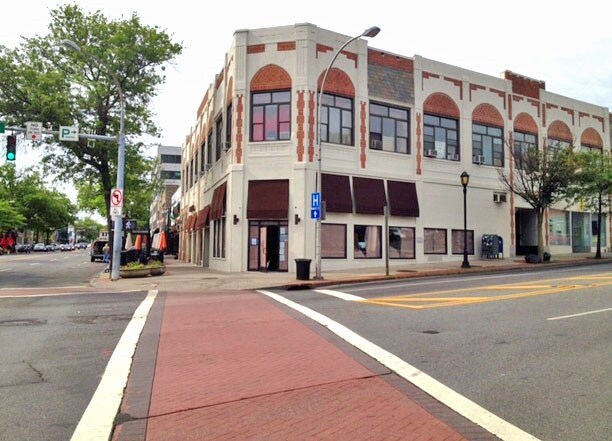
The former building (dating from 1929) that was at the corner of Post Rd and Mamaroneck Ave was recently demolished (around 2017). 
The building once housed B. Altman’s clothing store and was replaced with The Mitchell apartments. Apartments. The building after the departments stores left housed a number of stores including a bridal shop and Democratic Committee.
After B. Altman’s moved to their own building where the Westchester is today, the building housed many different stores including Alexanders for about 5 years before they built their own building at what became the Pavillion (now demolished) just down the road.
According to Assessors Office, address for 147 Mamaroneck Ave dates from 1942. The building once housed the Wallach Store and has since then housed a number of bar restaurants. Wallach’s was a clothing store and had a dog bar (water fountain for dogs) on sidewalk of Mamaroneck Ave till the more recent renovations.
Building at 142-6 Mamaroneck Ave dates from 1934.
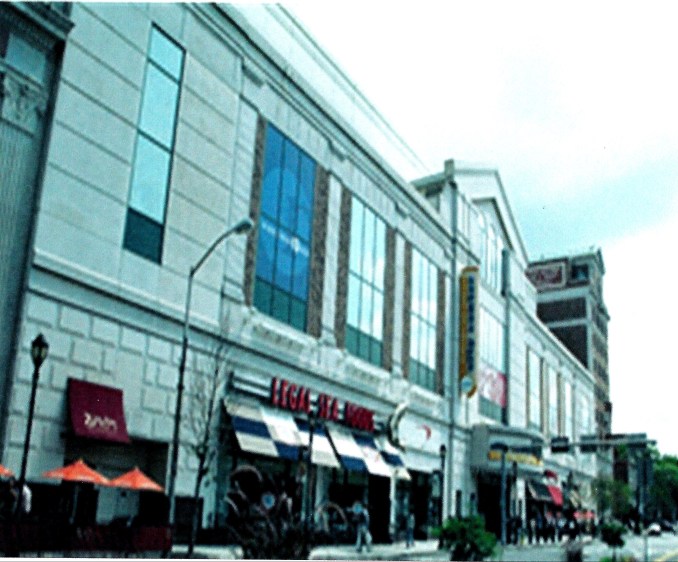 The City Center opened in 2003 on the block where the first Macy’s Store was located in 1948. It’s architectural design blends with the 2 former banks that are at the corners of Martine and Main St.

The former Home Savings Bank established in 1893 is at the Main St corner (dating from 1925). The building was repurposed for a restaurant. The original vault is used for seating.
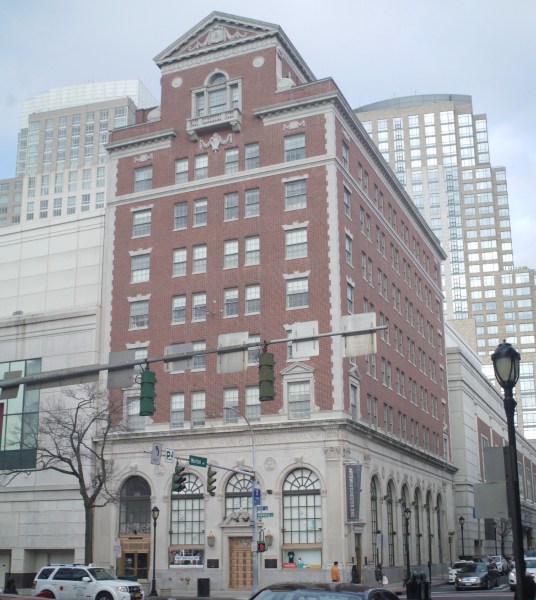
The Peoples National Bank & Trust Company building at the Martine Ave corner dates from 1929. The bank established in 1924 is now ArtsWestchester. The building was donated by JP Morgan and has many of its original fixtures. The bank’s vault is part of the exhibit gallery on the ground floor.
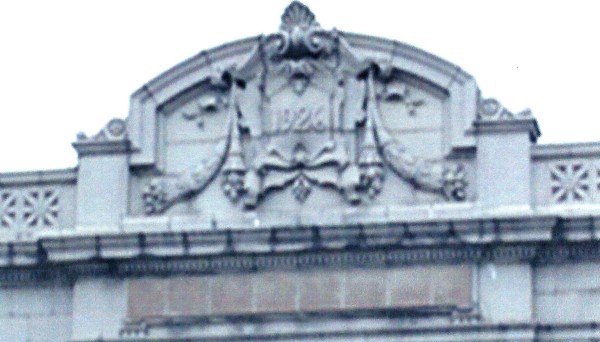

The Colony Theater building at 100 Mamaroneck Ave still has its 1926 crown (left). The building has been used by various businesses.
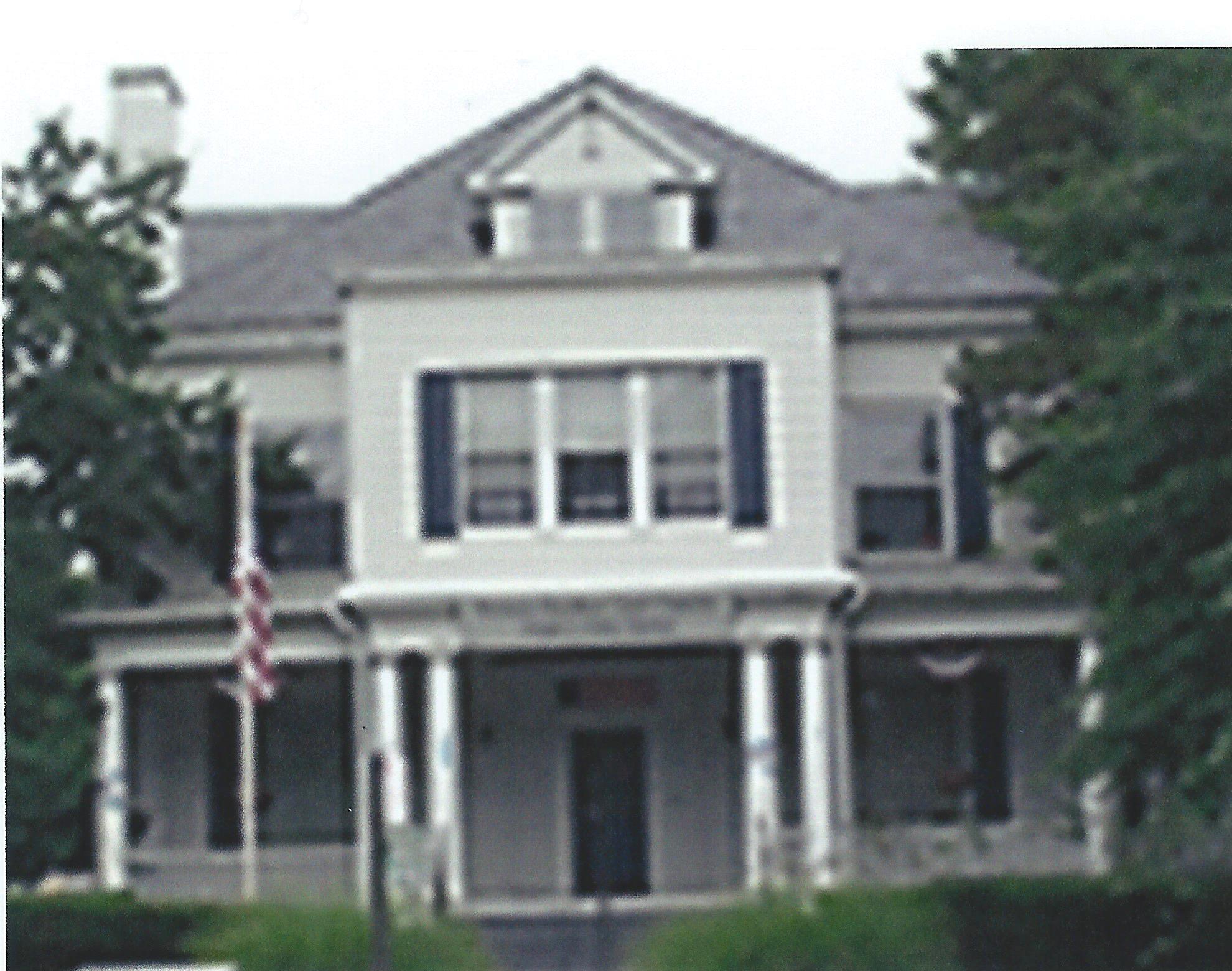
The home of Ernest Erbeck at 213 Mamaroneck Ave dates from the early 1900’s and presently houses the Westchester County Republican Committee, which was established in 1948.
Main St. formerly named Railroad Ave appears on maps as early as 1911. On an older map Main St does appear but in the S Broadway & Armory Pl area.
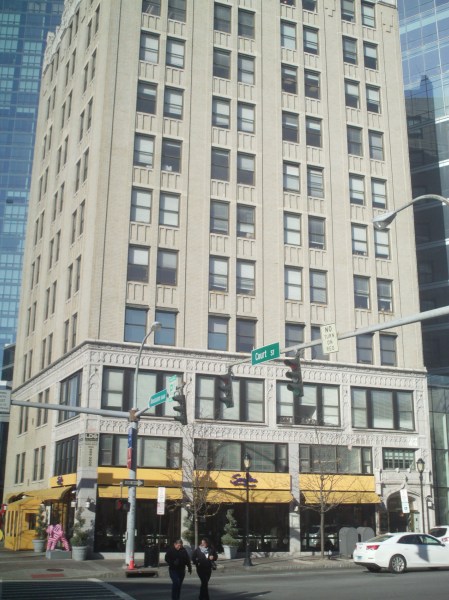 Bar Building completed in 1928 is at 199-201 Main St and though threatened with demolition it was saved from new development and in 2007 was placed on the National Register of Historic Places. More info about the building is available in another blog entry on this website.
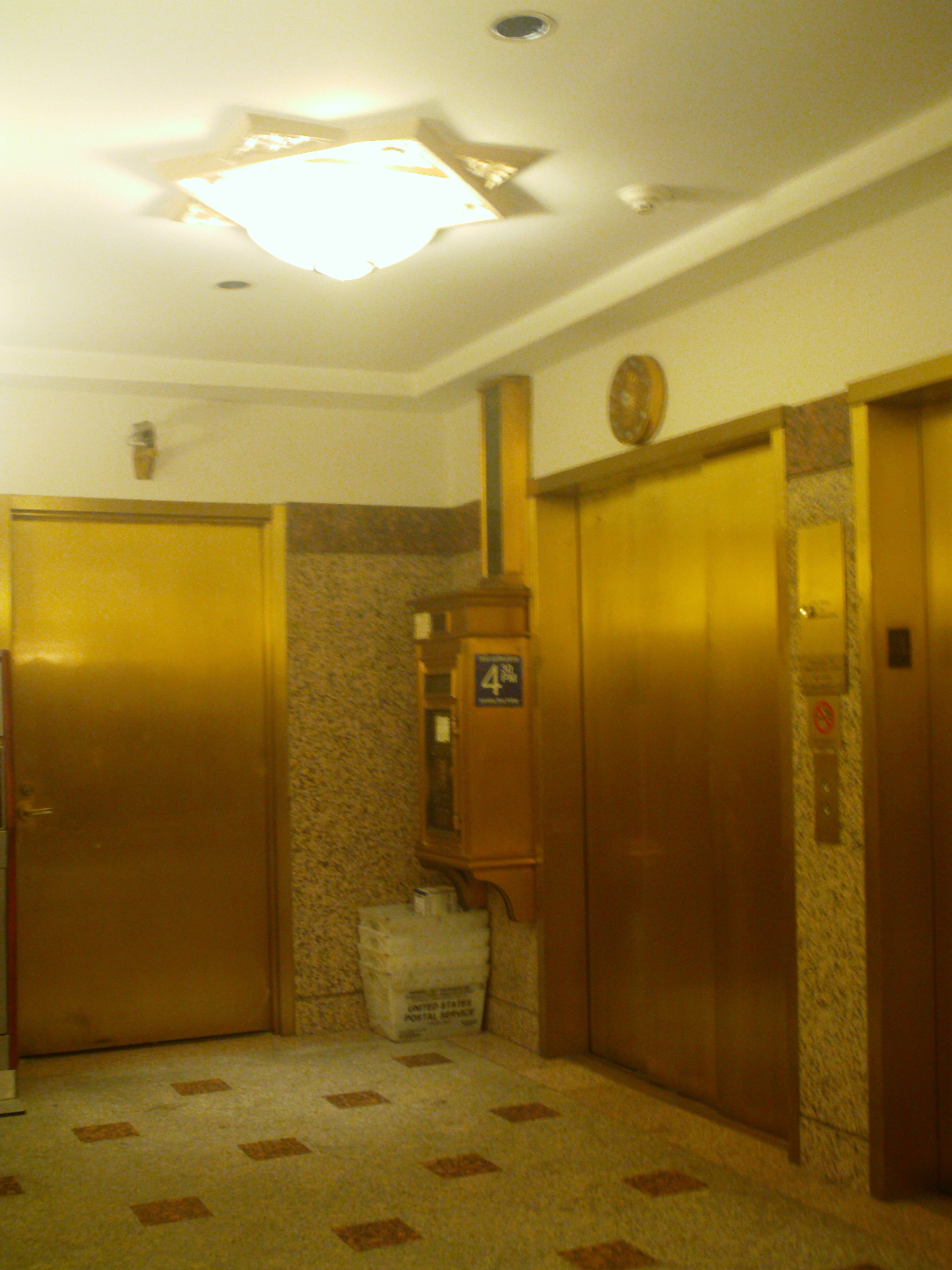
Northcourt building at 175 Main St was completed in 1930.

Grace Episcopal Church Congregation is the oldest building on Main St and congregation goes back to colonial times. Church Street gets its name from the church. Grace Church (left) moved to its present location from an older structure located near S Broadway. The church’s cemetery was also moved at a later time to WP’s Rural Cemetery for the building of the White Plains Hotel (that is now being renovated to be luxury apartments. The church had an annex at 1305 Mamaroneck Ave for a time (circa 1910) and there is a community center behind the church that was built in the 1900’s.
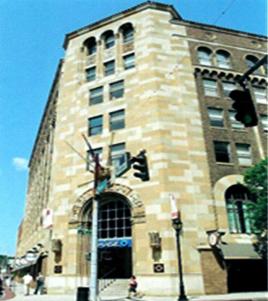 Lawyer Building, the former Westchester Title and Trust Company, is at the opposite corner of Church St and Main St (left). It once housed the Reporter Dispatch Newspaper and dates from 1926. Additions were added to the older structure.
 Except for the two top floors, the Kennedy Building at 2 Williams St dates from 1919. A smaller structure at 171 Main St dates from 1937.
Nearby on Martine Ave is the Masonic Building dating from 1908. 
Tod Building (circa 1914) found at corner of Martine & Mamaroneck Aves that extends to Court St was built by John Miles. Miles constructed two twin structures that he named after his children. The other structure was named for the builder’s daughter Marion and once contained Tod’s Market, an experimental canning kitchen (1917-8) and the Rotary Club (in 1919). It was located where the Michaelian Building is today on Martine. WP’s Miles Ave was named after builder who died in 1918 (by suicide).

Building at 257-9 Mamaroneck Ave is used as retail and offices and dates from 1924. Not sure if it was a single-family home at that time.
See other entries under WP History for more information about remnants in BD.
White Plains Hospitals
This entry is an updated version of “Hospitals” from White Plains, New York: A City of Contrasts.”
The Former St Agnes Hospital

St. Agnes Hospital, closed in 2003, had its beginnings in 1908. The medical building on the property underwent renovations and the former hospital was repurposed into an assistive living facility (the Bristal).
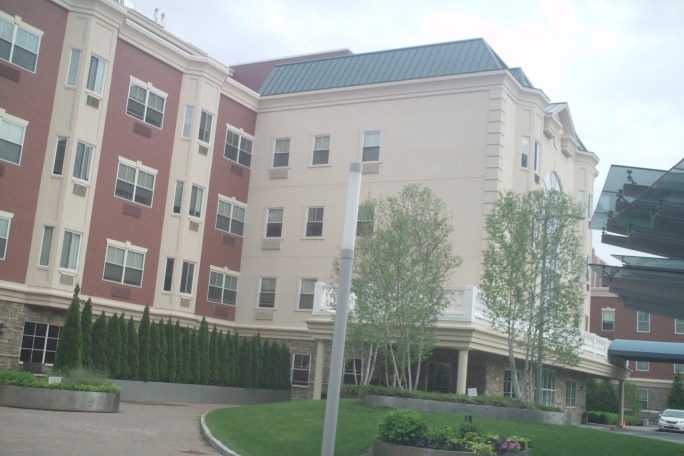
The plans to turn the rest of the complex into a retirement community did not happen.
A grotto (below) remains near the entrance.

NY Presbyterian Hospital
NY Presbyterian Hospital now owns the property where in the 1894 Bloomingdale Hospital opened. Many of the buildings from the original hospital are still in use. The property of the Hospital used to go from Westchester Ave to Heatherbloom Rd.
Bloomingdale (Insane) Asylum (1821-1889) in Manhattan bought White Plains (WP) farmland in 1868 for an annex. When the NY City location closed, the hospital moved to WP. The hospital got its original name from the section of NY City where the first hospital was located. The road leading from the NY City hospital was named Bloomingdale (Dutch in origin) and in the 19th century it became part of Broadway. Incidentally, WP’s Bloomingdale Rd was named after the hospital.
The original hospital grounds were designed by Frederick L. Olmsted Company. The main building dates from 1894 and two of the homes that were on the grounds when the property was purchased are still on the grounds. The hospital’s wrought iron fencing still surrounding the property has NY Hospital (Cornell) signs from when they owned the hospital.
A redeveloped city park at the corner of Bryant and Mamaroneck Aves was once apart of the hospital grounds. There are walking trails and signage at the entrance.

Interestingly, the Bloomingdale’s Department Store located on a section of the hospital’s original property is named for the store’s founders, Joseph and Lyman G. Bloomingdale whose father was Bavarian. The store opened in 1975.


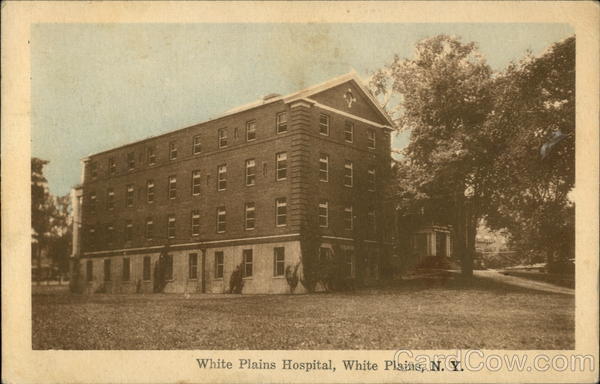


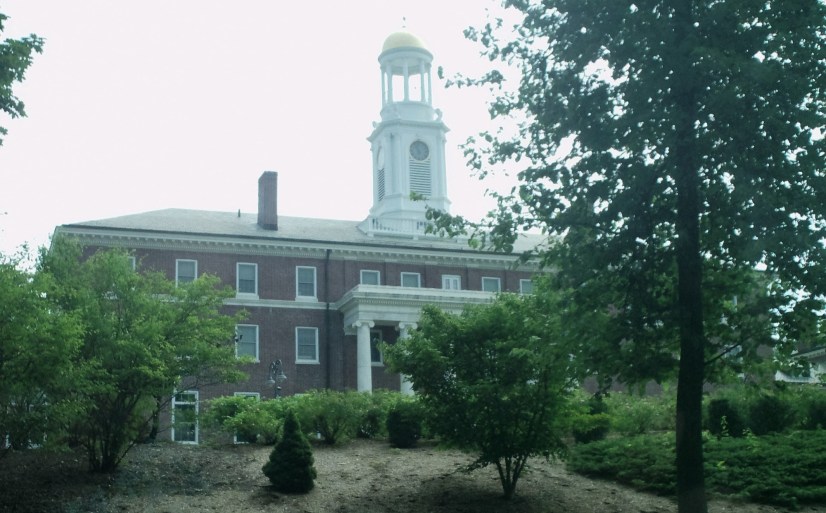
The hospital is located on the grounds that were once apart of Bloomingdale Hospital. Burke is now part of the Montefiore Health System.
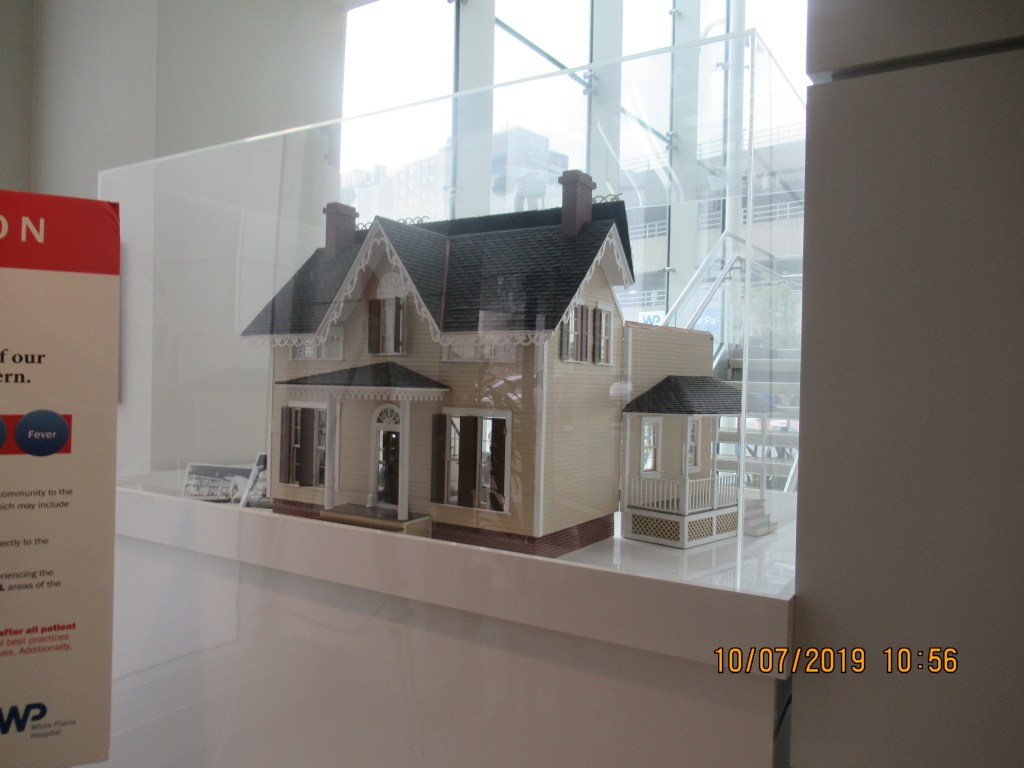
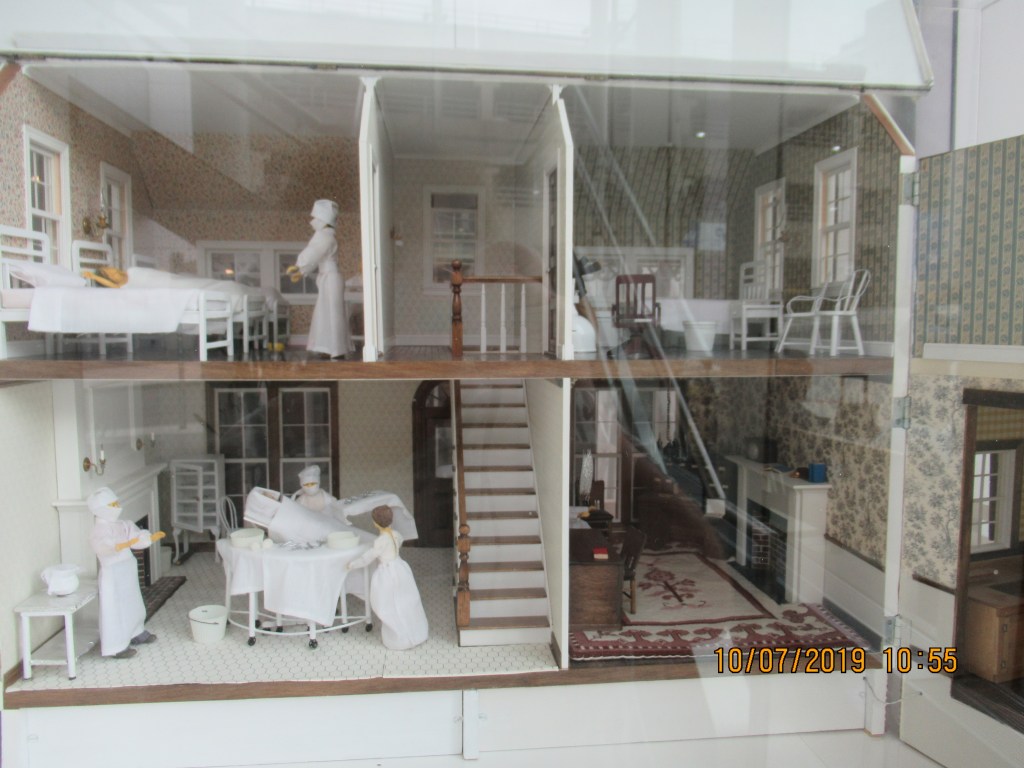
Today, WP has many medical offices/centers and now include Urgent Care centers (for emergencies) that serve the people in the community. There are three hospitals (WP, Burke & NY Presbyterian) that keep expanding their services. Ambulance services are available through 911 call in services with fast moving vehicles that can get to those in need within a short period of time.
City have many paid doctors, nurses and other health professionals but there are still volunteers and those who donate their time to keep our medical facilities available for those in need. Hospitals have reach out programs, lectures and events for patients and those in the community.
During the pandemic of 2020, the Westchester County Center was converted into a hospital and a parking lot a testing center.
White Plains Schools History
Entry is updated version of chapter “Schools” from White Plains, New York: A City of Contrasts:

Though there were schools in White Plains (WP) as far back as the early 1700’s little is known about them. According to Renoda Hoffman in her book Yesterday in WP, there was a school around 1738. Early schools for children were taught by women out of their homes & were supported by the families in the community.

A school building appears on a map of WP drawn by a soldier before the Battle of WP in 1776 on what was the Village St. Mrs. Adam’s School was located on what is now N Broadway near intersection with Lake St.
A school was recorded in town’s minutes of 1788. The structure was located in the area across from where Nordstrom is today and was used till 1848 when it was destroyed by fire. Another unpublished source at WP Public Library on WP schools states that the same school was located in the Nordstrom location and was destroyed by fire in 1855. After the fire, the school used a rented space in a blacksmith shop on Wallace Place till 1856 when they opened a four room elementary structure on Court Street. Interesting, the Court Street School was located across from the County jail that was part of a square block complex of court buildings along Court St from Main St.
In 1864, the Towns of Harrison & WP created the Union Free School District No 1. Court Street School and was expanded a number of times. In 1895, the high school (with four grades) was established at the Court St location. Below is a view of school from Martine at Court St corner and then the view on Mamaroneck Ave.


In 1898, two new grammar schools opened. East View, that John Rösch refers to as “East Side” in his book Picturesque White Plains, opened in the Eastview neighborhood. Fisher Hill School opened in the Fisher Hill neighborhood. Both structures had 8 rooms. In 1903, Hillside School opened with 8 rooms (till 1942).


In 1908, WP annexed the Chatterton School on Washington Ave. The school was part of the Battle Hill District of the Town of Greenburgh School System. Structure (below) is a rebuild (possibly in 1914) and was at the corner of Chatterton Ave and Harmon St. Original building on Washington Ave was converted to a residence and might still exist though not yet located. Battle Hill was part of Greenburgh till WP annexed it in 1916. School St gets its name from the school that was there.

In 1909, a small two room school opened at Silver Lake Park in West Harrison.

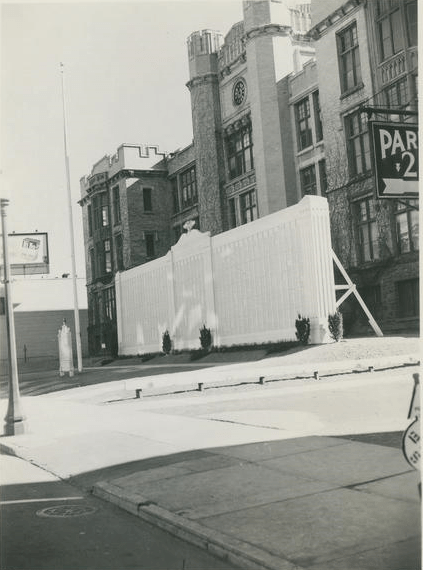
The high school students making up WP High School housed at Court St moved to their own building on Main St. in 1909 at cost of $250,000. The building housed the high school till 1930. The building was later demolished in 1940’s. The City’s first Macy’s Department Store (1959) was located at the former high school location. Today, the location is the City Center (opening in 2003).
In 1912, North Castle became part of the Union Free School District No 1. A four room school was constructed on N Broadway in North White Plains (below at Holland Ave).

In 1914, Post Rd & Soundview School (8 rooms) was opened but not occupied till Feb 1915 when Battle Hill School opened at 65 McKinley with nine rooms. Both Schools got additions in 1924 and added the Jr High levels.
After WP became a city in 1916, the Union Free School District No 1 dissolved and the city’s White Plains Public School District was formed. The two one room schoolhouses for Rosedale and Ridgeway were added to district.
In 1917, Ferris Ave School opened with 10 rooms.
Mamaroneck Ave School opened in 1921 with 12 rooms. Additions were made in 1923 and in 1926 when the Jr High level was added. Jr High level was removed in 1933. Additions were added at a later decade but not sure of dates. A likely time was in the 1960’s during the Baby Boom. Today, the schoolhouses grades K-5.
Battle Hill Elementary School added rooms in 1933 when it combined with the Chatterton Ave School and the Jr High level was added. The Jr High was discontinued after June 1973 and in 1982 after the elementary school closed the building was sold. The structure was repurposed into a condominium, The Hill (1987).
In 1924/5, Eastview School (also referred as East View) was extended with the addition of the buildings pictured below on the left that was added for the Junior High level (grades 7-9). In 1930, the school was modernized and expanded with the classrooms pictured below on right. The original structure of 1898 was demolished (date unavailable). For a number of years from 1992, the building was not used by students but was rented out to small tech companies (1994-98). When the building was again used by the school district, it was called the Eastview Campus of WP Middle School (grades 6-8). Starting in Sept. 2013, the school housed only 6th graders.


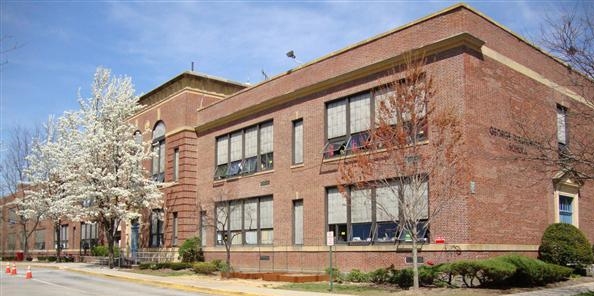
George Washington School opened in 1926 at corner of N Broadway and Holland Ave. It moved to Orchard St on the former Price property with the Price house used for classes with grades 5-7. By 1927, the house was gone and the new building opened in 1928 (Orchard St) without the seventh graders who went to Eastview while the students from the N Broadway school were transferred in. Today the school houses grades K-5.

In 1930, WP High School moved to 128 Grandview Avenue. The Highland building became a Junior High in 1960 when high school (grades 10-12) moved to North St location. In 1979, 9th grade moved to high school. Highlands later added the 6th grade when District reorganized but since 2013 it houses grades 7&8.
WP High School at 550 N St opened in September 1960 with grades 10-12. In 1979, the 9th grade was added. Major renovations and additions were completed around 2002 (starting in 1999) altering much of the original structure.

Post Rd School (dropping Soundview in name) added additions over the years to its original 1914 structure and in 1925 the school added the 9th grade and formed a Junior High (grades 7-9). Today’s K-5 Post Rd School is in a new structure that opened in 2009. The gym constructed in 1958 was renovated and remains attached to the new building.
The Rochambeau Building on Fisher Ave was opened in 1931; the Fisher Hill School closed. The building now houses the Rochambeau Alternative HS as well as Community School, Alternative Programs & Adult Education.
WP’s two early schools the first Ridgeway School and the first Rosedale School in the southern part of community were part of the Union Free School District No 2 till 1916 when they became part of the WP School District.

![t281[1]](https://sandraharrison1954.com/wp-content/uploads/2017/02/t2811-e1554310982986.jpg)
The first Rosedale School in WP at 171 West St in WP was used from about 1890 till 1953. The building dates from 1844 and was originally a Methodist Church. In 1953, when the school closed, its students were transferred to the newly built Ridgeway School at the corner of Mamaroneck Ave and Ridgeway. The small school then became a private residence. WP did build another school that was named Rosedale School. It opened in Sept 1961 at 30 Dellwood Rd but closed in 1979. In 1979, Solomon Schechter School established in 1966 moved to the former Rosedale School. Solomon Schechter bought the building in 1981 and was renamed Leffell School (7/2019).
The first one room Ridgeway School (donated by Israel Mott in 1847) was first used by local families (Mott, Horton, Purdy; Havilland). The school was used till 1933 (according to Renoda Hoffman). Another source states that the school was used till 1941. Girl Scouts used the building from 1948-1985. It is now part of a private residence at 408 Ridgeway (see picture above).
The former North St School on Partridge Rd was not ready for its opening in 1956 so the students were housed at Education House till 1957. The school was closed in 1979 and sold. Since 1980, the building has housed the German School.
![8052-02[1]](https://sandraharrison1954.com/wp-content/uploads/2017/02/8052-021-e1554311330332.jpg)
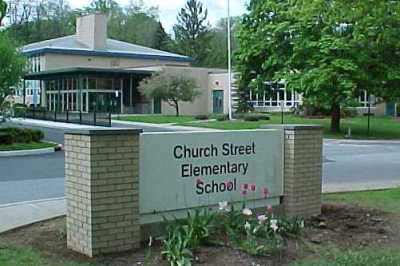
Church St School opened in 1957 but for a number of years (around 1979/80) was closed & housed a pre-school. The elementary school did reopen in 1988 when schools were reorganized to racially & ethnically balance the district with a school choice plan. The school even added a new addition.
Private Schools Past and Present:
Over its history, WP has had a number of private schools; many are no longer. A number of schools were established in the 1800’s.
White Plains Academy opened in 1826 (incorporated 1828) associated with the Methodist Church, closing in 1880.
White Plains Female Institute opened in 1852 and closed in 1873. Alexander Institute opened in 1845. It changed its name to WP Military Academy till 1863 when the named switched back to Alexander Institute. Mrs. Francis Harris’ School opened in 1867.
Miss Adler’s School opening in 1875 was also called Lafayette School and was run by the two Adler sisters, Mary (or Marie) and Emma, for 30 yrs. and was located on Church St.
A Victorian house built in 1893 at 99 Quinby Ave was once part of the Noble School (opening in 1909 at various locations by Mrs. Kathleen Noble Jerome till moving to Mt. Kisco in 1930’s).
Roger Ascham School was at 9 Myrtle Ave. School from 1915 till 1940. Found a source with “The Common Law of Conduct” for the school. Building at 9 Myrtle Ave dates from 1924 so it could have been somewhere else like I found info about on Soundview Ave. A Joseph Allen was on pamphlet.
In 1901, the Good Counsel Training School opened and in 1918 they began a high school. The Academy of Our Lady of Good Counsel was established in 1922 & its buildings are in the center of the grounds of the Good Counsel complex at 52 N Broadway. At the end of 2014-2015 school year, the high school closed & the elementary school moved to another location. The property was sold to a developer (2015) who has plans to demolish most of the structures on the former school campus.
The private Windward School, established in 1926, that was located on Windward Avenue in 1930 is split into a Westchester Lower School at 1275 Mamaroneck Av in White Plains while the Westchester Middle School is actually now in West Harrison at 40 West Red Oak Lane. They also have a Manhattan Lower and Middle School at 93rd St.
Archbishop Stepinac High School opened in 1948.
Our Lady of Sorrows School was established in 1957 (the church was founded in 1929).
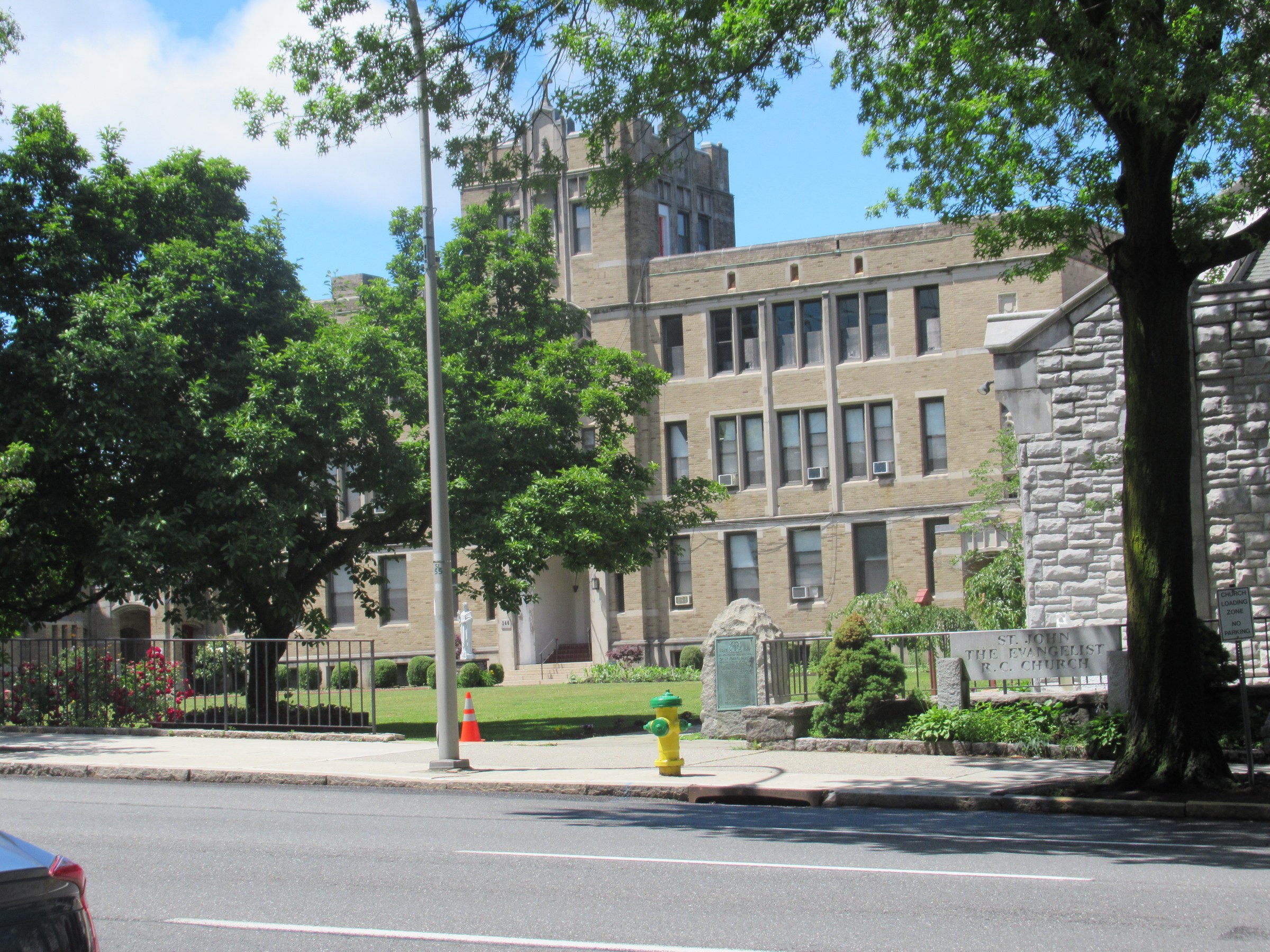
The buildings for St John’s Evangelist Parish School that closed in 2006 dates from 1930 and building is still next to the church on Hamilton Ave. Alumni from the school have Facebook pages (St John The Evangelist Elementary School).
St Bernard Parish School (of St Bernard Church) opened in 1932 and closed in 1977.
American Renaissance School ran from the 1980’s to the 1990’s
Private Schools include Our Lady of Sorrows, Stepinac High School, Windward School, German International School NY, Leffell School (formerly Solomon Schechter), Westchester Torah School, and Kodomono Kuni.
Fushion Academy at 1 North Broadway Fusion Academy Westchester (established in 2013) has about 129 students grades 6-12 offering full time or part time online/hybrid or in person learning.
See individual school websites for more information.
Present Day Public Schools:
WP has 5 elementary schools (k-5) (George Washington, Post Rd, Church St, Mamaroneck Ave; Ridgeway), 2 Middle Schools (6-8) (Highlands with grades 7 & 8 and Eastview for grade 6) one high school (White Plains High School for 9-12) as well as alternative programs that include Rochambeau Alternative High School (7-12) and programs/ classes for adults. District provides instruction for elementary children at NY Presbyterian Hospital. For more information about White Plains Schools see the district’s website (whiteplainspublicschools.org/).
Board of Education & Administration:
WP’s first Board of Education office was on Hamilton Ave. Since 1955, the offices have been at 5 Homeside Lane in the former Charles Smithers mansion constructed in 1924. In 1935, the mansion was owned by Adolph Ochs, publisher of New York Times & his descendants till the school district acquired it. 
The original part of the building connected to the Family Information Center at 500 North St (also known as Damon House) that housed offices & meeting rooms was demolished recently to build a new addition to the high school. It was the former home of Henry C. Lomb, a musician, and the original structure dated back to 1920. There had been a similar structure once owned by JC Penney that was on the south side of the high school that was demolished with construction of the high school.
Post Secondary Schools & Preschools Past and Present:
WP has had a number of secondary schools (vocational/ academic) over its history. One was Wilfred Beauty School on Main St where the Vintage Restaurant Bar is located. The White Plains Education and Training Center now offers vocational training and other courses for free.
City still has a number of colleges campuses. Present campuses include Pace School of Law and College of Westchester.
Mercy College had a campus in White Plains for some time. Pace took over the College of White Plains in 1976. The college began as Good Counsel College in 1923 and renamed the College of WP in 1972. Pace was expected to continue the undergraduate program, but they did not keep the promise. Preston Hall was the location of the College of WP (that Pace now uses). Berkeley closed its White Plains campus in 2021 and they are in Manhattan.
WP has numerous preschool programs that were not included in this entry. There are many specialized schools in the arts that are included in the entry for “Arts in White Plains.”
A source of digitalized pictures of WP schools can be viewed online at Westchester County Historic Society. They have materials at Library in Elmsford.
Segregation/Reorganization:
Most schools in City over the years were neighborhood schools and students living in the area went to the closest school. WP’s enrollment increased especially after World War II (WWII) & so did the number of neighborhood elementary schools. The district often reorganized itself following national educational trends by grades. At one time there were Junior High Schools with grades 7-9 and then Middle Schools with grades 5-8.
WP’s population had increased after the railroad came in 1844. After WWII, more children were born and by 1954, WP schools had become less integrated. The district transferred pupils and closed buildings to reduce racial imbalances around 1954.
WP did not have laws to segregate the schools and when there was just the one school on Court Street all children went to the same building. Segregation was the result of housing issues. Certain neighborhoods in WP were mostly “white” while others were more integrated. Real estate practices & banks not lending money to “blacks” and other groups were the main reasons for the neighborhood demographics being less or more homogenous.
WP’s Urban Renewal from around 1960 to 1980 affected Blacks and Italians living and running businesses in the Business District (BD). Some moved to other parts of the city, but others moved out of the city. WP Mall was built to take in some of the businesses and there were lower income apartments in other parts of the city that took in residents on DeKalb, Lake St and Ferris Ave.
White Plains Schools were reorganized and racially balanced in 1964 with enrollment at 8,853 (17% Black) under plan developed with Superintendent Dr. C Johnson. There were 4,543 elementary students of which 19 percent were Black and the elementary levels were integrated. Eric Files has more info on this plan: https://eric.ed.gov/?id=ED018486.
Students at High School had protested in 1968 about the lack of diversity in the teaching staff and the need for Afro American studies to be added to the High School curriculum as well as other things. Library has an entry on this in Local History: https://whiteplainslibrary.org/2017/07/local-history-schools-out-pt-1/.
As a teacher at WPHS in 1978, the school district might have been desegregated from the outside but students inside the school were divided by levels and the lowest level had more “black” students while the higher level had mostly “white” students. At that time my Special Education classes were half “white” and half “black.” This was unfortunately a national problem with most children of color being designated as handicapped under IDEA. Teachers often were the ones to refer students for Special Ed.
Back then the number of Hispanic students was low and there were few Asians. District was reorganized in 1979 to save money and reduce costs as well as the balance the school demographics. Controlled Parent Choice plan was implemented in 1988 to reorganize the students to balance the number of students by race and ethnicity. Superintendent Dr. Marcus reorganized the students in grades K-8. The student population of 5,000 was about 55% white, 30 % black and 15% Hispanic.
After 1980, the Hispanic and Asian population increased while the “black” population decreased. For a number of years before Keio was built in 1990, Japanese nationals attended White Plains Schools. It should be noted that the demographics of the city and the public school system are not the same with many attending private schools in and out of the city. With the increase with students whose first language is not English many more services, classes for students that English is not their first language (ESOL or ESL) and curriculum were introduced with state mandates. Bilingual classes are the norm.
There are fewer Black students now than back in 1960’s as the city demographics has changed. See other entries about WP Demographics for this. Now the district has a majority minority population. National Center for Education Statistics puts WP Schools with 33% Hispanic (of any race), 11% Black, 47% White and 8% Asian. Beginning in 9/2018–19, WP is providing free Universal PreK children aged 4 but provided by outside agencies.
Remote Learning:
As a final note, WP Schools went online with remote learning when the schools closed in March 2020 at the beginning of a World Pandemic that had spread in Westchester County overnight. With the pandemic still spreading nationwide, WP Schools adopted a hybrid style model to start the process of reopening beginning with the school year for 2020-2021. Schools today are fully open and operating as they did before the pandemic.
Historic White Plains City Departments & Services
The following entry is an updated version of White Plains, NY: A City of Contrasts” in the chapter on “City Department & Services.”


White Plains’ police force was organized in 1898 and the Fire Department was established in 1851 but was served by volunteer companies till 1917 when the city paid its first Fire Chief & four Lieutenants. Information/photographs along with items about the police and fire departments can be found at the City’s Public Safety Building at the corner of Martine and South Lexington Aves.

The fire department has fire houses throughout the city while the police department can be found at the Public Safety Building. The Fire Department Headquarters (above at top) at corner of Mamaroneck/Maple Aves opened in 1927 and has Renaissance and Medieval details. The one directly above is along Old Mamaroneck Ave with Soundview intersection. The firehouse on South Lexington near the corner of Maple Ave opened in 1910.
 The WP Public Library (below) was established in 1899 and was located in 2 structures before it moved to the present location on Martine Ave in 1974. The library’s website has more information about its history, oral recordings from members of the community and a digitalized collection of photographs. A new Local History Room opened at end of 2017.
The Martin Luther King Jr Freedom Library is located at the Slater Center.
White Plains’ Older Houses of Worship
This post is and update from the chapter on “Houses of Worship” from the book White Plains, New York: A City of Contrasts Chapter.
White Plains has many houses of worship and religious groups that have long established histories. Some of the earliest congregations started by meeting in individual homes before moving to a more permanent location. Most houses of worship have websites that contain detailed information about their congregation’s history.
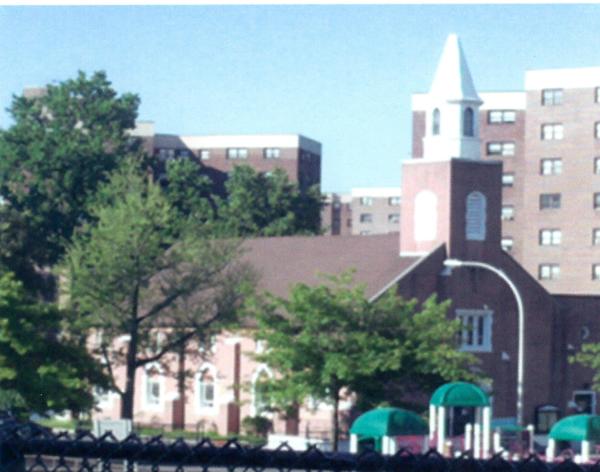 The Bethel Baptist Church congregation now at one Fisher Ct started in 1885 by former slaves meeting in a home. The church moved to Fisher Ave in 1890 but since then the structure has undergone many changes.
Mount Hope African Methodist Episcopal (AME) Zion Church now located at 65 Lake St was established in 1827. The people who first established this church came from West Harrison in the Silver Lake area called “The Hills.” They formed the Ashbury Colored People’s Church after being liberated from slavery by the Quakers of Purchase. The cemetery is part of the Silver Lake Preserve and is along a Heritage Trail on Buckout Rd (east side). There are also remains from the original church in the area. The AME Mount Hope Zion Church claims ownership of this historic Stoney Hill Cemetery but Harrison refuses to relinquish the rights to the cemetery.
 Our Lady of Mount Carmel on South Lexington Ave was established by Italian Americans in 1889. The façade of the 1933 structure is a replica of Santa Maria Della Pieta in Venice, Italy with the inside designed after Santa Maria Maggiore in Rome Italy. The 200 feet high gold leaf dome of the church was designed after the Church of San Lorenzo, the Cathedral of Lugano, in Switzerland.
 Temple Israel first founded in 1909 as Sons of Israel is now located at 280 Old Mamaroneck Ave. From 1906 to 1911, Jews met for services at the former Admiral Dot Hotel on Railroad Ave (now Main Street). After the Hotel burned down, the Congregation constructed a temple on Fisher Avenue in 1911. Today the building on Fisher Ave is the Allen AME Church. The Hebrew Institute was founded in 1915 and is located at 20 Greenridge Ave.
 The Church of St. Bernard at 51 Prospect goes back to 1926.
 Church of Lady of Sorrows at 920 Mamaroneck Ave dates back to 1929 and the Church in the Highlands on Bryant Avenue dates to 1922. The church was once part of Good Counsel Sisters of Divine Compassion. It was built on land where the Gedney farming family had a home.
The Ridgeway Alliance Church at 465 Ridgeway Alliance Church was established in 1907.  St John, The Evangelist Parish at 148 Hamilton Ave, was founded in 1868 and their current building was dedicated in 1892.
 St Mathews Church established in 1895 dedicated church on Mamaroneck Ave in 1925

The First Christ Scientist Church established around 1899 at 34 Maple Ave has its oldest section that dates from 1916 with other additions dating from 1925 and 1936. The Reading Room dates from 1954.
An Update on Houses of Worship in Today’s WP:
Today’s WP has two Buddhist Community Centers (Soka Gakkai; Shinnyo) along with a number of Synagogues of different branches (Reconstructionist, Reform; Orthodox, Conservative and Interfaith). WP has numerous Christian Churches/Organizations of various denominations. A Hindu Temple is being constructed in WP at 390 North St. The WP Islamic Center located at the Galleria is now at 768 North St till it builds its new home in Greenburgh near the WP border.
For information on other houses of worship not seen here see other entries under History of White Plains (N Broadway & Business District sections) or do search of site.
White Plains Historic Businesses & Organizations
This entry is an updated version of “Businesses and Organizations” in White Plains, NY: A City of Contrasts:
White Plains (WP) has a number of businesses and organizations that were established before 1940:
Chillemi Shoe Repair (established 1949) is going to move from WP Mall to Church St. There are now plans to demolish and replace the mall.
M.L. Condon (lumber) Company on Ferris Ave dates from 1912. Fisher & Miller Inc (meats) at 85 Westmoreland Ave has been in business since 1934.
Lee’s Funeral Home established in 1915 is now on Fisher Ave. Sam’s of Gedney Way, a restaurant since 1932, is still located on the Gedney Way but moved to its present locale in 1969. See their website for more information. Amodio’s Nursery on Mamaroneck Ave dates back to 1939.
 The Young Men’s Christian Association (YMCA) was established back in 1896 and moved to 250 Mamaroneck Ave in 1928. In 1967, the older building was renovated and expanded. Announced in 2019 were plans to replace building with residential housing. Building started to be taken down in 2021. YWCA of White Plains and Central Westchester dates from 1929 and more info is in another entry on N Broadway.
The Music Conservatory of Westchester was founded in 1929 and is now located on Central Ave. The Rotary Club dates back to 1919.
 The 1928 Belmont Hotel became the Roger Smith Hotel in 1935. WFAS first broadcast from the Hotel before it moved to Hartsdale. The building that became the Coachman Hotel in 1977 was taken over by Westchester County during the 1980’s becoming the Coachman Family Center.
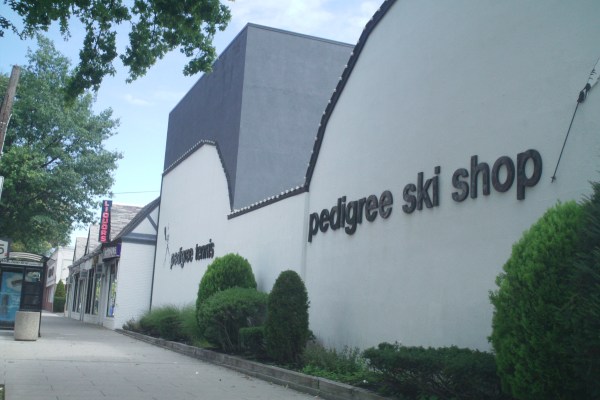
The Pix Theater (1935) at 355 Mamaroneck Ave was first theatre in Westchester made for “talkies,” with a 440 seat auditorium. Closed in 1976, it was converted into restaurant and now it is part of the Pedigree Ski Shop. The former Colony Movie Theatre is still on Mamaroneck but is now completely occupied by stores & offices.
Mail service in WP began during colonial days with the establishment of the post road. The Post Office (below), that opened in 1932 once housed the Battle of WP mural displayed at the library, is now a County Building (25 Quarropas Ave). It is located on Grand St. at Quarropas Ave corner.  Nu-Way Dry Cleaners established in 1945 was established by the Bayliss family. Fredericks was a tailors in 1905 and became a dry cleaners in 1927.
McMahon, Lyon & Harnett Funeral Home established in 1942 as Tracy-McMahon (Frank McMahon & father-in-law George Tracy) moved in 1946 to its present location on Mamaroneck Ave. In 1964, the business expanded to include the 100 yr old Lyon-Harnett Undertakers. Ballard- Durand Funeral Home started with Arthur Ballard who came to WP in 1930 but was established in NY City late in late 1800’s. Was on Cromwell Place in 1930 but now on Maple Ave by 1938. George Durand joined the home soon after. Building was home of Humphrey Lynch built in early 1900’s by Emmett E Waite.
Peck’s Skate Shop at 31 Lake St has been in business since 1936.
Thomsons Art & Frame has been in business over 75 yrs started. Business started on E Post Rd in 1925 and has been owned by the Sohn Family for about 31 yrs is at 184 Mamaroneck Ave. Right next door, Sam Ash Music (established in 1924 Brooklyn) has been in WP during the late 60’s but the store took over a music store that had a 20 yr history.
Colonial Needle Company now on Westmorekand Ave started in Watertown NY in 1888 under a different name. When they moved to Yonkers, it got its present name.
Kent Supply Company established in 1931 has a location on Ferris Ave.
Sears started as a catalog company in 1895 and there has been a store in WP for decades.
Scarlet Deli dates from 1964. Klahr Glass now at 65 Bank St was established in 1932.
Elks Club in WP dates from 1900 was established in NYC in 1867-8 as drinking club on Elk St.
El Centro Hispano, Inc., serving the needs of the growing Hispanic Community, was established in 1974 and became incorporated in 2000.
White Plains Beautification Foundation has origins that go back to 1952; was incorporated in 1965. They support; maintain gardens throughout the city.
The Women’s Club of WP has origins that go back to 1904.
Organizations/businesses not found here might be found in other sections as well as more information. Many businesses and organizations have their own websites and Social Media pages.
White Plains’ Quarry and Farms
Entry is an updated version of the section found in White Plains, New York: A City of Contrasts under “Quarry and Farms.”
Agriculture was the economic basis for White Plains (WP) from its beginnings till the mid-1800’s. Small farms made up most of WP and its population remained small. When trains train came in 1844, everything changed.
Rock remains from the Davis Quarry at the corner of Oakwood and Prospect Aves can still be found. Stone from this quarry was used to build the third county court house on Court Street. Davis Brook (formerly Golden Pine Brook) flowed from the south near where the quarry was located. Today the brook runs underground and still empties into the Bronx River.


WP was once made up of numerous farms. The last working farm in WP, Baldwin Farm was made into a city park with a portion used for community gardens. In 1823, James Foster bought the land on Hall Ave and created the Pine Tree Farm. When James died his daughter Sarah Foster’s husband Horace Baldwin took over the farm. The last Baldwin to live on the farm died in 1979 with the house being destroyed by a fire in 1982.
Further down the road is what remains of the family’s burial plot. The area just north on Buckout Rd in West Harrison is part of a number of urban legends. The Baldwin Farm entrance and community gardens is on Hall Ave. The Baldwin Cemetery is located further down the road but there is only one grave stone standing.

Gedney Farms, purchased in 1740 by John Gedney, became a developed neighborhood of houses and golf courses. The last home owned by the Gedney Family (circa 1854) is located at corner of Burling Ave and Gedney Esplanade. The structure is now a residence but housed the Westchester Music Conservatory before it moved to Central Ave. A number of city neighborhoods, streets and businesses bare the Gedney name.
The Westchester Hills Golf Club on Ridgeway was founded in 1913. The Ridgeway Golf Course that opened in 1923 was sold to French American School of NY at end of 2010. Their plan to build a school on the land has yet to happen due to strong community opposition and law suits.
The Maple Moor Golf Course opened in 1923 and was the Howard J. Griffin farm in 1879 (pictured below).

White Plains today has no more farms but there are a number of community gardens and a Farmer’s Market.
Memorials in White Plains
 Throughout White Plains, there are trees, benches, water structures, gardens and monuments dedicated to the memory of past residents, veterans, public servants, and those who made major contributions to our nation.
Other memorials like the Garden of Remembrance commemorate important events in history.
 Garden of Remembrance on Martine Ave is a memorial garden in remembrance of the Holocaust and to the millions that died at the hands of the Nazis between 1933 and 1945. The small garden is open daily to the public. There are plantings, a seating area, the sculpture “Gates of Remembrance” ( 1992; pictured above) and a statue for Ann Frank. Located at 148 Martine Ave next to the Michaelian Building, the garden was created by the Holocaust and Human Rights Education Center.
Plaques and benches throughout the city honor individuals.
A statue of Martin Luther King Jr. is on  Martin Luther King Jr Boulevard in front of the court house. The street also commemorates the Civil Right leader.
There is a memorial for fallen fire fighters in front of Fire Department Headquarters on Mamaroneck Ave.
 The memorial at Silver Lake Park commemorates those who died on 9-11-2001 from the community.
“Cuba Free,” was erected in 1909 honoring those who died in the Spanish-American War at the intersection of Park and Hillside Aves. Samuel J. Walton, on e of the soldiers listed on the marker, was buried in WP Rural Cemetery where his grave is marked with a stone carving of a tree stump. There are a number of monuments and memorials for the Battle of White Plains, Civil War, WWI and other wars around the city and at City Hall (in the entrance area).
 The first streets in White Plains were dirt roads and horses were the main mode of transport. An old horse trough given to the city by the WP Branch of the ASPCA is next to Public Safety building on S Lexington Ave. It was re-dedicated by the WP Beautification Foundation in 1992.
The City also honors people by dedicating sections of streets in their name. The blue signs are found just below street name sign.
Feeling Like Alice in Wonderland

Feeling like I’m living in a work of fiction and one in which the first chapter wasn’t very good. Have the urge to peek at the ending but not sure I’d like it.
For months, I’ve felt more disconnected to the world. I can’t believe the events that have transpired during the last few months. Feel like I’ve entered a fictionalized version of the real world where decorum has no place.
Am I now in Wonderland?
 Sandy's Written Creations
Proud to Be An American!
Posted on January 22, 2017 by sandraharrison1954
Leave a Comment
On a rainy day in Washington when the skies were weeping, I was mourning. I prayed for those who have similar values to have the strength to make their voices heard against the new Presidency.
I’m not one to go to protests but I am very proud of those standing up for women’s rights all over the world. This was inspirational!
We will need to be vigilant and active calling our representatives to give a voice to our concerns when Congress and the President moves in a direction that will destroy us.
I pray for hope, peace and a kinder gentler truthful world.
Share this: Sandy's Written Creations