Dealing With A Noisy Neighbor

What can you do about a noisy neighbor and get results?

Been dealing with a really bad neighbor about 12 years. Live in Co-op as a share holder. Offender is also share holder. Going through building management/Board, police or even approaching neighbor just did not work and actually made things worse. City even changed noise ordinances making noise complaints even more difficult to use.

Knowing How Sound Travels Helps:

Did lots of research on noise. There are two types of noise- audio and impact. Audio noise is loud music, TV, talking and sounds that passes through the air.  Impact noise is direct contact with a surface area (walls, ceilings and floors) and/or connected to other surfaces (i.e. banging on wall traveling to floor and/or ceiling). Audio is easier to deal with.

Impact noise is almost impossible to stop except at source. Audio noise can also make impact noise. For example, a loud speaker that touches a surface can beat into that surface.

Audio noise in my building travels up and down between units stacked on top of each other but not from units on same floor. Had a neighbor tap dancing on their wooden floor affect my refrigerator. It shook and this was with an apartment next to mine. Hammering a surface directly or indirectly can travel everywhere. My building had a pump going all night long that I heard from the other side of building. This was a building ordinance violation in my municipality so a complaint to City stopped this. It sounded like a whale in the ocean.

Knowing Your Rights:

You have a right to a quiet environment in your building and/or municipality. This can be written in a lease,  house rules or in a municipal ordinance. No one in turn should disturb one’s neighbor unnecessarily.

My building dates from 1954 and found out that there is an empty space between floors. Sound coming from above is often worse than from below.  Floors in my building require that 80% of floors be covered except for kitchen and bathroom. These floors needing carpeting are wooden. Sound travels from surface to surface (i.e. floor to walls to ceiling) by way of the “studs” or the wood beams that connect the surfaces to each other. Sheetrock does little to absorb noise and travels through it. Noise travels easily in open space like the space between ceiling and floor. When one hits or walks on ones floor, the impact of this hits the studs and the sound waves created by this action travels down to the floor below.

Action Taken With Temporary or Worse Result:

  • Speaking with Offender.
  • Calling, Speaking to or writing letter to building management and/or Board. Keep copies of letters and e-mails. Follow up calls with either e-mail or letter.
  • Calling police who might show up and talk to neighbor but do little else. There might not be a violation. These ordinances are often referred to as nuisance laws. Read your ordinances in your community. They can also change. One policeman did tell me that the women above me had no carpets but had children running around in sneakers late at night (10:30 pm). I realized after one visit by police that my neighbor wasn’t even home. Her music was running loudly but she wasn’t even in the unit. Get reports by police and ask them to put in report things like they got no answer and/or that there were no carpets.

Action Taken That Got Results:

  • Masking noise: Running white noise machines, fans or even air-conditioners. Out of season, fans can be faced to wall. You can also mask noise from the outside and having storm windows or double panes is better than one pane. But you can also put another barrier on windows that can be effective for outside noises.
  • Playing an audio device (had to get surround sound and additional speakers cause  my TV wasn’t loud enough).
  • Striking back: Hitting a surface with a strong whack. You do not have to strike the ceiling but the walls connected to them. Hitting door metal frames is effective. Make sure the object you use will not damage your surface.
  • Running a loud vacuum cleaner or motor (i.e. blender or electric tool). This is not the greatest method because you could damage machine. Doing this when you know your neighbor is sleeping can be effective. I figured out when my neighbor is in the unit or sleeping. Running an audio device does not require the offender being home. My neighbor runs hers when she isn’t in her unit. I did not hear foot steps or other banging. Car being gone from parking space is another indication.
  • Sounding an alarm (loud noise). I got one that is used on doors and when I separate two parts, the alarm sounds. It is loud for me but this has been the only thing that seems to work with impact noise. I use it in my bed when neighbor gets up between 5 and 6 am and is noisy dropping things, slamming drawers or just walking in shoes on bare wooden floors.

Things Considered Doing

  • Getting a Gong or loud instrument like an electric guitar with amplifier. Have played piano but did not work.
  • Suing. But one needs proof and damages. Saw couple sue in small claims court (People’s Court) with wife winning a bigger cash reward (max) cause she had doctor bills showing pain and suffering. Husband did not have medical damages but won a lesser amount. Suit was made against building (not tenant) who did not have proper floor covering with a bunch of cats jumping about the apartment above the couple’s. I saw on YouTube. I myself was able to tape noise using video showing my apartment, and time on TV.
  • Putting in sound proofing but this is not fully effective or easy to do. I asked to do this by filling in space between my ceiling and floor above but building did not allow. Could be a fire hazard. I considered putting in a ceiling below other but this is expensive and may only dampen 10-20% of noise. Would have to do with walls and even floors cause sound travels down or through them. Cost could be high and finding a contractor is difficult. All work has to go through my Board. They do sell sheetrock that dampers sound, clips for studs to attach surfaces that have rubber dampers and black plastic sheets that dampen noise that can be placed on ceilings, paint and even tape for connecting breaks in surfaces.

Being a Good And Quiet Neighbor:

One can lessen the noise you make by:

  • Following rules of building by covering floors. Carpets need to be thick, large and have rubber under them. Small throw rugs do not do the trick.
  • Walk on covered floors and not uncovered areas.
  • Place things on floor and avoid dropping them.
  • Avoid banging furniture up against walls, floor or ceilings (kitchen cabinets).
  • Close draws and not bang them shut.
  • Deal with squeaks at source. Oil them with even cooking oil.
  • Avoid banging cabinets shut especially the noisy bathroom wall cabinet over sink.
  • Doing construction at times allowed by building and/or municipality.
  • You can go barefoot and/or shoeless. One can wear slippers without heavy bottoms or heels or socks with rubber grips on bottoms . Socks can be dangerous on a slippery surface. Socks with rubber grips on bottoms are given at hospitals and airplanes (upper classes) but they can be purchased.
  • Lifting furniture when moving or put felt on bottom areas. You also avoiding scrapping your floors causing scratches.

Good luck and let me know your stories!

A Good Read

I’m an avid mystery book reader. Some of my favorite mystery authors include:

Jonathan Kellerman          Karin Slaughter             Martha Grimes

Linda Feinstein                   Sue Grafton                    Peter May

Ann Cleaves                      Mary Higgins Clark          Nevada Barr

Sara Paretsky                    James Lee Burke             Perri O’ Shaughnessy

Walter Mosley                  Tess Gerritson                   Lee Child

John Sanford                    Richard North Patterson   Mo Hayder

——————————————————

Other favorite authors (now and in the past) include:

Dean Koontz           Stieg Larsson           Jim Butcher           Fiona Davis

Douglas Preston/Lincoln Child          Sidney Shelton

Ann Rice        John Sandford       Alexandre Dumas     Robin Cook

Leo Tolstoy      Ayn Rand

—————————————————————–

Biographies Worth Reading:

Jackson Pollack: An American Saga

You Can’t Be Serious (John McEnroe)

Open: An Autobiography (Andre Agassi)

Parks of White Plains: History Behind the Name

White Plains (WP) Historic Society’s newsletter posted article below on the history behind the names of City’s parks:

It should be noted that the City has other parks (see information posted below from City’s Park’s & Recreation Dept.), plazas and playgrounds (not in a park) and not listed in Newsletter above (i.e. Renaissance Plaza, Bark Park, Bryant-Mamaroneck Park & Mitchell Place Tot Lot). Baldwin Farm is named for former farm that makes up the park. Information can be found in blog entry on Quarry & Farms.

There are private gardens, parklets (memorial gardens) and Westchester County parks/gardens throughout WP.

Battle Hill Park is a recreational park on Battle Hill and is also named for hill. Chatterton Playground is named for the first name for Battle Hill during Colonial times. The hill refers to the family living on the hill. Chatterton was tenant farmer of Philipse Family.

Ridgeway Nature Trail starts on Ridgeway school.

Garden of Remembrance commemorating Holocaust is on Westchester County land on Martine Ave. Bronx River Parkway Reservation is a County park running in western part of City.  wp parkspark amenities


Buried in White Plains

Entry is from White Plains, NY: A City of Contrasts from chapter “North Broadway Area.”

Both the Presbyterian Church & Cemetery and the White Plains (WP) Rural Cemetery on N Broadway contain graves from colonial times and veterans of the Battle of WP. As was once customary, people had family burial plots near their homes and WP still has three smaller burial areas.
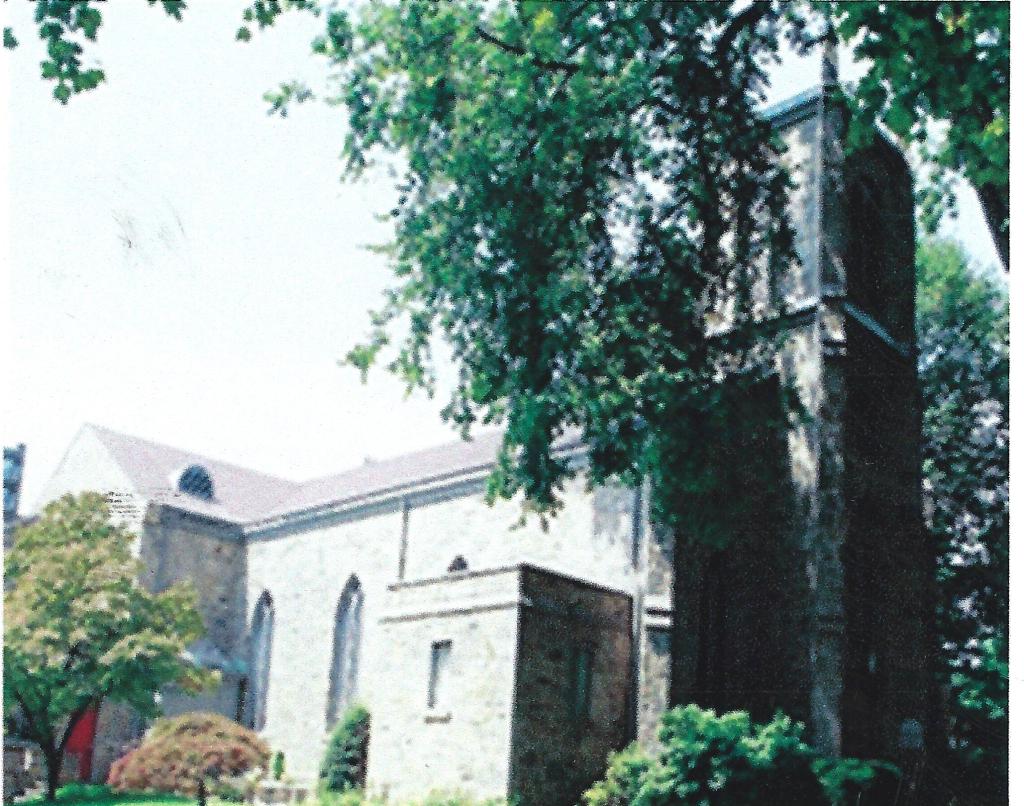
74Today’s Presbyterian Church dates from 1855 with additions added in 1924 and 1958. Before constructing the first meeting house in 1727, services were held in the homes of its members as far back as 1722. The first structure built on the site was destroyed by fire as well as its 1824 replacement. The first structure was destroyed during the fire set by Major Austin after the Battle of WP.

73

Parts of the graveyard were moved to the north side of the chapel to make room for  additions. Graves date from 1709. The church’s first ordained minister, Reverend John Smith (1702-1771) was buried under the church. His tomb stone was originally in the grave yard but was later placed inside the church. Jacob Purdy of the Purdy House is buried in the cemetery .
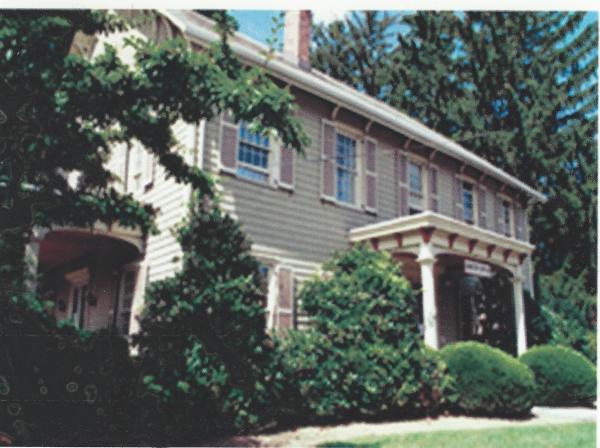
77The WP Rural Cemetery, incorporated in 1854, bought the land bordering the property of the Methodist Church in 1855. The Church Building (1797) became the Cemetery’s office and replaced the first structure that was destroyed by fire in 1795. The Church’s grave yard dates back to 1797.

In 1966, before the WP Hotel (now Esplanade) was constructed, the burial plots near the corner of S Broadway and the E Post R that were part of the Grace Church Cemetery and Hatfield Family Burial Ground were relocated to the Rural Cemetery. Grace Church’s first building of 1825 was located on the site till it was abandoned in 1864 when the congregation moved to its new building on Main St. The Hatfield relations were among the first families to settle in White Plains. Captain Abraham Hatfield owned property and the Hatfield Tavern that was located near the first courthouse. Gilbert Hatfield’s home on Hatfield Hill was used by Americans during the Battle of WP. The home was located at 1020 Hall Ave till around 2013 when it was demolished. The former home of Daniel Hatfield still exists on Lake St.

Eight graves from the Dick Family Burial Ground (1798-1854) were also relocated to the WP Rural Cemetery in the early 1900’s from a section of the city along the south side Westchester Ave between Bryant Ave and Meadowbrook Rd.

79WP Rural Cemetery has a cannon and memorials honoring veterans buried in the cemetery.

80A small burial area for Harriott-Leonard Family on West Street remains with one tombstone for Abraham Leonard. In more recent times, it received attention by being cleared of overgrowth.

The much larger Purdy Cemetery is along Mamaroneck Ave just south of Hillair Circle. Both burial plots have gotten some recent attention. On November 7, 2010, a new headstone was rededicated for Hercules Wessels, one of several people who were buried in the Purdy Cemetery. The WP Historical Society has been restoring other tombstones in the grave site that is on private property but is now managed by the Historic Society. More information can be found  on their website at whiteplainshistory.org.
81.82

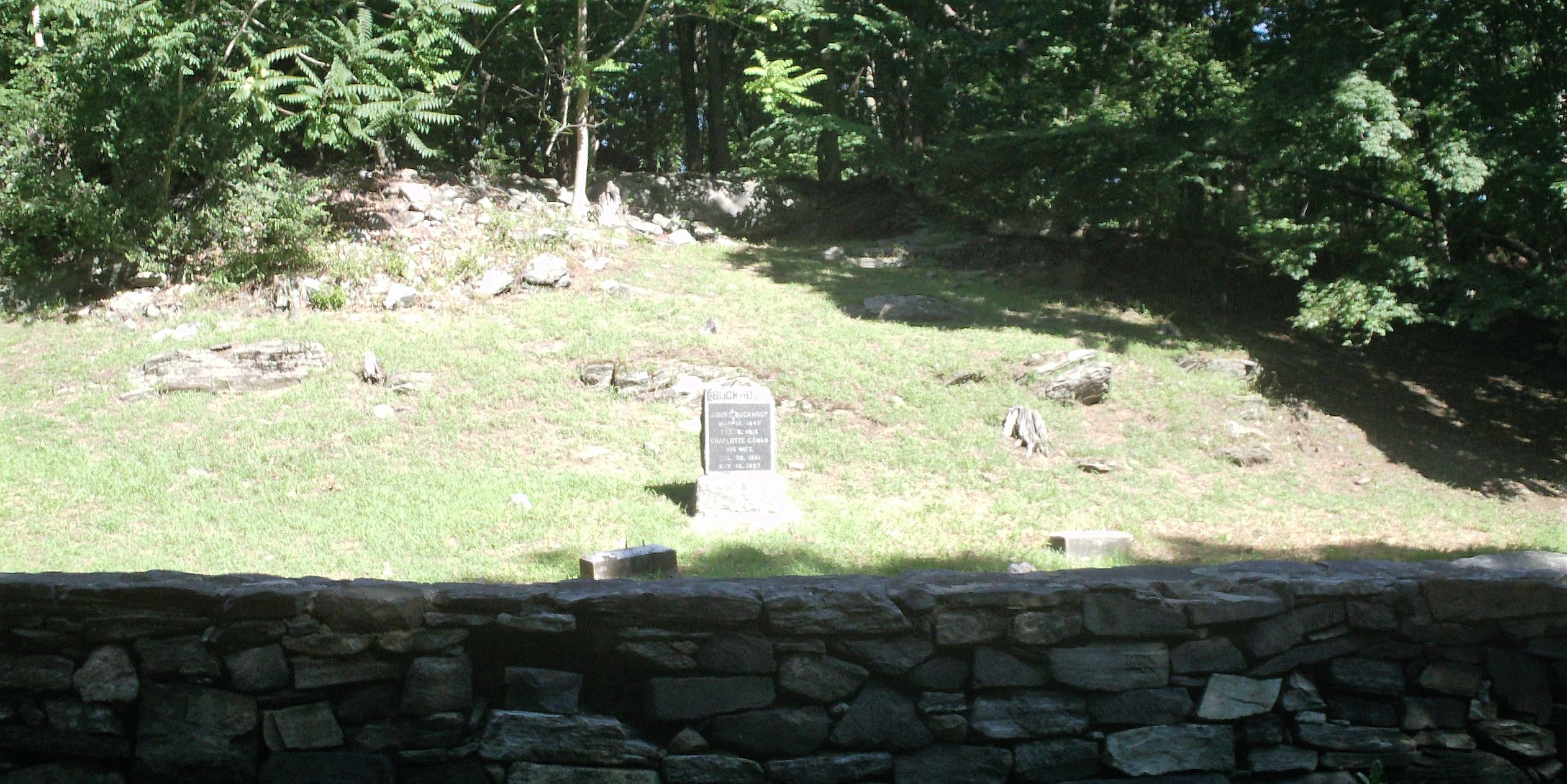
What remains of the Foster Family Burial Plot is located on Hall Ave where it becomes Buckout Rd.   The Baldwin Cemetery is located further down the road from the Baldwin Farm that is now a city park.  There is only one grave stone standing. The cemetery was recently named a Historic Landmark by the City.DSC03056 (2).JPG
There are former members (including the founders) of Good Counsel buried at the Chapel of Divine Compassion on N Broadway. Father William A. Dunphy pastor of St John the Evangelist Church (1885-1891) is interred under the altar in the center of the sanctuary of the church.

For detail information on cemeteries see Patrick Raferty’s books: The Cemeteries of Westchester County. Erik Pleska has a book and website on Buckout Rd. of West Harrison @bedofnailz.com. 

White Plains’ Older Homes

This entry is an updated version of a section from White Plains, New York:  City of Contrasts in chapter “Houses:”

Some of White Plains (WP) early farms would later became country estates for wealthy New Yorkers (later 1800’s to early 1900’s), private schools, hospitals, golf courses, and even a large hotel but as the population grew in the 20th century the Business District expanded and many of the large estates were subdivided to build smaller homes and apartment buildings. Some mansions were preserved by being repurposed for non-residential uses.

A small number of homes that date from the 1700’s can still be found but most have been moved from their original sites. Some homes built during the 1800’s can also be found but the majority of homes in the city were built during the 20th century. In searching for older homes, the Internet can be a useful tool. Most homes listed for sale online provide the date of construction.  The City’s Assessors Office is another good source.
36
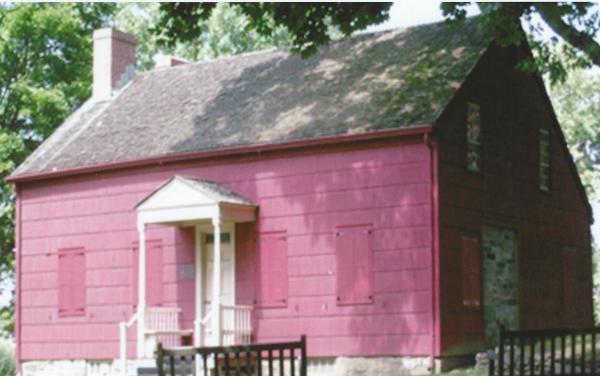
Purdy House

Besides the Jacob Purdy House (above) there a few other structures in WP that date from the colonial period. The Caleb Hyatt house (below) where Captain Benjamin Lyon lived during the American Revolution was moved from North St (where the offices of the former 1956 General Foods Building are today) to 28 Colonial Rd. In 1953, George Simpson moved the house and lived in it for a time.

106
Caleb Hyatt House
107
Anthony Miller

In 1951, Simpson moved the former Anthony Miller (above house in blue) home from its location at 525 N Broadway to 379 Church St.  The house is at the end of Church St and dates from the early 1720’s. The yellow house on N Broadway dates from 1776.  Information is from Assessors Office and real estate websites.

Colonial

The Queen Ann Victorian (brown) house at 108 N Broadway dates from around 1900 and was considered for a historic landmark by the city’s Historic Preservation Commission. After being sold for $750k in 2019 the house was painted yellow. Believe it is being used by different tenants.

dsc03094

Victorian home at 90 Greenridge Ave that dates from 1890. There was a source that stated that the house was designed by architect of Lyndhurst, Alexander Jackson Davis but the historic society gave a sensible argument that this could not be the case.
DSC05819 (2)

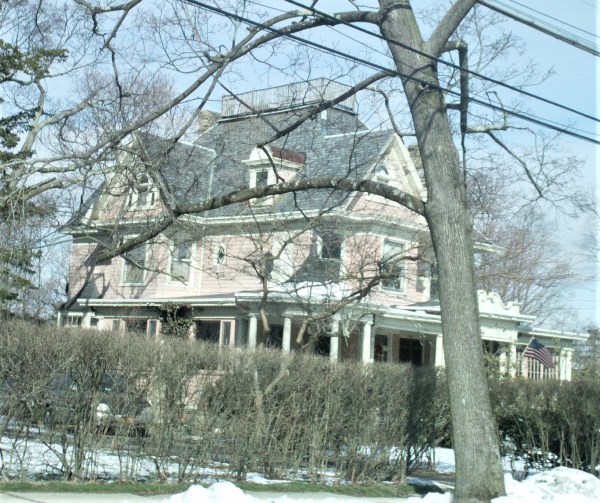
Another Victorian built in 1893 is at 99 Quinby Ave. It might have been a school at one time but cannot find source.

The former Carpenter House dating from 1874 can be found at it’s original location on Purdy Hill just above the Hillside Village Condominiums at 16 Park Terrace.
108
Carpenter

The Percy Grainger House at 7 Cromwell Pl was built in 1893 for the Cromwell family. The composer lived in the house from 1921 to 1961 and his widow stayed on till 1979. The house is maintained as a museum by the Percy Grainger Society (see website for more information).

109

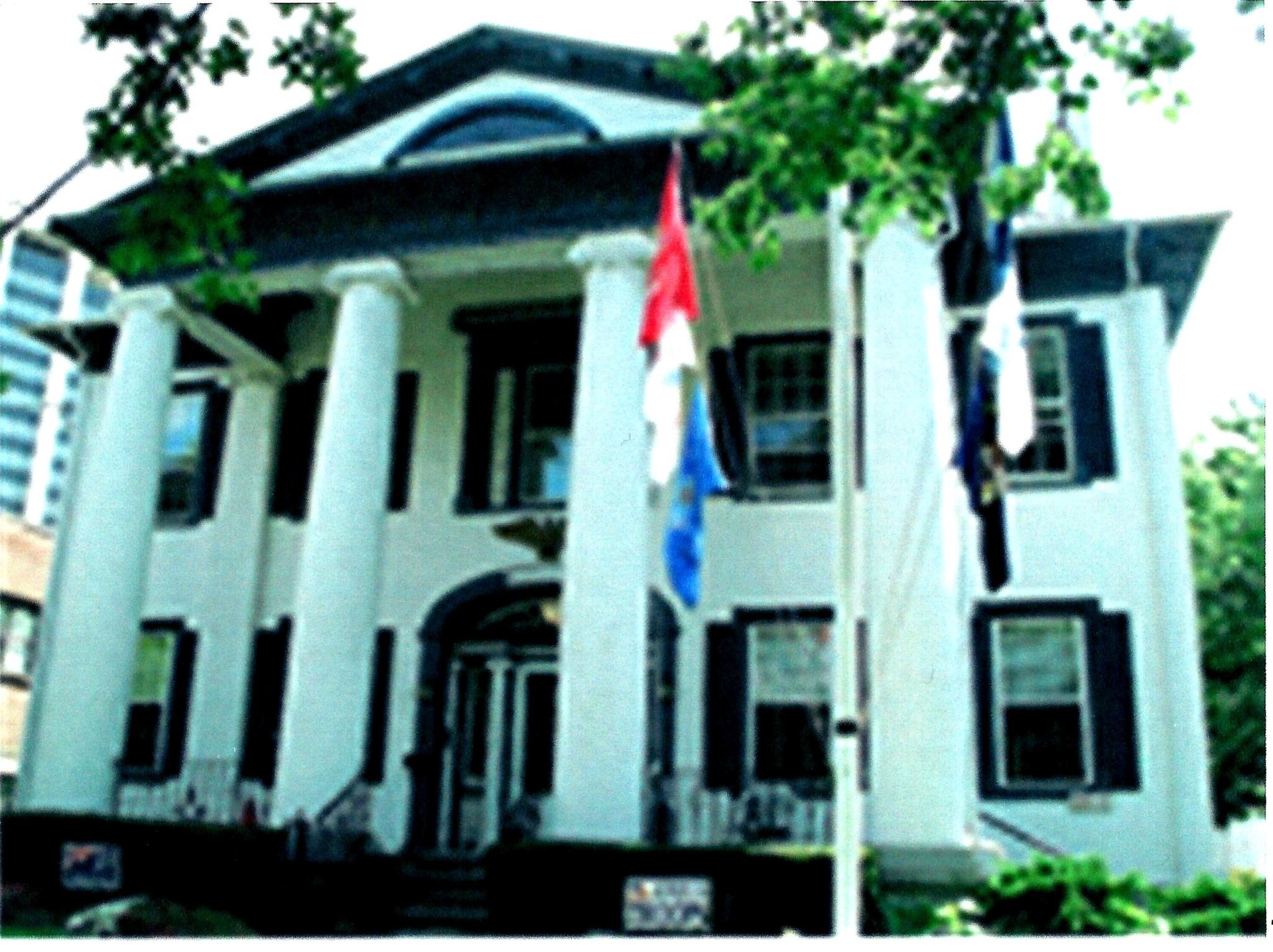
The 1810 home of Minot Mitchell (a lawyer) was moved to Mitchell Pl and is used by the American Legion. Originally, it was on S Broadway (where Cameo House is today) and designed to resemble the second court house in WP.
110

The Soundview Manor at 283 Soundview Ave was originally built as a wedding gift for Robert L. Dula. The house dating back to 1920 had been a Bed & Breakfast Inn for a number of years but the house was more recently sold to a developer who has plans to demolish the house and subdivide the property. The house is now in poor condition but was named a historic landmark by WP’s Historic Preservation Commission.

111
Ballard-Durand

The Ballard-Durand Funeral Home (left) at corner of Maple Ave and S Broadway was once a residence that was built before 1938 when it was modernized for its present use.

112

The former C.V Rich Mansion (above) on Ridgeway Avenue dates from 1911 became the location for the Woman’s Club of WP in 1931. The group has roots back to 1904 but the Club was established in 1916. Additions to the original structure were completed in 1932.

113

The original house built by Daniel Hatfield House in 1786 is at 49 Lake St. Renovations and the store in front were added in 1924. The chimney foundation was made with cannon balls found in the area from the Battle of WP. The former Gilbert Hatfield house (1020 Hall Ave) that was used by officers of American Continental Army during the Battle of WP was finally located on Hall Ave but was demolished before publication of book. Pictures were actually online.

The stone sided house (below left) at 791 North St dates from 1895.  The home at 880 North St is the former home of James Gibbons who died in 1908.

115

The house owned by Howard J. Griffin is also located on west side of North St at 1131 North St and is across from the Maple Moor Golf Course.  The house has a section which is believed to date back to colonial times. The house was renovated in 1923.  Griffin’s son Chauncey served as mayor of WP from 1931 to 1933. The farmland purchased by Howard Griffin in 1879, which contained his cider mill, became the Maple Moor Golf Course in 1925.

Former 1817 farmhouse is located at 250 Rosedale Ave. The former Gedney Farmhouse at 30 Burling Ave dates from around 1854 (or 1859 depending on source). It was used by the Westchester Music Conservatory when they first came to WP till they moved to Central Park Ave. Howard Willet, a gentleman farmer, bought Gedney Farm in 1897 and his second home (made of brick) is now at 25 Hathaway Lane. His first home burned down so this one was built after 1909. House address was on Oxford when it was built but the exact date of construction is not available.
117

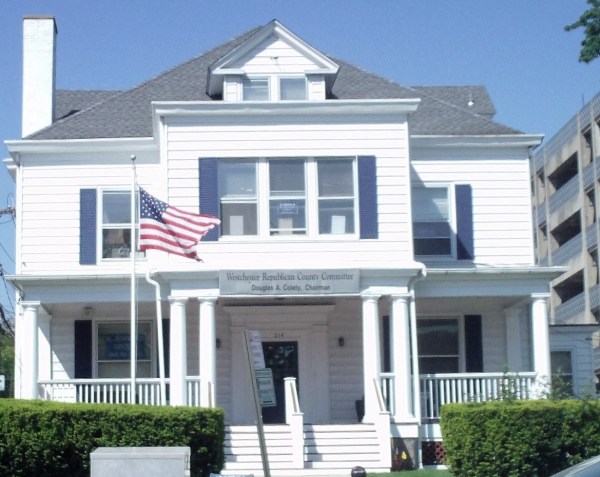
The former Ernest Erbeck home on Mamaroneck Ave is like one of the last houses left on the street in the Business District. The structure (below) dates back to the early 1900’s.
DSC04060 (2)
House at 154 Purdy Ave dates back to 1850

Little Farm is off of North St and the farmhouse dating from 1900 or earlier is still in the development of Little Lane. Information about this house and farm can be found on White Plains’ Historic Society’s website.

Information about the Purdy House and other homes in WP can be found in other blog entries of this website.

White Plains’ 1st Village Street

The following entry is an updated version from  “The Purchase of White Plains” chapter in White Plains, NY: A City of Contrasts:

cochran 1776 mapWhite Plains (WP) in Colonial days was largely made up of farms. Mills sprang up along  streams & its rivers bringing the village its earliest industry.

The center of the village was along a former Indian trail that is now the west side of N Broadway north of Main St and  south along what is now S Broadway & Maple Ave.

Along the dirt road was “the commons” or village green. Today, Tibbits Park and the other undeveloped areas left along the street are what remains of this former open space.

The Cochran Map (pictured above left) is a rendering of the original map held by Westchester County Archives (see their virtual archives) that was an early map drawn during the Battle of White Plains of Oct. 1776 by soldiers serving the American Continental Army.

14     13

At 52 North Broadway  in White Plains (WP) eleven histoic buildings make up the Good Counsel Complex. In 1886, Sisters of the Divine Compassion was founded in NY City by Mother Ma68ry Veronica and Monsignor Thomas S. Preston. They bought the N Broadway property in 1892 and opened the House of Nazareth for children. Gate to property is on left.

In 1901, the Good Counsel Training School opened and in 1918 they began a high school.  The Academy of Our Lady of Good Counsel was established in 1922 and its buildings are in the center of the grounds. At the end of 2014-2015 school year, the high school closed and the elementary school moved to another location.

The Convent was established in 1908 and its buildings were of the Spanish mission style.  On the property, are two former residences: the Tilford House completed in 1856, and  Mapleton House completed in 1867 ( pictured below). Mapleton

Tilford House was moved & repurposed when the Chapel of Divine Compassion (left) was constructed on the site in 1897. The co-founders of Good Counsel are buried in the church along with former clergy & Congressional Presidents.

The Complex was sold in 2015 to a developer who has plans to demolish most of the buildings. Their plan is to move Mapleton next to the church that still remains in the hands of the “sisters.

Since 1976, Pace University has shared the original complex. Preston Hall (dating from 1931)  once housed Good Counsel College that was established in 1923.  In  1972, the college was renamed WP College.  Original gates can be found at the entrance on N Broadway.

72

Across the street from the Complex area, are some of the city’s oldest trees.

Since the 1930’s, N/ S Broadway, and the Post Rd became part of New York Route 22. The post road was used for mail delivery during colonial times and an old 30 mile marker that was located where Maple Ave and South Broadway intercepted.  WP Library is its keeper and is now in reopened Local History Room at WP Library (below).

DSC04969 (2)

Presbyterian Church & Cemetery and the WP Rural Cemetery on N Broadway contain graves from colonial times including those who fought in the Battle of WP. Information about the cemeteries can be found in the entry of website: Buried in WP.PS_20141008221930

Today’s Presbyterian Church (left) dates from 1855 with additions added in 1924 and 1958. Before constructing the first meeting house in 1727, services were held in the homes of its members as far back as 1722. The first structure built on the site was destroyed by fire by Major Austin after the Battle of WP in Nov 1776. A replacement 1825 structure would also be destroyed by fire.

77

The WP Rural Cemetery, incorporated in 1854, bought the land bordering the property of the Methodist Church in 1855. The Church Building (1797, above)) became the Cemetery’s office and replaced the first structure that was destroyed by fire in 1795. The Church’s grave yard dates back to 1797. For more information about the cemetery see the entry of website: Buried in WP.

The Tudor style building, the Kennedy-Duncan Building pictured below left) at 69 N Broadway  is the older part of the YWCA residence and dates from 1914.  It was the former Presbyterian Rest For Convalescence and in 2011 was put on the National Register of Historic Places. The YWCA started as a girls club in 1929, was incorporated in 1930 and has offered housing for woman since 1930.  The newer addition dates from 1970.

84       85

Along N Broadway and on the streets nearby there are a number of buildings, private homes and apartment buildings that were built before 1940. The house at 96 N Broadway (yellow house pictured below left) is listed by WP as dating from 1776. The Colonial Mansion (1899) is at 139 N Broadway (pictured below right). For more information see “Businesses and Organizations” blog entry,

Colonial      111

.

.   87 88

Broadpark Lodge (1927-8) on Westchester Ave and Main St has some noteworthy architectural details such as a weather vane on a high tower (pictured above) 89and small carved heads decorating the building.

Other older apartments on the street are The Chateau (1928) at 87 N Broadway, the Dorchester (1939) at 40 N Broadway and Broadlawn (pictured left; 1928) at 20 North Broadway. Broadlawn is of French provincial design and the grounds contain two rare Dutch Elms.

. 90 91

One S Broadway (1937), the Brentwood (1935-6) at 300 Main St (above left), the Wellington (1925) at 312 Main Street, the Winton (pictured above right;1939) at 210 Martine, the Parkville House (1920) at 16 Lake St, the Granada Arms (1929) at 30 Winsor Terrance, Franklin Manor/Court (1928) on Franklin Ave, and the Royal View Condominiums (1928) at 42 Barker Ave. 

92                                                      Royal View
DSC03673                                                1 S Broadway

Other apartment buildings in the city that predate 1940 include: Saxon House (1928) at 23 Old Mamaroneck Rd, Surrey Strathmore (1939) at 90 Bryant Ave, and Bristol House (1930) at 10 Nosband Ave.

Historic Traces in White Plains Business District (BD)

An updated version of entry of White Plains, New York: A City of Contrasts from “Business District” chapter:

Most of the buildings in White Plains’ Business District (BD) were built in the 20th century. Some of the structures were repurposed or rebuilt though there many structures that are original to their location. Some buildings are on the National  Registry of Historic Places. In recent years, White Plains (WP)  formed a Historic Preservation Committee to designate local landmarks. These structures can be found on the City’s website (cityofwhiteplains.com).

Mamaroneck Ave, one of the City’s older roads runs all the way to the Village of Mamaroneck (established in 1661). The roadway changed over time running on what is now Old Mamaroneck Rd and where West St once intersected the roadway. Many of the buildings on Mamaroneck Ave remained during city’s largest urban renewal project of 1966 to 1980 giving one an idea of what the rest of the BD was like prior to that.

The former building (dating from 1929) that was at the corner of Post Rd and Mamaroneck Ave was recently demolished (around 2017). 93

The building once housed B. Altman’s clothing store and was replaced with The Mitchell apartments. Apartments. The building after the departments stores left housed a number of stores including a bridal shop and Democratic Committee.

After B. Altman’s moved to their own building where the Westchester is today, the building housed many different stores including Alexanders for about 5 years before they built their own building at what became the Pavillion (now demolished) just down the road. 

According to Assessors Office, address for 147 Mamaroneck Ave dates from 1942. The building once housed the Wallach Store and has since then housed a number of bar restaurants. Wallach’s was a clothing store and had a dog bar (water fountain for dogs) on sidewalk of Mamaroneck Ave till the more recent renovations.

Building at 142-6 Mamaroneck Ave dates from 1934. 

148 Mamaroneck Ave, White Plains, NY for sale - Building Photo - Image 1 of 1

95The City Center opened in 2003 on the block where the first Macy’s Store was located in 1948. It’s architectural design blends with the 2 former banks that are at the corners of Martine and Main St.

94

The former Home Savings Bank established in 1893 is at the Main St corner (dating from 1925). The building was repurposed for a restaurant. The original vault is used for seating.

DSC05179 (2)

The Peoples National Bank & Trust Company building  at the Martine Ave corner dates from 1929. The bank established in 1924 is now ArtsWestchester. The building was donated by JP Morgan and has many of its original fixtures. The bank’s vault is part of the exhibit gallery on the ground floor.

98

97

The Colony Theater building at 100 Mamaroneck Ave still has its 1926 crown (left). The building has been used by various businesses.

99

The home of Ernest Erbeck at 213 Mamaroneck Ave dates from the early 1900’s and presently houses the Westchester County Republican Committee, which was established in 1948.

Main St. formerly named Railroad Ave appears on maps as early as 1911. On an older map Main St does appear but in the S Broadway & Armory Pl area.

dsc01178Bar Building completed in 1928 is at 199-201 Main St and though threatened with demolition it was saved from new development and in 2007 was placed on the National Register of Historic Places. More info about the building is available in another blog entry on this website.dsc01186

dsc01188


Northcourt building at 175 Main St was completed in 1930.105

101

Grace Episcopal Church Congregation is the oldest building on Main St and congregation goes back to colonial times. Church Street gets its name from the church. Grace Church (left) moved to its present location from an older structure located near S Broadway. The church’s cemetery was also moved at a later time to WP’s Rural Cemetery for the building of the White Plains Hotel (that is now being renovated to be luxury apartments. The church had an annex at 1305 Mamaroneck Ave for a time (circa 1910) and there is a community center behind the church that was built in the 1900’s. 

102Lawyer Building, the former Westchester Title and Trust Company, is at the opposite corner of Church St and Main St (left). It once housed the Reporter Dispatch Newspaper and dates from 1926. Additions were added to the older structure.


103Except for the two top floors, the Kennedy Building at 2 Williams St dates from 1919. A smaller structure at 171 Main St dates from 1937.


Nearby on Martine Ave is the Masonic Building dating from 1908. 104


Tod Building (circa 1914) found at corner of Martine & Mamaroneck Aves that extends to Court St was built by John Miles. Miles constructed two twin structures that he named after his children. The other structure was named for the builder’s daughter Marion and once contained Tod’s Market, an experimental canning kitchen (1917-8) and the Rotary Club (in 1919). It was located where the Michaelian Building is today on Martine. WP’s Miles Ave was named after builder who died in 1918 (by suicide).

257 Mamaroneck Ave, White Plains, NY for sale - 257-Mamaroneck-Avenue-Retail-Office-ARES-15 - Image 1 of 1

Building at 257-9 Mamaroneck Ave is used as retail and offices and dates from 1924. Not sure if it was a single-family home at that time.

See other entries under WP History for more information about remnants in BD.

White Plains Hospitals

This entry is an updated version of “Hospitals” from White Plains, New York: A City of Contrasts.” 

The Former St Agnes Hospital 

444a365c3cecf6ff63aee1c2c3d3ee43 (2)

St. Agnes Hospital, closed in 2003, had its beginnings in 1908. The medical building on the property underwent renovations and the former hospital was repurposed into an assistive living facility (the Bristal).

DSC01685

The plans to turn the rest of the complex into a retirement community did not happen.

A grotto (below) remains near the entrance.

3

NY Presbyterian Hospital 

NY Presbyterian Hospital now owns the property where in the 1894 Bloomingdale Hospital opened.  Many of the buildings from the original hospital are still in use. The property of the Hospital used to go from Westchester Ave to Heatherbloom Rd.

Bloomingdale (Insane) Asylum (1821-1889) in Manhattan bought White Plains (WP) farmland in 1868 for an annex. When the NY City location closed, the hospital moved to WP. The hospital got its original name from the section of NY City where the first hospital was located. The road leading from the NY City hospital was named Bloomingdale (Dutch in origin) and in the 19th century it became part of Broadway. Incidentally, WP’s Bloomingdale Rd was named after the hospital. 

The original hospital grounds were designed by Frederick L. Olmsted Company. The main building dates from 1894 and two of the homes that were on the grounds when the property was purchased are still on the grounds. The hospital’s wrought iron fencing still surrounding the property has NY Hospital (Cornell) signs from when they owned the hospital.

A redeveloped city park at the corner of Bryant and Mamaroneck Aves was once apart of the hospital grounds. There are walking trails and signage at the entrance.bryantm5

dsc02916

Interestingly, the Bloomingdale’s Department Store located on a section of the hospital’s original property is named for the store’s founders, Joseph and Lyman G. Bloomingdale whose father was Bavarian. The store opened in 1975.

White Plains Hospital  1893
 
White Plains Hospital founded in 1893 was located on Washington Ave on Chatterton Hill with four rooms. Except for the doctor, the staff were volunteers.  At that time Chatterton Hill (now Battle Hill) was part of Greenburgh. 
 
1897
 
See the source image
 
The hospital moved to Fisher House on Lexington Ave in 1897 before moving to E. Post Road in 1907 to a brick structure that was expanded in 1924.
 
The old structure was demolished and replaced by a new structure in 1939.
 
wp-timeline-1939
 
 
Additions were made to the 1939 structure over the years. The taller section of the hospital in the picture below is the 1939 building.121
 
Today the hospital complex extends from Longview Ave to Davis Ave (main entrance) and is between Maple Ave and E. Post Road and is part of the Montefiore Health System. There are new buildings and repurposed ones that make up today’s complex.


Burke Rehabilitation Hospital
 
 Burke Rehabilitation Hospital (below) on Mamaroneck Ave opened in 1915 as the Winifred Masterson Burke Foundation. There are 12 buildings in the neoclassical style. John Masterson Burke established the hospital dsc02785-2

The hospital is located on the grounds that were once apart of  Bloomingdale Hospital.  Burke is now part of the Montefiore Health System. 

Replica of 1893 Hospital in WP Hospital’s lobby
Replica of 1893 hospital

Today, WP has many medical offices/centers and now include Urgent Care centers (for emergencies) that serve the people in the community. There are three hospitals (WP, Burke & NY Presbyterian) that keep expanding their services. Ambulance services are available through 911 call in services with fast moving vehicles that can get to those in need within a short period of time.

City have many paid doctors, nurses and other health professionals but there are still volunteers and those who donate their time to keep our medical facilities available for those in need. Hospitals have reach out programs, lectures and events for patients and those in the community.

During the pandemic of 2020, the Westchester County Center was converted into a hospital and a parking lot a testing center.

White Plains Schools History

Entry is updated version of chapter “Schools” from White Plains, New York: A City of Contrasts:

North Broadway School

Though there were schools in White Plains (WP) as far back as the early 1700’s little is known about them. According to Renoda Hoffman in her book Yesterday in WP, there was a school around 1738.  Early schools for children were taught by women out of their homes & were supported by the families in the community. 

cochran 1776 map

A school building appears on a map of WP drawn by a soldier before the Battle of WP in 1776 on what was the Village St.  Mrs. Adam’s School was located on what is now N Broadway near intersection with Lake St.

A school was recorded in town’s minutes of 1788. The structure was located in the area across from where Nordstrom is today and was used till 1848 when it was destroyed by fire. Another unpublished source at WP Public Library on WP schools states that the same school was located in the Nordstrom location and was destroyed by fire in 1855. After the fire, the school used a rented space in a blacksmith shop on Wallace Place till 1856 when they opened a four room elementary structure on Court Street.  Interesting, the Court Street School was located across from the County jail that was part of a square block complex of court buildings along Court St from Main St.

In 1864, the Towns of Harrison & WP created the Union Free School District No 1. Court Street School and was expanded a number of times. In 1895, the high school (with four grades) was established at the Court St location. Below is a view of school from Martine at Court St corner and then the view on Mamaroneck Ave.

court street
Court St School (taken from Court St)

This image has an empty alt attribute; its file name is t0601-1-e1554071346138.jpg
Court St School on Mamaroneck Ave.

In 1898, two new grammar schools opened. East View, that John Rösch refers to as “East Side” in his book Picturesque White Plains, opened in the Eastview neighborhood. Fisher Hill School opened in the Fisher Hill neighborhood. Both structures had 8 rooms. In 1903, Hillside School opened with 8 rooms (till 1942).

In 1908, WP annexed the Chatterton School on Washington Ave. The school was part of the Battle Hill District of the Town of Greenburgh School System.  Structure (below) is a rebuild (possibly in 1914) and was at the corner of Chatterton Ave and Harmon St.  Original building on Washington Ave was converted to a residence and might still exist though not yet located.  Battle Hill was part of Greenburgh till WP annexed it in 1916. School St gets its name from the school that was there.

Scan_20180215 (9)

In 1909, a small two room school opened at Silver Lake Park in West Harrison.

This image has an empty alt attribute; its file name is high-school-main-st-2.jpg
WPHS on Main St
high school main st

The high school students making up WP High School housed at Court St moved to their own building on Main St. in 1909 at cost of $250,000. The building housed the high school till 1930. The building was later demolished in 1940’s. The City’s first Macy’s Department Store (1959) was located at the former high school location. Today, the location is the City Center (opening in 2003). 

In 1912, North Castle became part of the Union Free School District No 1. A four room school was constructed on N Broadway in North White Plains (below at Holland Ave). 

Old N Broadway at corner of N Broadway and holland AVe
North Broadway School

In 1914, Post Rd & Soundview School (8 rooms) was opened but not occupied till Feb 1915 when Battle Hill School opened at 65 McKinley with nine rooms. Both Schools got additions in 1924 and added the Jr High levels.

After WP became a city in 1916, the Union Free School District No 1 dissolved and the city’s White Plains Public School District was formed. The two one room schoolhouses for Rosedale and Ridgeway were added to district.

In 1917, Ferris Ave School opened with 10 rooms.

Mamaroneck Ave School opened in 1921 with 12 rooms. Additions were made in 1923 and in 1926 when the Jr High level was added. Jr High level was removed in 1933. Additions were added at a later decade but not sure of dates. A likely time was in the 1960’s during the Baby Boom. Today, the schoolhouses grades K-5.

Battle Hill Elementary School added rooms in 1933 when it combined with the Chatterton Ave School and the Jr High level was added.  The Jr High was discontinued after June 1973 and in 1982 after the elementary school closed the building was sold. The structure was repurposed into a condominium, The Hill (1987).

In 1924/5, Eastview School (also referred as East View) was extended with the addition of the buildings pictured below on the left that was added for the Junior High level (grades 7-9). In 1930, the school was modernized and expanded with the classrooms pictured below on right. The original structure of 1898 was demolished (date unavailable).  For a number of years from 1992, the building was not used by students but was rented out to small tech companies (1994-98). When the building was again used by the school district, it was called the Eastview Campus of WP Middle School  (grades 6-8). Starting in Sept. 2013, the school housed only 6th graders.

George Washington School opened in 1926 at corner of N Broadway and Holland Ave. It moved to Orchard St on the former Price property with the Price house used for classes with grades 5-7.  By 1927, the house was gone and the new building opened in 1928 (Orchard St) without the seventh graders who went to Eastview while the students from the N Broadway school were transferred in. Today the school houses grades K-5.  

122
Highlands

In 1930, WP High School moved to 128 Grandview Avenue. The Highland building became a Junior High in 1960 when high school (grades 10-12) moved to North St location. In 1979, 9th grade moved to high school. Highlands later added the 6th grade when District reorganized but since 2013 it houses grades 7&8. 

WP High School at 550 N St opened in September 1960 with grades 10-12. In 1979,  the 9th grade was added.  Major renovations and additions were completed around 2002 (starting in 1999) altering much of the original structure.

north st aerial
Aerial view of WPHS (1960’s)

Post Rd School (dropping Soundview in name) added additions over the years to its original 1914 structure and in 1925 the school added the 9th grade and formed a Junior High  (grades 7-9). Today’s K-5 Post Rd School is in a new structure that opened in 2009. The gym constructed in 1958 was renovated and remains attached to the new building.

The Rochambeau Building on Fisher Ave was opened in 1931; the Fisher Hill School closed. The building now houses the Rochambeau Alternative HS as well as Community School, Alternative Programs & Adult Education.  

WP’s two early schools the first Ridgeway School and the first Rosedale School in the southern part of community were part of the Union Free School District No 2 till 1916 when they became part of the WP School District.

ridgeway
Former Ridgeway School is attached to house on Ridgeway Ave. Former school house is a living room.
t281[1]
Rosedale School (original)

The first Rosedale School in WP at 171 West St in WP was used from about 1890 till 1953. The building dates from 1844 and was originally a Methodist Church.  In 1953, when the school closed, its students were transferred to the newly built Ridgeway School at the corner of Mamaroneck Ave and Ridgeway.  The small school then became a private residence. WP did build another school that was named Rosedale School. It opened in Sept 1961 at 30 Dellwood Rd but closed in 1979.  In 1979, Solomon Schechter School established in 1966 moved to the former Rosedale School. Solomon Schechter bought the building in 1981 and was renamed Leffell School (7/2019).

The first one room Ridgeway School (donated by Israel Mott in 1847) was first used by local families (Mott, Horton, Purdy; Havilland). The school was used till 1933 (according to Renoda Hoffman). Another source states that the school was used till 1941. Girl Scouts used the building from 1948-1985. It is now part of a private residence at 408 Ridgeway (see picture above).

The former North St School on Partridge Rd was not ready for its opening in 1956 so the students were housed at Education House till 1957. The school was closed in 1979 and sold. Since 1980, the building has housed the German School.

8052-02[1]
German International School (formerly North St School)

Church St School opened in 1957 but for a number of years (around 1979/80) was closed & housed a pre-school. The elementary school did reopen in 1988 when schools were reorganized to racially & ethnically balance the district with a school choice plan. The school even added a new addition.     

This image has an empty alt attribute; its file name is finalchurch_st.cropped_school1-1.jpg

Private Schools Past and Present:

Over its history, WP has had a number of private schools; many are no longer. A number of schools were established in the 1800’s.

White Plains Academy opened in 1826 (incorporated 1828) associated with the Methodist Church, closing in 1880. 

White Plains Female Institute opened in 1852 and closed in 1873. Alexander Institute opened in 1845. It changed its name to WP Military Academy till 1863 when the named switched back to Alexander Institute. Mrs. Francis Harris’ School opened in 1867. 

Miss Adler’s School opening in 1875 was also called Lafayette School and was run by the two Adler sisters, Mary (or Marie) and Emma, for 30 yrs. and was located on Church St.

A Victorian house built in 1893 at 99 Quinby Ave was once part of the Noble School (opening in 1909 at various locations by Mrs. Kathleen Noble Jerome till moving to Mt. Kisco in 1930’s).

Roger Ascham School was at 9 Myrtle Ave. School from 1915 till 1940. Found a source with “The Common Law of Conduct” for the school. Building at 9 Myrtle Ave dates from 1924 so it could have been somewhere else like I found info about on Soundview Ave. A Joseph Allen was on pamphlet.

In 1901, the Good Counsel Training School opened and in 1918 they began a high school. The Academy of Our Lady of Good Counsel was established in 1922 & its buildings are in the center of the grounds of the Good Counsel complex at 52 N Broadway. At the end of 2014-2015 school year, the high school closed & the elementary school moved to another location. The property was sold to a developer (2015) who has plans to demolish most of the structures on the former school campus.

The private Windward School, established in 1926, that was located on Windward Avenue in 1930 is split into a Westchester Lower School at 1275 Mamaroneck Av in White Plains while the Westchester Middle School is actually now in West Harrison at 40 West Red Oak Lane. They also have a Manhattan Lower and Middle School at 93rd St.

Archbishop Stepinac High School opened in 1948.

Our Lady of Sorrows School was established in 1957 (the church was founded in 1929).

The buildings for St John’s Evangelist Parish School that closed in 2006 dates from 1930 and building is still next to the church on Hamilton Ave. Alumni from the school have Facebook pages (St John The Evangelist Elementary School).

St Bernard Parish School (of St Bernard Church) opened in 1932 and closed in 1977.

American Renaissance School ran from the 1980’s to the 1990’s

Private Schools include Our Lady of Sorrows, Stepinac High School, Windward School, German International School NY, Leffell School (formerly Solomon Schechter), Westchester Torah School, and Kodomono Kuni.

Fushion Academy at 1 North Broadway Fusion Academy Westchester (established in 2013) has about 129 students grades 6-12 offering full time or part time online/hybrid or in person learning.

See individual school websites for more information.

Present Day Public Schools:

WP has 5 elementary schools (k-5) (George Washington, Post Rd, Church St, Mamaroneck Ave; Ridgeway), 2 Middle Schools (6-8) (Highlands with grades 7 & 8 and Eastview for grade 6) one high school (White Plains High School for 9-12) as well as alternative programs that include Rochambeau Alternative High School (7-12) and programs/ classes for adults. District provides instruction for elementary children at NY Presbyterian Hospital. For more information about White Plains Schools see the district’s website (whiteplainspublicschools.org/). 

Board of Education & Administration:

WP’s first Board of Education office was on Hamilton Ave. Since 1955, the offices have been at 5 Homeside Lane in the former Charles Smithers mansion constructed in 1924. In 1935, the mansion was owned by Adolph Ochs, publisher of New York Times & his descendants till the school district acquired it. 125

The original part of the building connected to the Family Information Center at 500 North St (also known as Damon House) that housed offices & meeting rooms was demolished recently to build a new addition to the high school. It was the former home of Henry C. Lomb, a musician, and the original structure dated back to 1920. There had been a similar structure once owned by JC Penney that was on the south side of the high school that was demolished with construction of the high school.

Post Secondary Schools & Preschools Past and Present:

WP has had a number of secondary schools (vocational/ academic) over its history.  One was Wilfred Beauty School on Main St where the Vintage Restaurant Bar is located. The White Plains Education and Training Center now offers vocational training and other courses for free.

City still has a number of colleges campuses. Present campuses include Pace School of Law and College of Westchester.

Mercy College had a campus in White Plains for some time. Pace took over the College of White Plains in 1976.  The college began as Good Counsel College in 1923 and renamed the College of WP in 1972. Pace was expected to continue the undergraduate program, but they did not keep the promise. Preston Hall was the location of the College of WP (that Pace now uses).  Berkeley closed its White Plains campus in 2021 and they are in Manhattan.

WP has numerous preschool programs that were not included in this entry. There are many specialized schools in the arts that are included in the entry for “Arts in White Plains.”

A source of digitalized pictures of WP schools can be viewed online at Westchester County Historic Society. They have materials at Library in Elmsford.

Segregation/Reorganization:

Most schools in City over the years were neighborhood schools and students living in the area went to the closest school. WP’s enrollment increased especially after World War II (WWII) & so did the number of neighborhood elementary schools. The district often reorganized itself following national educational trends by grades. At one time there were Junior High Schools with grades 7-9 and then Middle Schools with grades 5-8.

WP’s population had increased after the railroad came in 1844. After WWII, more children were born and by 1954, WP schools had become less integrated. The district transferred pupils and closed buildings to reduce racial imbalances around 1954.

WP did not have laws to segregate the schools and when there was just the one school on Court Street all children went to the same building. Segregation was the result of housing issues. Certain neighborhoods in WP were mostly “white” while others were more integrated. Real estate practices & banks not lending money to “blacks” and other groups were the main reasons for the neighborhood demographics being less or more homogenous.

WP’s Urban Renewal from around 1960 to 1980 affected Blacks and Italians living and running businesses in the Business District (BD). Some moved to other parts of the city, but others moved out of the city. WP Mall was built to take in some of the businesses and there were lower income apartments in other parts of the city that took in residents on DeKalb, Lake St and Ferris Ave.

White Plains Schools were reorganized and racially balanced in 1964 with enrollment at 8,853 (17% Black) under plan developed with Superintendent Dr. C Johnson. There were 4,543 elementary students of which 19 percent were Black and the elementary levels were integrated. Eric Files has more info on this plan: https://eric.ed.gov/?id=ED018486.

Students at High School had protested in 1968 about the lack of diversity in the teaching staff and the need for Afro American studies to be added to the High School curriculum as well as other things. Library has an entry on this in Local History: https://whiteplainslibrary.org/2017/07/local-history-schools-out-pt-1/.

As a teacher at WPHS in 1978, the school district might have been desegregated from the outside but students inside the school were divided by levels and the lowest level had more “black” students while the higher level had mostly “white” students. At that time my Special Education classes were half “white” and half “black.” This was unfortunately a national problem with most children of color being designated as handicapped under IDEA. Teachers often were the ones to refer students for Special Ed.

Back then the number of Hispanic students was low and there were few Asians. District was reorganized in 1979 to save money and reduce costs as well as the balance the school demographics. Controlled Parent Choice plan was implemented in 1988 to reorganize the students to balance the number of students by race and ethnicity. Superintendent Dr. Marcus reorganized the students in grades K-8. The student population of 5,000 was about 55% white, 30 % black and 15% Hispanic.

After 1980, the Hispanic and Asian population increased while the “black” population decreased. For a number of years before Keio was built in 1990, Japanese nationals attended White Plains Schools. It should be noted that the demographics of the city and the public school system are not the same with many attending private schools in and out of the city. With the increase with students whose first language is not English many more services, classes for students that English is not their first language (ESOL or ESL) and curriculum were introduced with state mandates. Bilingual classes are the norm.

There are fewer Black students now than back in 1960’s as the city demographics has changed. See other entries about WP Demographics for this. Now the district has a majority minority population. National Center for Education Statistics puts WP Schools with 33% Hispanic (of any race), 11% Black, 47% White and 8% Asian. Beginning in 9/2018–19, WP is providing free Universal PreK children aged 4 but provided by outside agencies.

Remote Learning:

As a final note, WP Schools went online with remote learning when the schools closed in March 2020 at the beginning of a World Pandemic that had spread in Westchester County overnight. With the pandemic still spreading nationwide, WP Schools adopted a hybrid style model to start the process of reopening beginning with the school year for 2020-2021. Schools today are fully open and operating as they did before the pandemic.

Historic White Plains City Departments & Services

The following entry is an updated version of White Plains, NY: A City of Contrasts” in the chapter on “City Department & Services.”

126 DSC02960

White Plains’ police force was organized in 1898 and the Fire Department was established in 1851 but was served by volunteer companies till 1917 when the city paid its first Fire Chief & four Lieutenants.  Information/photographs along with items about the police and fire departments can be found at the City’s Public Safety Building at the corner of Martine and South Lexington Aves.

dsc01692-e1516026157738.jpg

The fire department has fire houses throughout the city while the police department can be found at the Public Safety Building.  The  Fire Department Headquarters (above at top) at corner of Mamaroneck/Maple Aves opened in 1927 and has Renaissance and Medieval details. The one directly above is along Old Mamaroneck Ave with Soundview intersection. The firehouse on South Lexington near the corner of Maple Ave opened in 1910.

dsc00955The WP Public Library  (below) was established in 1899 and was located in 2 structures before it moved to the present location on Martine Ave in 1974. The library’s website has more information about its history, oral recordings from members of the community and a digitalized collection of photographs. A new Local History Room opened at end of 2017.

The Martin Luther King Jr Freedom Library is located at the Slater Center.dsc00727