Sandy's Written Creations
Writings by Sandra Harrison including poetry, essays, fiction, non-fiction; children's literatire.
Washington-Rochambeau Revolutionary Route National Historic Trail
Two Markers placed in 2012 for the Washington-Rochambeau Revolutionary Route National Historic Trail can be found in Tibbits Park. Its near Main St outside fountain.


Reducing/Reusing/Recycling Advice/Tricks to Help Mother Earth
Caring for Mother Earth is work but it can also save you money. Organizing one’s “stuff” is important to cut waste, make room for other things and to find things when you have a need. Knowing you have enough of the things you need when you need it (like batteries, detergents, cleaners and paper goods).
Packaging:
- Clean out glass jars and use to store items, drinking glasses and to store sauces/drippings from cooking to reuse or let jell to throw out/compost. To clean out left food, fill with hot water and put on cover to shake, flush and redo till clean. Let soak to remove insides and to take off labels for reuse. I used a small jar to hold a toothbrush.
- Reuse plastic/paper
- Reuse packing materials to mail out items.
Reuse Paper/plastic bags from stores:
1. Store in a place for easy retrieval.
Books/DVDs/CDs:
1. Sell
2. Donate (library, senior centers)
Old Clothing:
1. Donate usable clothing
2. Make into rags
Perfume:
- Use your old perfumes for room freshers.
Ideas from MSN: https://www.msn.com/en-us/lifestyle/other/70-upcycling-ideas-to-turn-your-trash-into-treasure/ss-BB16YVzZ?ocid=msnews#image=45
What’s in a name? In Neighboring Hartsdale
Hartsdale, NY shares not only a border with White Plains (WP) but its history. White Plains has a street named Hartsdale Ave located in Highlands neighborhood.
Hartsdale during Colonial Days was part of Philipsburg Manor owned by the Frederick Philipse family and his descendants. The patriarch was born Vredyck Filipsen before emigrating but changed his name in 1664 under British rule. The Dutch merchant came to America in 1653 and bought hus estate from Adriaen van der Donck. Before the Revolution, the section that is now Hartsdale was rented to six wealthy families: Appleby, Odell, Oakley, Hart and Barnes. John Hart were tenants of what now makes up part of the Harts Brook Park Preserve. The hamlet of Hartsdale gets its name from John Hart. The name was used for streets, sections of the hamlet, brooks, parks and businesses.
In 1778, Philipsburg was confiscated by the American rebels and broken up. Appleby, Odell and Oakley families were loyalists at start of Revolution. Hart started as a loyalist (Tory) but changed allegiances.
In 1776, the Battle of White Plains took place not only where Hartsdale is today but parts of Philipsburg Manor (now Greenburgh) White Plains, Scarsdale, North White Plains and Harrison. A skirmish took place along the Bronx River near where the Hartsdale train station is today. The exchange between British Forces and the installed American forces along the river took place before the battle that took place on Chatterton Hill of Philipsburg named after the Chatterton family (the only tenant on the hill) on October 28, 1776.
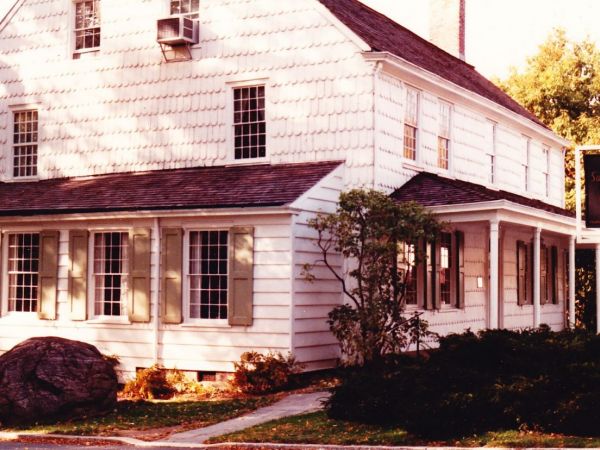
A farmhouse dating from 1732 on Ridge Road was used as headquarters for Comte de Rochambeau in 1781. House was locale for meetings between George Washington and for the French troops that joined with the Americans. Today the house is named for John Odell who was a guide for George Washington and bought house in 1785. The house was deeded to the Sons of the American Revolution in 1965 but has deteriorated over time but money has been allocated for its renovation to become a museum.
to be continued….
Preparing for Surgery
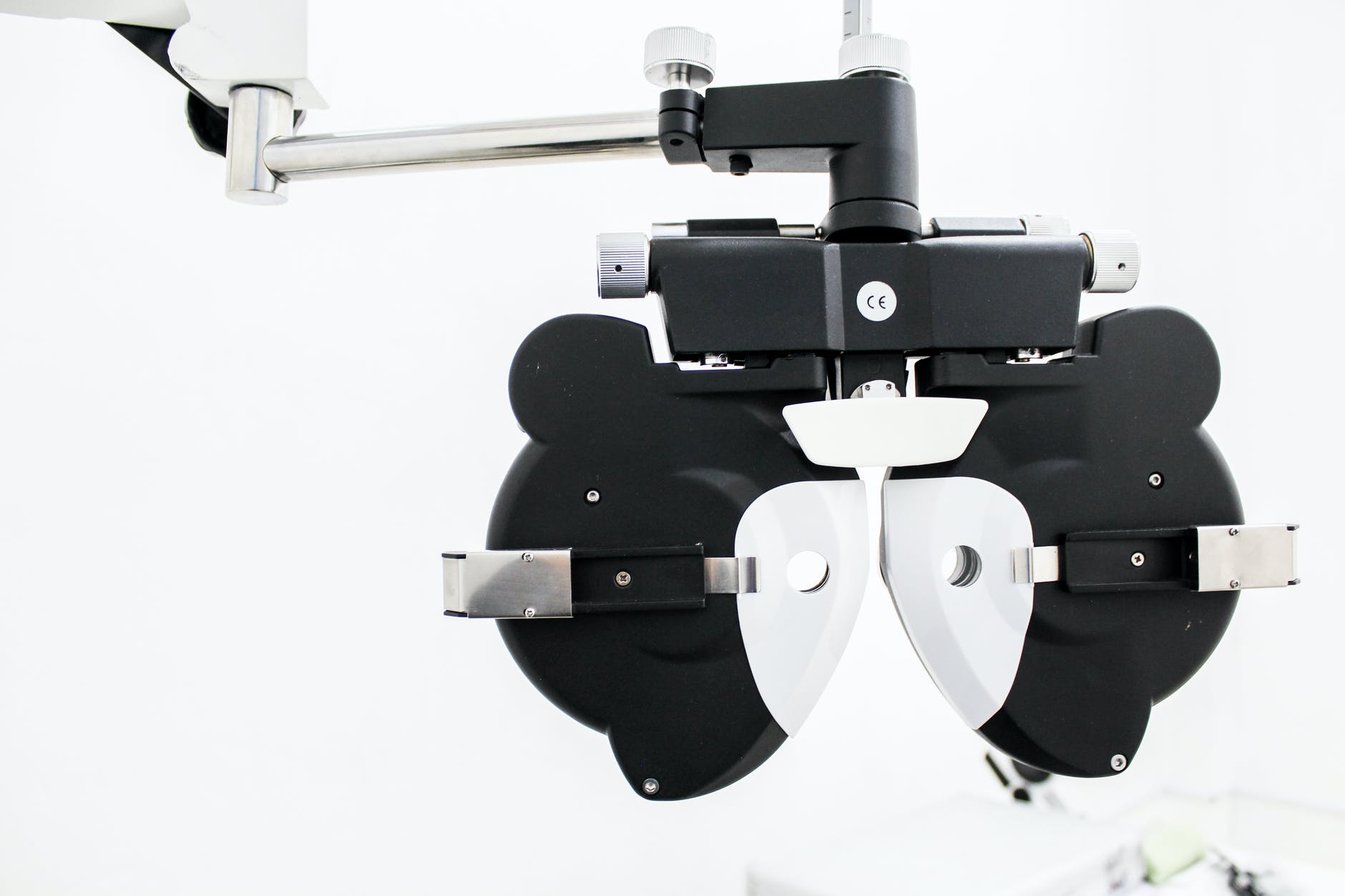
There are many things that one has to prepare for in life but planning for surgery is something one needs to do in order to get through it. Most important is to be emotionally and physically ready for what is to come. I find that doctors don’t adequately prepare their patients for surgery. Often, they leave out the most important details. Information is key to a successful result.
Living alone, I did not have someone who could get me things once I came home from the hospital. The internet is great in seeking out a variety of information and I found a great many sources where people shared their experiences. In one case, I found speaking to a person who actually had a Vitrectomy very helpful.
My first surgery was a Tonsillectomy but at four my parents took responsibility for my care. But, the surgeries that I had as an older adult were very different. The Vitrectomy that I had to correct a macular hole in my left eye was a real challenge. I was awake for this procedure and lasts at minimum 45 minutes to one hour. It was strange not being able to see through this eye during surgery and experience no pain. What was difficult was staying still and the recovery period that followed.
Recovery for a Vitrectomy is very challenging. I had to prepare for everything ahead of time. After surgery, your head has to stay in a downward position till the doctor tells you can sit up. They put an air bubble in your eye that will close the macular hole. This means one has to eat, sleep and be with your head facing downward all the time. Luckily, I only had to do this for 9 days but some patients have had to do this longer.
I had to rent furniture so that I could stay with my head facing down and it is really a boring experience. I had a special chair that is like the massage chairs to sit in. I had a special mirror to watch TV and borrowed a number of audio books from the library to pass the time. I even borrowed my father’s old walker to move around my apartment to help me keep my head down. I put a stool by my kitchen sink so it would be easier to bend over when brushing my teeth or cleaning up. I even took up some rugs so I would be able to move about easier.
Sleeping was the hardest thing. I had to put my head in a donut ring and prop my head up above the mattress to sleep downward. I did not get much sleep. I had to prepare meals ahead of time and bought foods that I could eat with my head downward. I froze meals that I could easily pop into the microwave to heat up. I used a straw for drinking and disposable plates, cups and utensils so I didn’t have to wash up after. This took a lot of preplanning.
Doctors do not tell you about the medications you will have to take till after the surgeries (determined after surgery) so I had my doctor fax a pharmacy that I use that delivers.
I had to make arrangements to get to the hospital for the Vitrectomy as well as the trip home. My mother came with me and I had to arrange for her to go with me. I live in White Plains and she lives in Yonkers. My father needed looking after and my brother was nice enough to volunteer to watch him when my mother was with me. My brother lives in Delaware.
Out of all the surgeries I have had, the Vitrectomy was the most difficult. For me I found that some of the same measures that I took then, could be applied to all procedures and surgeries that I had after.. Being prepared is the most important thing and plan accordingly.
- Know what to do before the surgery. Watch videos and do research. Get all the things one will need ahead of time. Be ready with transportation and to having an escort home. Have a pharmacy ready to deliver needed medicine that Doctor asks you to take or apply after surgery.
- Prepare the home or location of recovery period for your needs after the surgery. Plan and prepare for meals appropriate for the type of surgery one is having. Have numbers in your mobile or land phone that you might need.
- Know the recovery time needs and consult with your Surgeon when things come up.

Photo by Anna Shvets on Pexels.com
i want to be
i want to fly, when i can’t
i want to be, when i can’t
just want to do a lot of things
but i can’t
oh, it’s hard
trying to get out of being me
down the rabbit hole again
woe is me
struggling just to get up
fighting life with all the energy of my being
i want to go anywhere but here
but i can’t
getting the gears going takes the day; then its over
darkness envelopes my essence
woe is me
but, now my head is spinning
can’t focus
can’t get it together
heavens just let me sleep
Transportation in White Plains
How did people get around White Plains before & during colonial days? How did new modes of transport transform WP from a “sleepy” small village into a modern city?
Horses:
Remember, that modern day horses did not come to America till Europeans brought them here. Native Americans inhabiting the White Plains (WP) area got around mostly on foot. To the Munsee speaking people of the Weckquaeskeck tribe, WP was known as Quarropas. They created a number of footpaths that settlers would later use as roads. North St was one of WP’s first roads made from one of these footpaths. The settlers that came from Rye (around 1683) used the path.
Horses were used for travel, to transport goods & to work. Many horses were used by Hessian Soldiers and some Americas during the Battle of WP in 1776. Horses were used to pull WP’s earliest fire vehicles and even its first ambulances.
Horses were also used for sport. Horseback riding was quite popular as well as other equestrian events (like polo, racing, and jumping). The Gedney Farm Hotel that opened in 1913 (and closed in 1924) held such events. They even had a stage coach that gave the wealthy guests rides.

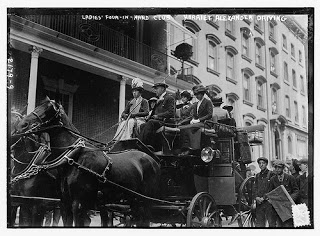
Liberty Stage Coach from Hotel

Horses were also used by mounted police officers. One barn of the former Gedney Farm was used by Mounted State Troopers (Troop K) from 1917 till a fire burned it down in 1924. In more recent times, WP had two mounted police officers in the Business District.
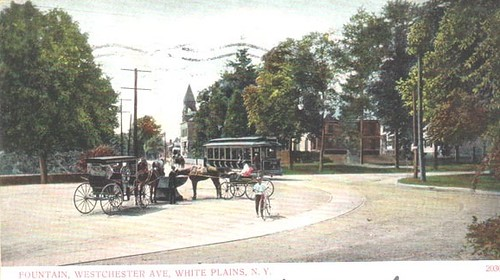
For the horses, fountains were constructed in some of WP’s roadways (one in the circle on Westchester Ave and one on Central Ave). Today, the only remnant of that time that can be found in WP is the horse trough on S. Lexington donated to City (see entry on memorials for more information).

Horse Trough by Public Safety Building
Bicycling:
Bicycling was also used as a mode of transportation. Early bikes were wooden and had no pedals. Pedals were added in the 1800’s making them easier to use.
Today, people cycling also use bicycles for sport. Many long distance cyclists use Rt 22, a state designated bike route. There is also a multi use pathway along the Bronx River that goes as far south as Mount Vernon and north to Kensico Dam in Valhalla. Westchester County has Bike Sundays during warmer months for bicycling on the Bronx River Parkway.
WP recently put in bike lanes (4.3 miles) on some of its streets. In 2018, bike sharing was introduced (Lime Bikes) and in April 2019 they added e-assist bikes. These bikes are dock less. But the company pulled out like a years later.
Trains:
Trains (NY and Harlem Railroad) came to WP from NYC in 1844 using a steam coal run engine. Early train carriages in NYC were horse drawn.
The Train’s arrival was instrumental in changing WP’s economy. The small village was transformed from a small agriculturally based community to a modern city. Farms switched from small subsistent farming to dairy. Milk could now be delivered to NYC where there was a big market. Small mills disappeared replaced by small industrial businesses and factories along the train route. The Business District changed to Railroad Ave that the City would rename Main Street. Even the County Government buildings moved and a new Court House was built on its street.
Weathly NYers commuted to the Westchester and for vacation homes as an alternative place to the dirty hot crowded City. Wealthy NYers bought former farms to create large homes. “Gentlemen” farmers like Howard Willet bought the Gedney Farm to raise cattle (for dairy) and for his prize horses and dogs. Willet’s first home burned down in 1909 but his 2nd home built in brick is still at 25 Hathaway Lane. Gedney Farm Hotel was built on the land Willet sold to accommodate these NYers. The hotel was created from the former barns after his dairy farm was no longer viable.

Train Ad that included suburban homes for sale
Trains were instrumental in bringing people to Westchester by aggressive advertising. They advertised the availability of inexpensive land where the wealthy could build a vacation home. Many former farms in WP were purchased and wealthy NYers built large estates. When these homes were abandoned many estates were subdivided into multiple smaller plots that were advertised for little money and where one could build a home. Developers put in streets, sewers and other needed amenities. Even Sears Roback and other companies advertised and delivered kits for building homes by providing designs, instructions, and everything one would need to build a home. There are still homes in WP made from these kits like one at 100 Greenridge Ave.
The New York and Harlem Railroad that later became part of the NY Central Railroad had a number of train stations in WP with most located south of Main Street. First two were small wooden structures. The 2nd station in WP is pictured below and when it was no longer used as a station, it was moved and used as a saloon till it was demolished.

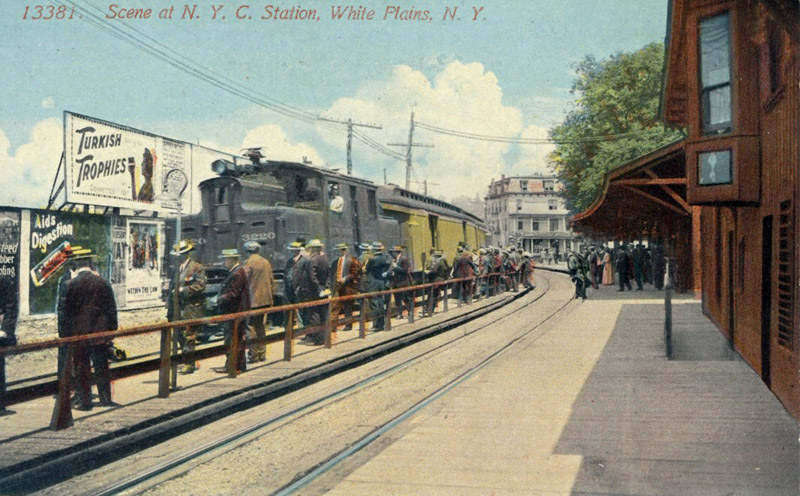
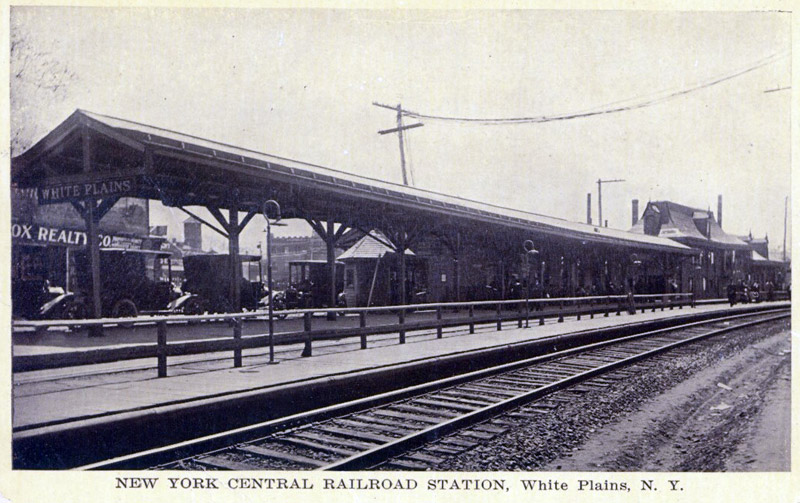
White Plains residents also use the North White Plains Train Station where today the city has parking and a multi-level garage.
When the steam engine was electrified in 1910 (battery powered Julien traction cars), the tracks became a hazard so they were lifted above the streets at Main St & Hamilton Ave. In 1914, a new station was built nearer to Main St than the former stations.

1914 Station
In 1987, a new station was built on the tracks and it is now under going a major 92 million dollar renovation. The older station was demolished in 1983 but remnants from the former station can be found behind Bank St Commons Apartments. Today the Harlem Rail line is run by MetroNorth and they have offices at 525 North Broadway.

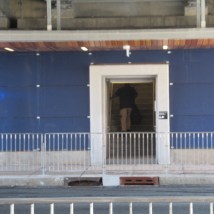
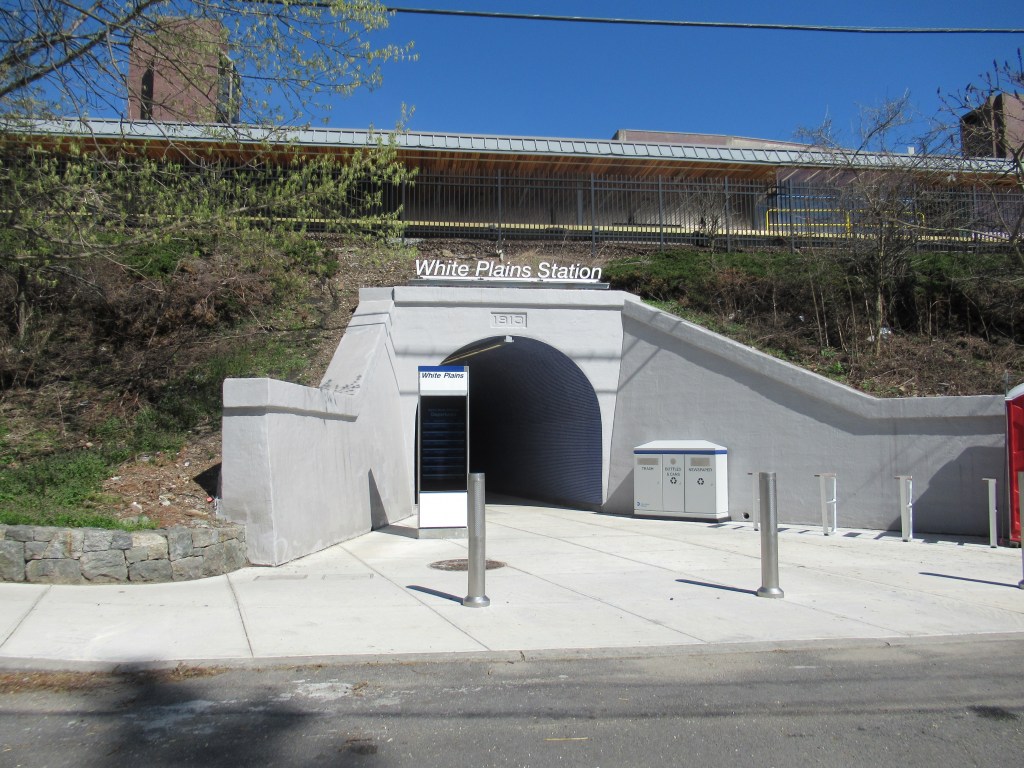
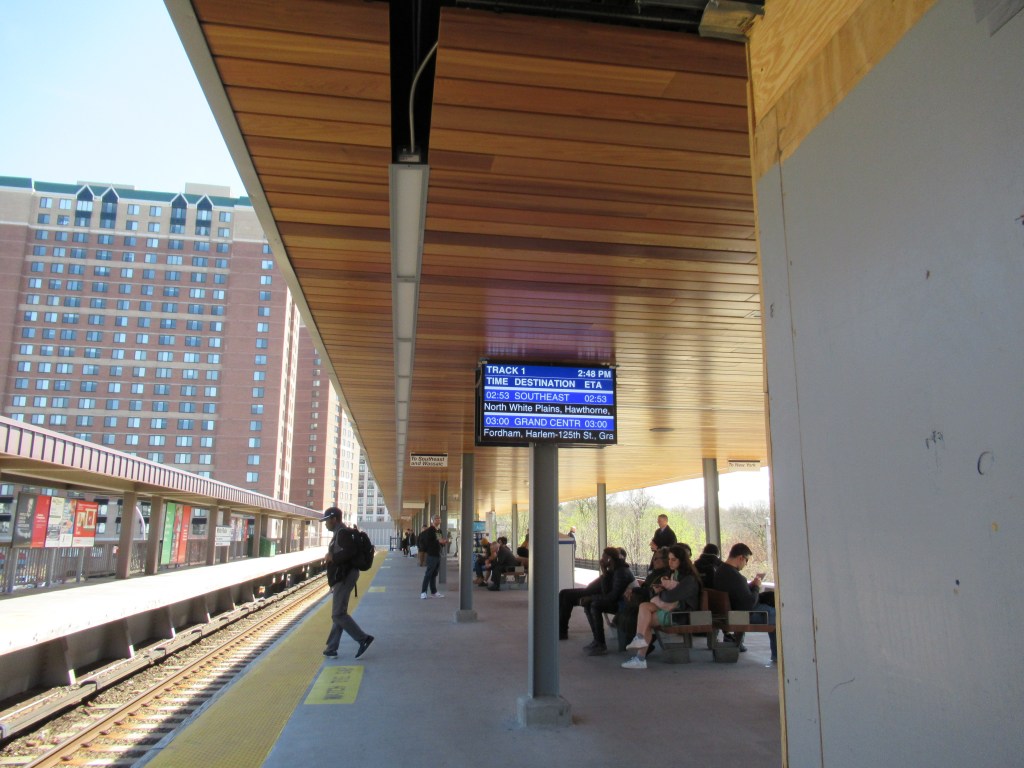
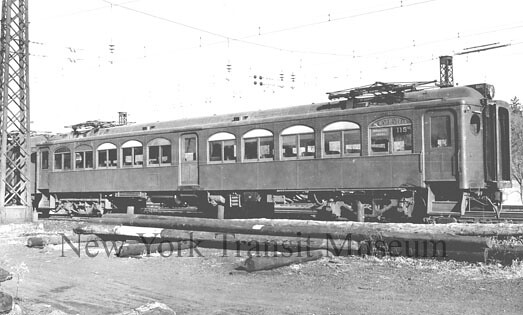
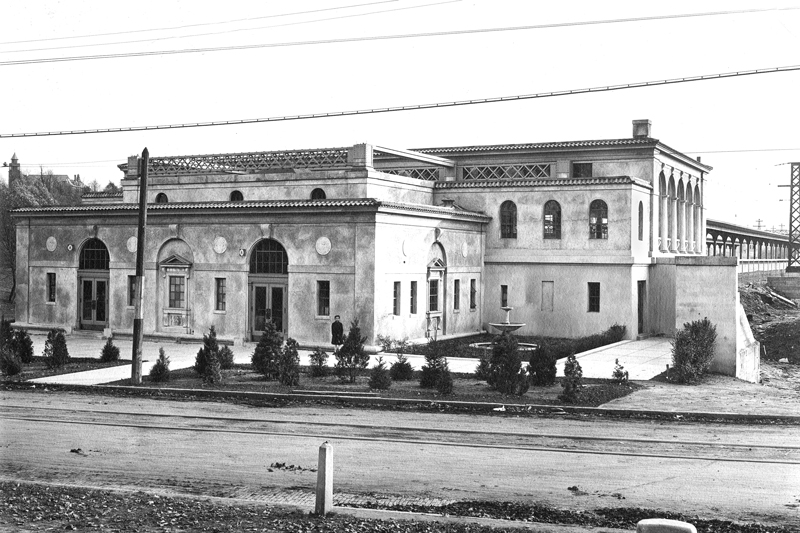
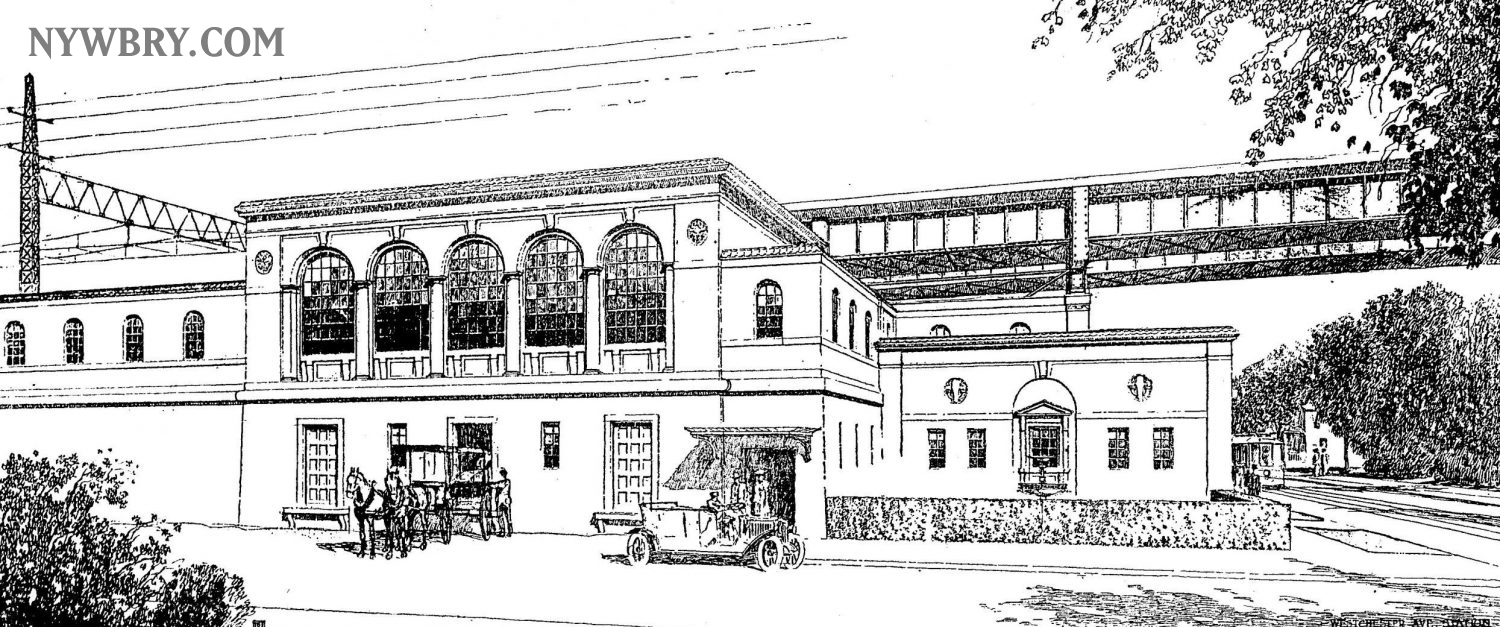
Another rail line ran in the central part of WP from the Bronx to the terminal at Westchester Ave. NY, Westchester Boston ran from 1912 to 1937. There were stations at Ridgeway, Gedney Way and Mamaroneck Ave (all demolished) and Mamaroneck Ave station was the last station in WP when it began service on May 29, 1912 since the terminal at Westchester Ave was not completed till July 1912. The terminal at Westchester Ave had two island platforms for the four tracks. There was also a freight yard located alongside the terminal. The rail was to be extended north to Pound Ridge but this was never completed.
Passenger service ended on December 31, 1937. Most abandoned mostly till 1940 as railroad was rented for for some commercial uses but in 1942 much of the rail was torn down and salvaged for scrap.
The Westchester Terminal was torn down in the 1950s for construction of B. Altman’s. The department store was torn down to build Nordstrom within the The Westchester mall that opened in 1995. The mall architecture has some similarities to the terminal on the exterior

Map of NY Westchester Boston
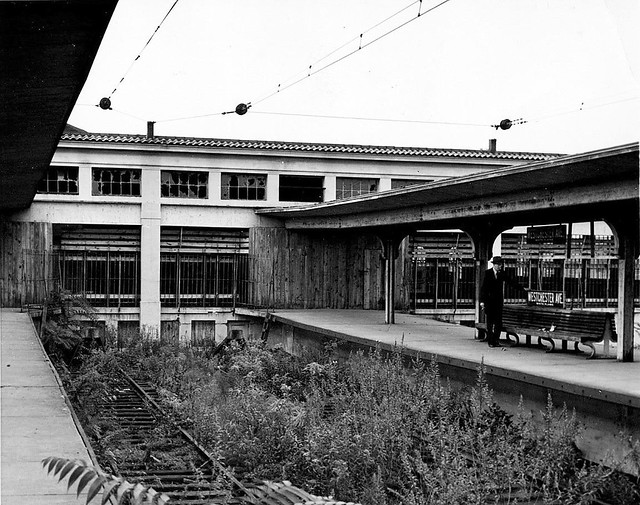
Westchester Ave Terminal

Businesses on Gedney Way popped up on road with station there as well as Mamaroneck Ave where Bloomingdale intersects. City created a trail on parts of tracks now named the Harrington Trail. It goes from Scarsdale border to Bolton but there is construction underway to extend it toward Bryant Ave. Parts of the rail bed run through Sam’s of Gedney Way parking lot and under Bryant Ave going to at City parking lot at Mamaroneck Ave by Bloomingdale Rd. See Facebook page for more pictures and info: https://www.facebook.com/nywbry
Trolleys and Buses:
During late 1800’s to 1926, trollies were used in WP run by electricity. Trolley tracks ran along many streets connecting to other places in Westchester. Buses replaced the trolleys and by 1926 they were gone. Buses could go on most streets and routes could change. The trolley tracks were phased out till they were paved over.
Today, many Westchester County run BeeLine buses often have a 2nd cab. They are ADA compliant and many have hybrid engines to reduce carbon emissions. Many outside front areas have a place for bicycles. Fares that were once paid in coins and bills now use MetroCards. MetroCards are being phased out and replaced with OMNY cards. Coins can be used but machines do not accept pennies. Alternative Paratransit buses are available for disabled passengers but some cities like WP use local taxicabs to supplement the demand.
WP is part of the NY states mass transit system connected with the new Governor Mario Cuomo Bridge from Rockland County. WP has a bus depot and bus station near the train station for Greyhound/Trailways for longer trips. Buses also come to WP from CT.

Hudson Link to other side of Hudson:


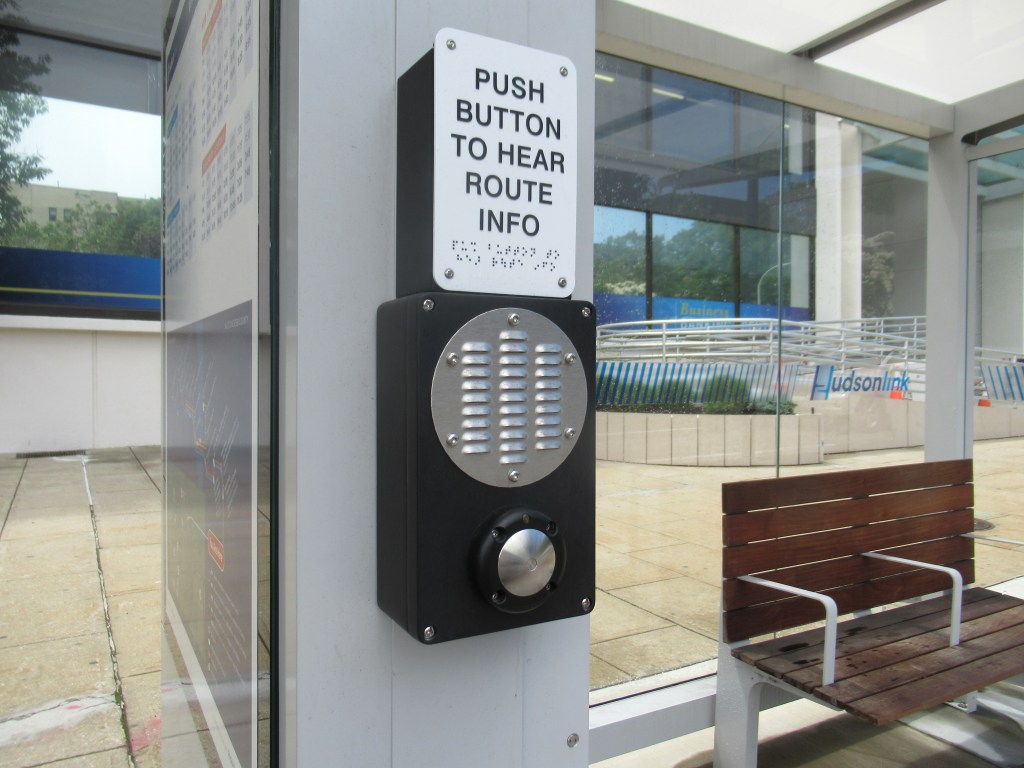


Motorized Vehicles:
Cars and trucks were used in the early 1900’s in White Plains and roads were made out of more durable materials (cobble stone to asphalt). Trolleys and then buses used the same streets. Except for recreational use or by police, horses were eventually gone from the roadways.
Cars were made (one at a time) in WP in early 1900’s. Mammoth Garage was an early locale for making cars in WP. Building that was over one hundred years old was demolished in 2019.
Cars were also used to transport people for individual trips. There are multiple taxis companies operating in WP. City has rental cars available through many companies and with “Zip” Cars. Ride sharing is also available as well as limo services.
Airport:
In 1939, Westchester County Airport was given the Gedney Farm Golf Club as a possible site for airport. The airport in West Harrison was built in 1942 for Air National Guard during WWII to protect NYC’s water supply. Since then the National Guard has moved on ( from 1983) and the County run airport has become a major airport in area with flights within in and outside the United States. It has become an alternative for LaGuardia Airport in NYC (Queens).
“Westchester County Airport” by Kent Patterson has info on early airports in County.
For more information see other entries on this website.
How Well Do You Know White Plains?
Not until I joined Facebook did I find out how many people reminiscence about old White Plains (WP). Many were former residents who remember the City before Urban Renewal (1966-1980) when much of the Business District (BD) demolished for revitalization.
Just a start for my questions about White Plains:
1.Where was the location of the purchase of the White Plains that was a treaty with 17 sachems (chiefs) of the local Native American tribes?

2. Where did the men that purchased White Plains come from?
3. When the purchase was made, in what Colony was White Plains a part of?
4. Who actually created some of White Plains’ earliest streets and can you name them?
5. Can you name a man-made lake or pond in White Plains that is still around?

6. Where was the location for the reading of the Declaration of Independence read in White Plains?

7. Why did White Plains become the county seat and with what community did it share this role for decades?
8. How many County Court houses did White Plains have before the present one? And, do you know what happened to them?
9. What “happening” in White Plains had the greatest effect on the community?
10. Do you know which house of worship was White Plains’ first? Do you know where the latest one is being built and for what religion?
11. Before cars, how did the people get about in White Plains?
12. Ever wonder why there is a park in the middle of Broadway? How did that come about?

13. Where can you find an eagle motif or an actual sculpture of one in White Plains? What about a motif or sculpture of a soldier(s)?
Parking in White Plains
Parking is a challenge everywhere, but very much problematic for those in White Plains (WP). No overnight parking is allowed on the streets between 2 and 6 am. Most meters require payment (M-Sat); start at 9am but the cut off in the evening varying by location. Some go till midnight.
Parking on many WP streets in the busiest areas are metered & many streets have limited parking or none at all. WP has numerous metered and/or permit parking lots that require a fee. Some monthly permits require residency. See the City’s website for information at cityofwhiteplains.com under City Department section on Parking & Traffic (cityofwhiteplains.com/97/parking-traffic).
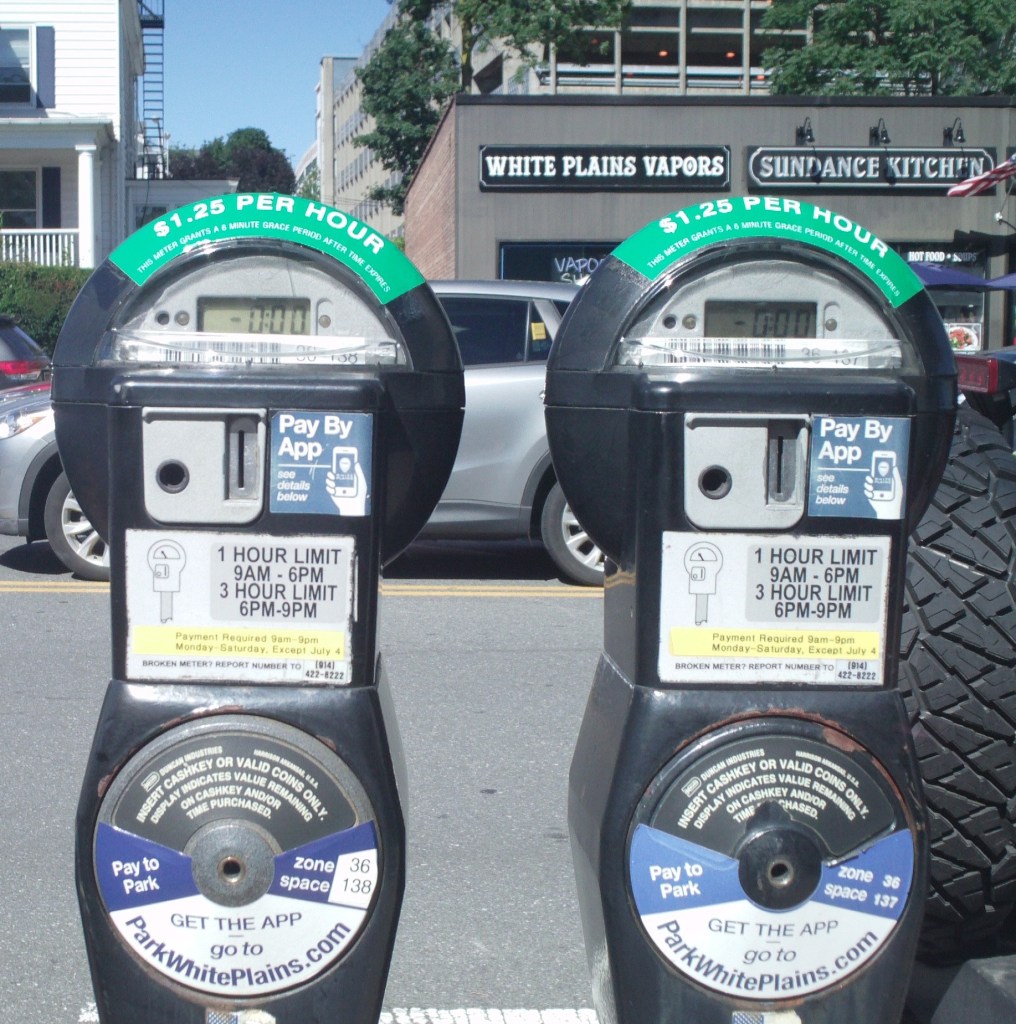
WP provides an app for paying parking fees with phone (parkwhiteplains.com). Residents can obtain parking permit at some garages at night & weekends for $75 a year. Some areas around WP offer 15 min. free parking on Mamaroneck Ave (like at Iron Tomato) & at WP Public Library. WP offers free weekend parking at N WP Train Station. On Sundays & certain holidays (Thanksgiving, Dec 25, Jan 1, Memorial Day, Labor Day; July 4) street parking is free & there are no time limits. Parking in delivery areas is allowed on Sunday and certain times but not drop off areas. Make sure to read the meter and signs before you park to be sure.
City has a grace period for ticketing for meters that expire and it is now 12 minutes (from the 5 min).

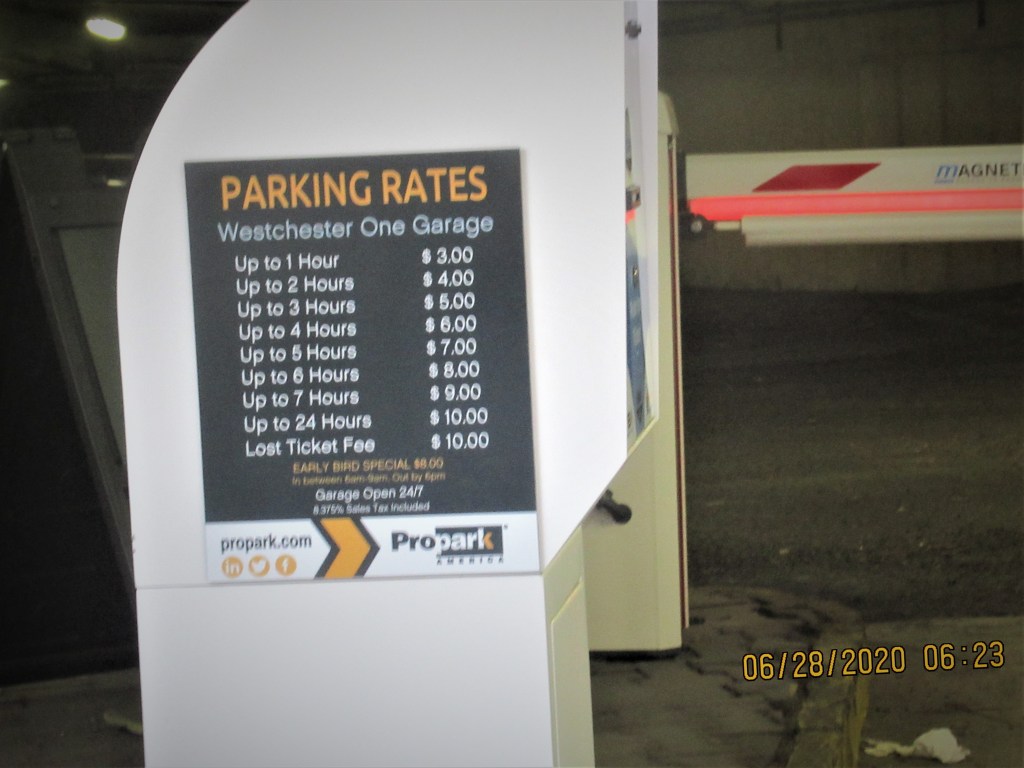
There are private parking lots & garages available in WP. There are websites/ apps to help locate parking & some allowing reservations for a space. Price comparisons are given. Inrix parkme (parkme.com); Spothero (spothero.com) & Propark.com are some. One lot of Propark on Paulding Av next to hotel lot has fees posted at entrance and overnight is $10.
There are restaurants, stores & other businesses that offer parking for their customers or clients for free and others offer parking credit at pay lots: Bloomingdale’s, Stop & Shop, The Container Store, Thomsoms Art Supply (behind the building), Sam’s of Gedney Way, WP Diner, TD Bank, Pedigree Ski Shop, CVS at 325 Mamaroneck Ave and Citibank at The Mitchell), New Deal Deli as well as stores along Mamaroneck Ave behind Saxon Pharmacy (460) & WP Bakery and UPS Store (366) where the lot is also used by CVS. Rosedale shops (i.e. Lombardi’s, K&S Cleaners, Chase) offer free parking.
U.S. Post Offices at Fisher Ave & Gedney PO offer parking. Burke Rehabilitation Hospital, NY Presbyterian Hospital, as well as medical offices at former St. Agnes Hospital grounds offer free parking.
Some parks offer parking (Liberty, Gardella (at Church St School but not during school hrs), Gillie, Purdy House, Baldwin, Battle Hill; Delfino Park) & schools have visitor parking on their campuses. Parking during non-school hours is available especially to use ball fields, tennis courts & parks near-by. County parks offer free parking (Maple Moore Golf Course, Silver Lake Preserve & Saxon Woods).
NY State Dept. of Labor has parking at 120 Bloomingdale Rd. Ballard-Dullard & Mahon, Lynn & Hartnett Funeral Homes have parking lots. YWCA on N St, & Westchester Hills Golf Club offer parking. Garden Centers such as Ridgeway, Gedney & Amodio’s offer parking. Many religious centers offer parking for their congregants throughout the city.
Westchester County has parking for employees and jurists at Michaelian Building & Court House. Federal Court has an employee parking lot. There is a fee at County Center lot but there are times where one does not get charged.
City and County offer free parking at NWP station on weekends and other times so check if you are parking there.
Parking credit is offered by some stores like Shoprite, Whole Foods, and Westchester Road Runner. See WP BID for others at wpbid.com.
Valet parking is offered at some locations in the city (City Center (on Mamaroneck Ave at certain hours with fees), The Westchester on Paulding, Cambria Hotel & White Plains Hospital). Medical building at 122 Maple Ave has valet parking (with a fee) and the Cancer Center on Longview has valet parking for patients without a fee. If you need to be at the Infusion Center best is to do valet parking since it is hard to find a long-term spot at the city lot on Longview.
The Westchester has free 30 min parking on Paulding Ave. by entrance (Express parking). This area is hard to find parking at times.
Handicap Parking:
There are very few handicap parking spaces on streets with meters and none where there are no meters. Most spots are in large multi-level garages, metered lots owned by City and private store parking lots. Fees are required unless you have a special permit (through county). Be aware that many handicapped spaces are designed for vans and for people who truly need more room exiting and getting in vehicles. Removal permits should be displayed but not while driving. Fines for taking a spot from those with the most need go from $125 and up. These spots cannot be used for vehicles without plates for waiting or even stopping to leave someone off at a location.
Regulations for Non-Designated Accessibility Parking
The holder of a handicapped parking permit or disabled person plate may park up to three hours at a half-hour, one-hour, and two-hour parking meter, by depositing the full amount of the respective parking meter (i.e. paying two hours for a two-hour meter, etc.). The holder of a handicap parking permit or disabled person plate may acquire a $50 monthly permit and park all day at parking structures’ reserved parking spaces. Both the handicapped parking permit and the monthly permit must be displayed.
Designated Metered Accessibility Parking Spaces
1.Church St. n/o Hamilton Ave (4th meter) – Driver Access, Slight Tree Obstruction
2. In Front Of (IFO) 44 Church St – Driver Access.
3. IFO 158 Grand St – Passenger Access
4.WP Library Martine Ave Entrance – Passenger Access (in Library drop off)
5. IFO 197 E. Post Rd – Passenger Access, Lamp Post.
6. IFO 452 Mamaroneck Ave – Passenger Access, Utility Pole Obstruction
7. MLK Jr. Blvd. n/o Hamilton Ave – (1st meter) Passenger Access, Slight Tree Obstr.
8. Hale Ave s/o Hiram St – Passenger Access, Slight Tree Obstruction
9. Main St. w/o Court St – Driver Access, Tree and Trash Can Obstruction.
10. Old Mamaroneck Rd opposite Doyer Ave – Passenger Access
11. IFO 60 Mitchell Pl – Passenger Access, 2 Meters
12. Quarropas St (Opposite Slater Center) – Passenger Access, Two Parking Spaces
13. S. Lex s/o Martine Ave – (1st meter on right) Passenger Access, Bike Lane Buffer
14. Cromwell Pl – (1st meter, left side) Driver Access, Utility Pole Obstruction
15. IFO 250 Mamaroneck Ave – Passenger Access, Tree Obstruction
16. Opposite 15 Chester Ave – (2nd meter on left) Driver Access, grass strip
17. Winchester St n/o E. Post – (1st meter on right) Passenger Access/ Slight Incline
18. IFO 20 Old Mamaroneck Rd – Passenger Access, grass strip
19. IFO 230 MLK Jr. Blvd – Passenger Access, Bike Lane Buffer for Driver Access
20. IFO 7-11 South Broadway – Passenger Access, 2 meters
21. Cromwell Pl – last meter before Maple Ave. Driver Access, Slight Incline
22. IFO 176 Grand St – Passenger Access
23. Martine Ave w/o Court St – (1st meter on left) Driver Access
24. Carhart Ave e/o Mamaroneck– (last meter before Mamaroneck) Passenger Access
25. E. Post Road e/o Court St – Both Sides Access, In Small Municipal Lot
26. Church St n/o Barker Ave – (1st meter on right) Passenger Access, grass strip
27. IFO 56 Doyer Ave – (7th meter before Old Mamaroneck) Passenger Access, grass strip
28. Opposite 88 Gedney Way – Passenger Access, 2 meters, grass strip
29. IFO 245 Mamaroneck Ave – Passenger Access, Slight Tree Obstruction
30. IFO 201 South Lexington Ave – (1st meter on left) Passenger Access, Small Incline
31. IFO 200 Mamaroneck Ave – Passenger Access
32. IFO 199-201 Main St – (1st meter on left) Driver Access
33. Quarropas St. e/o Grand St.– (3rd meter on right) Passenger Access
34. IFO 245 Main St – Driver Access, 2 meters
35.Mamaroneck Ave. at City Center Entrance – Both Sides Access past drop off lane.
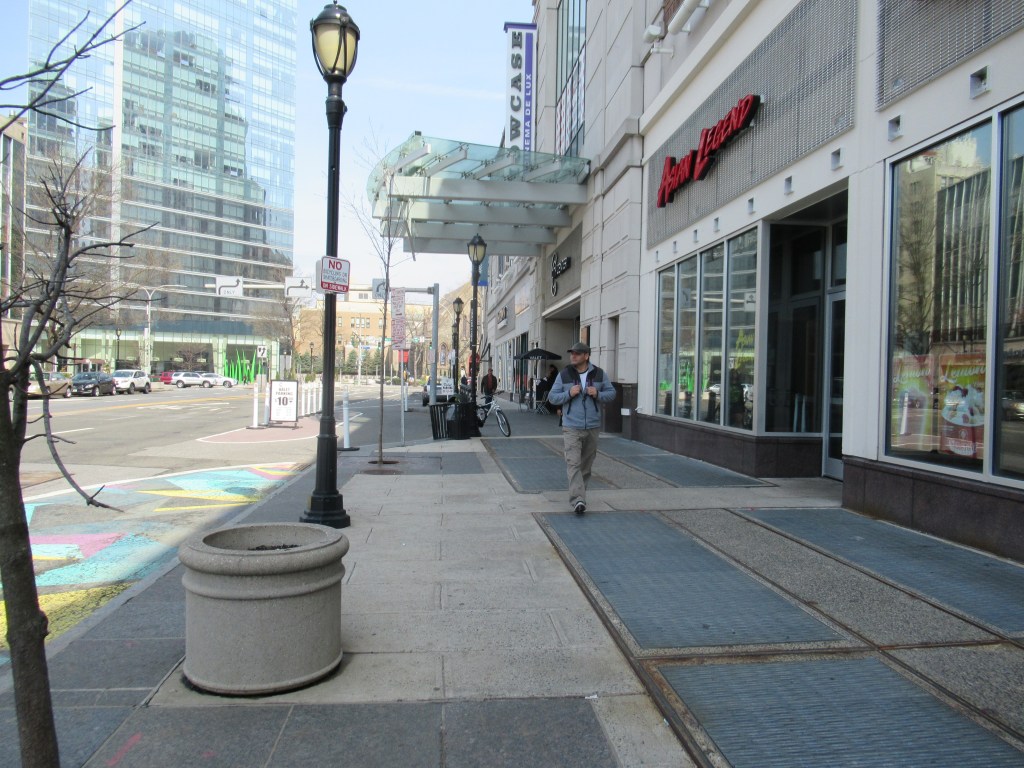
City is very aggressive enforcing its parking regulations but there are places where enforcement is less often at night & on weekends. Some avoid fees by finding lots near by. One place is Stop & Shop & non-metered streets close to malls. Holidays not allowing free parking & weekends have even less monitoring.
Police ticket overnight (after 2am) while out on patrol; parking authority tickets during day/evening. They use electronic license readers (not chalk). Main St near City Center is monitored weekdays very aggressively. Tickets can be $25 on the street but more for parking in an illegal area like a fire zone ($50). Some can get ticketed again if you move to different part of the same street (or block); people can get multiple tickets. City does use booting for outstanding repeat offenders.
Best is to feed the meters and follow instructions for the place you park. Use the parking app if you are delayed or don’t have cash. Make sure you keep your receipts so you can add time. Try googling a location to see on street parking regulations for a place you are headed for, but many are out of date so for most current maps/visuals use Westchester GIS. Suggested by resident is to put a nickel in a meter before 9 am so if you return after 9 you get 5 min with the nickel and a 5 min grace period after that. The money you place in a meter before 9am doesn’t start till 9 so plan accordingly. No money is needed if you park between 6am and 9am.
If you have a suggestion for changing the parking in an area, please send in the requests using email, contact forms online. City does look at individual requests (taking out spots, putting in spots, extending time, shortening time for example) so do not hesitate to make requests. City has the Transportation Commission that oversees these requests. You can get notified through the city website for agendas and minutes of meetings or you can just check them yourself.
WP Parking Department: https://www.cityofwhiteplains.com/97/Parking-Traffic.
When stopping to drop someone off or waiting in car for someone note posted street signs because there are areas where stopping and waiting are prohibited. Delivery parking areas on streets are designated, and they are for commercial vehicles that are actually making a delivery to a shop or business nearby. These spots are not available for regular vehicles during certain hours so be careful to read the signs. These spots are not for waiting or stopping.
Violations:
Parking tickets in WP can be paid online, by phone, by mail, or in person at the Parking Violations Office. Online at: https://whiteplains.citationportal.com or by phone with a $3.50 service fee per ticket. By Mail Send payment to: City Court – Parking Violations Office, City of WP, P.O. Box 6500, WP, NY 10602-6500. In Person at Parking Violations Office, 77 S. Lexington Avenue, WP, NY 10601, Mon.-Friday 9 a.m. to 4.
Tickets must be paid by deadline around 14 to 30 days after issuance. Late payments can get additional fees, collection actions, vehicle registration holds, or towing/ booting for multiple unpaid tickets. Fines range from $35 to $65 but with increase when ignored. Reasons for disputing a ticket are when signs are missing or there are unclear parking meter or app malfunction. Proof of payments exists contains incorrect info. All disputes must be filed before the payment deadline. Keep confirmations for records. Use parking app or check street-cleaning schedules to avoid future tickets. Contact Parking Violations Office at 914-422-6135 or visit City Hall at 255 Main Street, WP, NY 10601 for questions or assistance.
Sandra Harrison’s Family Heritage Story

Following here is a paper I wrote in 1971 for a Sociology class in high school. For my assignment, I interviewed my grandparents to find out my family’s immigrant experience coming to the United States. At this time, I had only one living grandparent on my father’s side Rita Harrison that had emigrated here. My mother’s father Samuel Schild was born in this country but his present wife (who was his 3rd wife Molly Schild) was from Russia so I included her in my assignment:
I was born in the United States as were my parents and one of my grandparents. My other grandparents, like the Pilgrims came to this country with the dreams and hopes of a new life.
Through personal interviews with my grandparents, I was able to obtain the reasons why, when, and how they or their parents came to this country. I will allow them to speak for themselves.
First my grandmother [Rita Harrison] on my father’s side will speak:
My father and mother was buying orchards (fruit). We lived in the province of Minsk ( in the western part of Russia during early 1900’s but now part of Belarus). The winter was very cold and summer was very warm. They had a lot of snow and rain like in the United States.
My brother was writing letters from America. He went there from living in Austria. He said, that I maybe could come out. I went because, everyone wants to go to this country. They didn’t want to give me no papers because I was too young, so I was waiting for them. My father didn’t want to go to this country. They wanted him to go before us but some friends were talking to him. He didn’t. My mother wanted to go. She dreamed this was a big city (NYC). My mother was already in big cities.
My father and mother remained and I went in 1913. I took a train to Latvia and from there we took a boat. I was alone and 16 years old. They took so many people. Not too many. Everyone had their place on the boat. They gave us food to eat. I was sea sick. It was very bad because it was going so slow. Two weeks.
We landed in Ellis Island. My brother came with his brother in-law and took me over right away. His brother in-law made furniture covers so I went to work for him. I felt it was very bad the United States and I wanted to go back because downtown the little children were going like it was summer with only a little shirts. It was very poor. But everything was cheap. I was disappointed. ‘To this country you bought me?’ I said to my brother. ‘Why did you bring me here? There I had apples and plums and here I haven’t got nothing.’
Then in a few years I and my brother sent for my father, a sister and another brother. They came here. My father was two years here and he didn’t want to stay here. He left us and left for me the small children. We lived once in Harlem in the East Side. We didn’t have the facilities that we have now. We were washing in a wash tub the clothes and the stove had an oven. Summer time was very hard for me. In Russia it was pleasant because it was country. We went to Chicago once. I like it because it was a little bit quieter, not so big or as hard.
Then I worked at dresses for three to four dollars a week. I didn’t know English but Yiddish. I learned it when I was working sewing covers and at night school. The teacher was working for ten cents a pupil. The rest of my brothers and sisters came over because they thought they could do better. We heard of the Golden Land but here wasn’t golden. We were poorer than there. We never had religious persecution in Europe or in America. My father said everyone was equal.
We lived in a Jewish community but a cousin lived in a gentile area. He was a black smith. I got married and my husband came from Kiev, Russia and he worked pushing carts (selling fruits and vegetables). He came to America because his father died and he made a hard living in Russia by gluing linings in coats.
Next I spoke with my grandfather [Samuel Schild] on my mother’s side. He himself was born in the United States but he will tell of his parents experiences:
My father came over in the late 1800’s from Austria because of the Pogroms in Europe. They just didn’t want the Jews there. So the Jews came here and worked very hard to save all the money they could to bring over other relatives.
My cousin came over here and like in Austria started a furrier business in New York City. He worked day and night to bring over his wife, father and my father. They all went into the fur business and became very wealthy. My father due to health reasons had to work elsewhere. He got a job at a gentile book binder that did book binding for Barnes and Noble.
My mother came also from Austria because jobs were scarce. They gave the gentiles most of the positions. She came over in the 1880’s at an early age. Her grandfather and her father had gone to New York City first and later sent for her. They went to the city because it was the Ghetto. They lived in a Jewish community and found jobs easier here. There was no religious persecution here. My mother knew how to sew so she got a job working for a dress maker. Later she married my father. Jobs were easier to find because employers were looking always for Green horns (immigrants) who they started at the bottom for little pay. You had to work hard for little money because they took advantage and even your employer was working cheap, so nobody could pay a working wage.
Both my parents came over by boat. They got money from relatives already living in America. Everyone had to have at least 25 dollars on himself so one couldn’t become a public charity. They traveled in the bottom of the boat. It was called steerage. The voyage ended after a two weeks on the sea at Ellis Island. Friends and relatives picked them up and they stayed with them until they could talk a little and get jobs. My parents never complained about conditions. The only thing is they could not keep the religion as well as they did in Europe because when my father worked in the book binding he worked for a gentile man, so he had to work on Saturdays and thus he didn’t keep the religion, but otherwise he did.
Finally my grandmother [Molly Schild] on my mother’s side will tell of her experiences:
My mother, my sisters and myself came over in 1923 from Odesa, Russia. My brother sent us money ($2,000). At that time it was a lot of money.
The conditions in Russia were the famine, the typhus epidemic and the post-revolution. People were just dying in the streets and we didn’t get enough to eat. The were socializing everything. Our business was taken away and my parents were not trained for any other jobs. They used to give us cards for bread. The bread was very black. Sometimes you stood in line all night and just in front of you they would tell you that there is no more bread. You were just out of luck. We used to get five pounds for everyone in the family. Not long before we left my brother sent every month ten packages by way of the American Relief Association. We used to sell it and used the money for our passports.
My father died and my brother who came over in 1913 to the US was doing well in the coal business and sent for us. We had trouble getting out of Russia until we got our passports. It took a long time. My brother even sent an agent to help us.
We went to Turkey to get a boat. We waited six weeks in comfort there in a hotel. After we left the Quota closed. We came on a French boat and had a wonderful time. We went first class for the thirty day trip with a nice cabin and plenty of food.
When we arrived in New York’s Ellis Island, we stayed for a night and then our brother came for us. He spent a lot of money on us and even bought a house in Borough Park, Brooklyn. We were disappointed in the US because we didn’t know the language or have any friends. We went to night school to learn English and I had a special tutor on Sundays. It took three years to settle down and we had to make the best of it.
All three of my grandparents each told of their own experiences or of their parents. All came over at different times, my paternal grandmother in 1913, my maternal grandmother in 1923 and my maternal grandfather’s parents in the 1880’s. Four reasons why they came could be summed up as the following: 1. religious reasons, 2. political reasons, 3. economic reasons; 4 because it was the thing to do at the time.
Also their economic state of affairs had an affect on the way they were to come to the US and how they were to live here. My maternal grandmother had a healthy family and brother and this were able to afford a nice voyage over and a nice home in the US. My paternal grandmother on the other hand had neither a rich brother or a rich family and this traveled third class and lived poorly.
Also the time they came over made a difference. My maternal grandmother had trouble getting passage and also the quota had only come then into existence, where as my other relations had little or no trouble getting passage.
My grandparents all changed in one way or another into the American way of life. They had to adopt to American ways, learn a new language, get used to a new environment and sometime adjust their religion. Through thick and thin though all my grandparents have stayed in this country and like my grandmother said, “We had you make the best of it.”
I have attempted researching my roots but hit so many snags. Only knew the grandparents quoted in report so never met my paternal grandfather Sam Harrison (from Russia) or maternal grandmother Ida Schild using Cohen or Kulka as maiden name from Poland. I have photos of family including great grandparents who emigrated to US but have never been able to find data online for Ellis Island or on other ancestry sites.
Had my DNA tested (My Heritage) and my mothers when I showed 1.8% Nigerian. Have 94.4% Ashkenazi Jewish DNA from Europe and 3.8% Sephardic Jewish from North Africa.

Redid my DNA with Ancestry.com and the results of North Africa and Nigeria did not appear at all so I came out 100% European Jewish. Now, I am more confused.
Rita was actually from what is now Belarus and Sam Harrison was from what is now the Ukraine. Sam Schild was from what is now Austria.


Lessons Learned from NY Pandemic Shut Down of 2020
Posted on June 10, 2020 by sandraharrison1954
Leave a Comment
During the Pandemic of 2020, NY was put on “pause” with the Matilda Law innacted by Governor Cuomo during a State Emergency. It started in March with the most stringent closings on March 22. Governor extended the May 16 reopening till June 6 with a new set of rules.
I could cry. This is the craziest time of my life. Well, at least the part I remember. These are the things I learned:
This is an article recently posted online:
“Coronavirus Life: Lessons From The Pandemic
Consumer Reports shares five key lessons to take away from the pandemic and how they may help positively reshape the way we go forward.
Consumer Reports, News Partner Posted Mon, Jul 19, 2021 at 11:44 am ET”…
By Kevin Loria/Consumer Reports
Our world has certainly seen its share of generation-defining events, from global wars to the 1918 influenza pandemic to the attacks of 9/11. And now, the COVID-19 pandemic. While each was unique, they all altered the lives of those who experienced them.
With the coronavirus pandemic, we’ve surely learned a lot. Some lessons have been painful—COVID-19 spotlighted healthcare inequities and the higher rates of infection and death in Black, Latino, and Native American populations. But recognizing what’s been wrong will help push our systems in the right direction, experts say, and some of the disruptions the crisis caused may produce lasting benefits.
“There has been often a lot of focus on loss . . . now people are beginning to reflect on what was gained,” says Vaile Wright, PhD, senior director of health care innovation at the American Psychological Association (APA).
For instance, many people say they want to continue to spend more time at home as the pandemic eases, according to a March 2021 Consumer Reports nationally representative survey of 2,144 American adults (PDF). And the vast majority hope the emphasis on cleanliness and hygiene continues…
…”But what pandemic-related changes are we most likely to hold on to? Here, five key lessons and how they may improve our lives in the long run.
We’ve Harnessed Tech For Health, Work, And Socializing
The tech revolution that seemed perpetually around the corner actually got here as the coronavirus spread—upending the way we work, socialize, and handle many basic needs.
Take telehealth. With restrictions on in-person visits, doctors saw patients via phone, tablet, or computer. More than 80 percent of clinicians who responded to a 2020 COVID-19 Health Coalition survey said telehealth improved the timeliness of care, and a subsequent HC survey found that patients were similarly satisfied. Experts say talk therapy also works well via telehealth. (What’s unclear: whether insurers, who expanded coverage for virtual care during the pandemic, will continue their coverage.)
Countless Americans used tech tools for working at home—a full 70 percent of full- or part-time working adults were doing their jobs remotely at least some of the time in April 2020, a Gallup poll found. Many liked it: 81 percent of 1,500 surveyed professionals who worked remotely in the past year would prefer not to go back to the office at all or to have a hybrid schedule going forward, according to a recent Harvard Business School survey. “We learned a lot about the ability to telework and still get the work done,” says Georges Benjamin, MD, executive director of the American Public Health Association (APHA). “The technology exists to do it effectively.”
Some also turned to tech for leisure activities like virtual cooking, live-streamed museum tours, and interactive fitness classes. And people regularly “visited” with relatives and friends via Zoom or FaceTime. While remote schooling for children was widely unpopular, the expansion of virtual adult education may continue to appeal: About one-third of American adults said online classes offered the best value for them, in a July 2020 survey by the nonprofit Strada Education Network.
One tech issue the pandemic magnified is that not everyone has reliable home internet access. Though solutions may be a while in coming, President Biden’s infrastructure bill aims to expand broadband to communities where it’s lacking.
We Picked Up Important Wellness Habits
Though we initially knew almost nothing about COVID-19, over the course of the pandemic many of us learned how strategies such as wearing masks, regular and proper hand-washing, distancing physically from those outside our household, ventilating indoor spaces, and staying home while sick could help reduce the spread of the illness.
At this point, experts as well as most consumers appear to want to see such infection-protective behaviors become the norm in the U.S. For instance, 79 percent of Americans say they feel positive about the focus on cleanliness and hygiene, and hope it remains after the pandemic is declared over, according to CR’s March 2021 survey. “I think handshakes probably won’t return real quickly,” says the APA’s Wright.
And just as many people in East Asia wore masks during daily activities such as commuting by public transit after the SARS outbreak there in 2003, some mask-wearing may persist in the U.S. for a while, says Barun Mathema, PhD, an assistant professor of epidemiology at the Mailman School of Public Health at Columbia University in New York.
This may be more likely in areas that were hit hard by COVID-19—or if a winter surge in coronavirus occurs in the U.S., according to Ali Mokdad, PhD, a professor of health metrics sciences at the Institute for Health Metrics and Evaluation at the University of Washington in Seattle, speaking at a news briefing in April 2021.
Importantly, smart health and hygiene habits have benefits beyond protecting against COVID-19. “The flu epidemic that comes every year didn’t happen this year, because of mask-wearing, hand-washing, and social distancing—and vaccination,” says the APHA’s Benjamin.
We’ve Become Better At DIY
Those months at home gave some the chance to notice every area of their living spaces that needed fixing or upgrading. That, in turn, motivated consumers with time on their hands to try do-it-yourself projects, and built confidence in their abilities to wield a pair of pliers or a screwdriver, says Grant Farnsworth, president of The Farnsworth Group, which does market research on the construction, lawn, and home improvement industries.
The result: During the pandemic consumers started 5 to 10 percent more DIY home improvement projects—such as landscaping and installing lighting—than they typically do, Farnsworth says.
When spring 2021 rolled around, and COVID-19 vaccines became widely available, industry experts expected the DIY home fix-up trend to end. But it didn’t. Instead, even as the professional contracting business has picked up, people are tackling DIY home improvements much as they did in 2020.
And the DIY movement went beyond home fixes. Thanks to guidance from friends, virtual classes, or video tutorials on YouTube, consumers learned to cut their own hair, designed and sewed face masks, and began breadmaking in such large numbers that flour became scarce in grocery stores. Many people also started crafting for fun, says Diana Smith, associate director of retail at market research firm Mintel, which predicts a rise in handmade gifts such as knit hats and home-baked cookies throughout 2021.
Whether this penchant for self-reliance will last is unclear, but the confidence that many gained from home projects could remain for life, Farnsworth says. And some of these DIY projects, Smith points out, offer a leisure option that “kind of feeds the soul.”
We Began Shopping Differently
When the pandemic forced us to suddenly alter our shopping routines, many people opted for contactless pickup and online and other delivery-based options.
Before COVID-19, online shopping was growing—people already bought most electronics on the internet, for instance. But the pandemic accelerated this, says Mintel’s Smith, particularly for groceries, household cleansers, and healthcare products, and tech gear useful for working at home. A nationally representative August 2020 Consumer Reports survey (PDF) of more than 2,000 U.S. adults found that the percentage of Americans who used delivery or pickup for groceries grew by more than 80 percent.
Consumers turned to local venues too, especially for food. A March 2021 survey by the International Food Information Council (IFIC) found that 44 percent of Americans ages 18 to 80 made an effort to support area restaurants and 25 percent purchased from nearby farmers.
The pandemic’s economic blow also made it hard for some people to put food on the table. CR’s August 2020 survey found that about 1 in 5 American grocery shoppers had used a food bank or pantry at some point since the pandemic began—and about half of them said they hadn’t used these programs in the preceding year. In IFIC’s March survey, more than 40 percent said they often or sometimes bought less food or less healthy food due to money worries.
Looking ahead, 55 percent of Americans say they hope contactless options like curbside pickup will last, CR’s March 2021 survey found. Almost half say they’re still shopping online more than in the past, Mintel says. But many may also continue to buy local, says Smith: “There’s an emphasis and a focus on community and connection.”
We’ve Reassessed Our Priorities
Throughout the ups and downs of the pandemic, many Americans have been reconsidering what matters most in life, and that’s little surprise to the experts we interviewed.
As Richard Tedeschi, PhD, a professor of psychology at the University of North Carolina at Charlotte, points out, going through challenging experiences often leads us to think more deeply about our core beliefs—whether it’s our personal relationships or health, the work we do, or how we spend our free time.
In addition, the coronavirus “caused people to realize that things could change in an instant,” says Mintel’s Smith. The firm’s recent data found that 59 percent of Americans say they want to spend more time with family. And 44 percent said they enjoyed spending more time at home during the pandemic and hope that continues afterward, according to CR’s March 2021 survey. “I think people have appreciated being forced to slow down,” says the APA’s Wright, “to actually be present in activities” with family and friends.
Mintel also found that 58 percent of people express a desire to take better care of their physical health. Home cooking could help there. According to CR’s August 2020 survey, more than a third of grocery shoppers say they cooked from scratch or tried new recipes more often than they used to before the coronavirus.
On the job front, the dedication of healthcare workers throughout the pandemic appears to have inspired more people to become doctors. Applications to attend medical school in 2021 were roughly 18 percent higher than the previous year’s numbers, according to the Association of American Medical Colleges. “After 9/11, [we] saw a big increase in individuals joining the armed forces,” Wright says. “I think that this is probably similar.”
The crisis motivated us to look out for our local communities, too, a trend that’s likely to endure, Smith says. We saw this worldwide: COVID-19 drove a global surge of interest in volunteering with food banks and organizations that support the elderly, disabled, or migrant populations, according to the United Nations.
Finally, 35 percent of us say we yearn to try “something new,” Mintel reports. But what? Only time will tell whether that means starting a blog or a business, learning a new language, raising chickens, relocating—or an entirely different kind of pursuit.
Experts Learned How To Keep Us Safer
Future pandemics are inevitable, according to health experts, but they note that takeaways from this crisis can make all the difference. Here’s what they say matters.
1. Strong Disease Surveillance Systems Benefit Everyone.
Many countries around the world need expert help to identify emerging outbreaks and new pathogens so that possible threats can be contained.
2. Supporting Public Health Keeps Us All Healthier.
The U.S. spends roughly $98 billion annually on public health. That needs to grow by about $7 billion, says Georges Benjamin, MD, of the American Public Health Association, to address new and chronic diseases. By comparison, the U.S. government spent trillions after COVID-19 spiraled out of control.
3. Collaboration Is Essential.
Scientists across the globe worked together to develop safe and effective vaccines and treatments and learn about the virus in record time.
4. Everyone Plays A Part.
After early failures in the U.S. pandemic response, people stayed home when requested, so “we were effective at bending the curve,” Benjamin says.
Editor’s Note: This article also appeared in the August 2021 issue of Consumer Reports magazine.
Consumer Reports is an independent, nonprofit testing and advocacy organization. Since 1936, we have provided unbiased, evidence-based information and advocated to protect the rights and safety of consumers. Sign up for a free CR newsletter to get expert insights delivered to your inbox. This article was originally published by Consumer Reports on July 8, 2021.“
Share this: Sandy's Written Creations