Sandy's Written Creations
Writings by Sandra Harrison including poetry, essays, fiction, non-fiction; children's literatire.
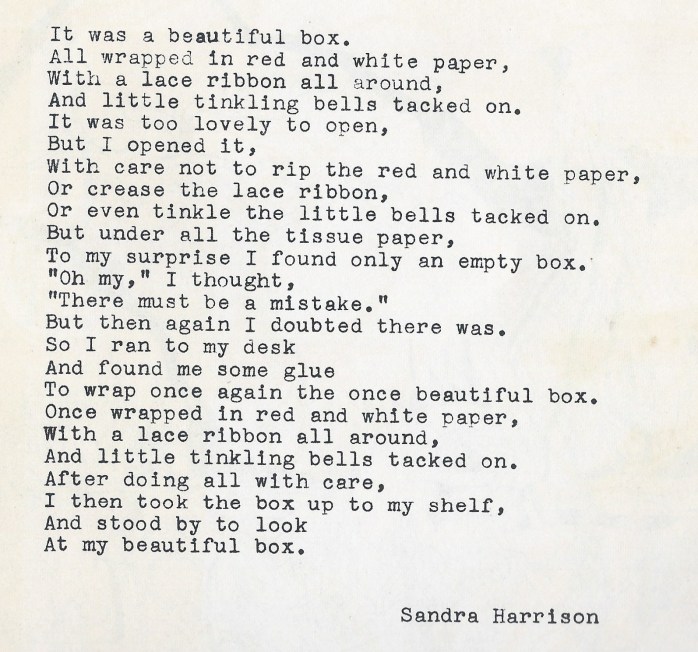
“Untitled” Poem

First published work was in Roosevelt HS 1971 Reflection Magazine. I was on the literary staff and it was suggested that one of my poems be selected. I would edit it today with slight changes especially in punctuation.
Collecting- What Do You Collect?
I collect dolls of all sizes, miniatures, doll houses, depression glass and children’s books by famous authors.

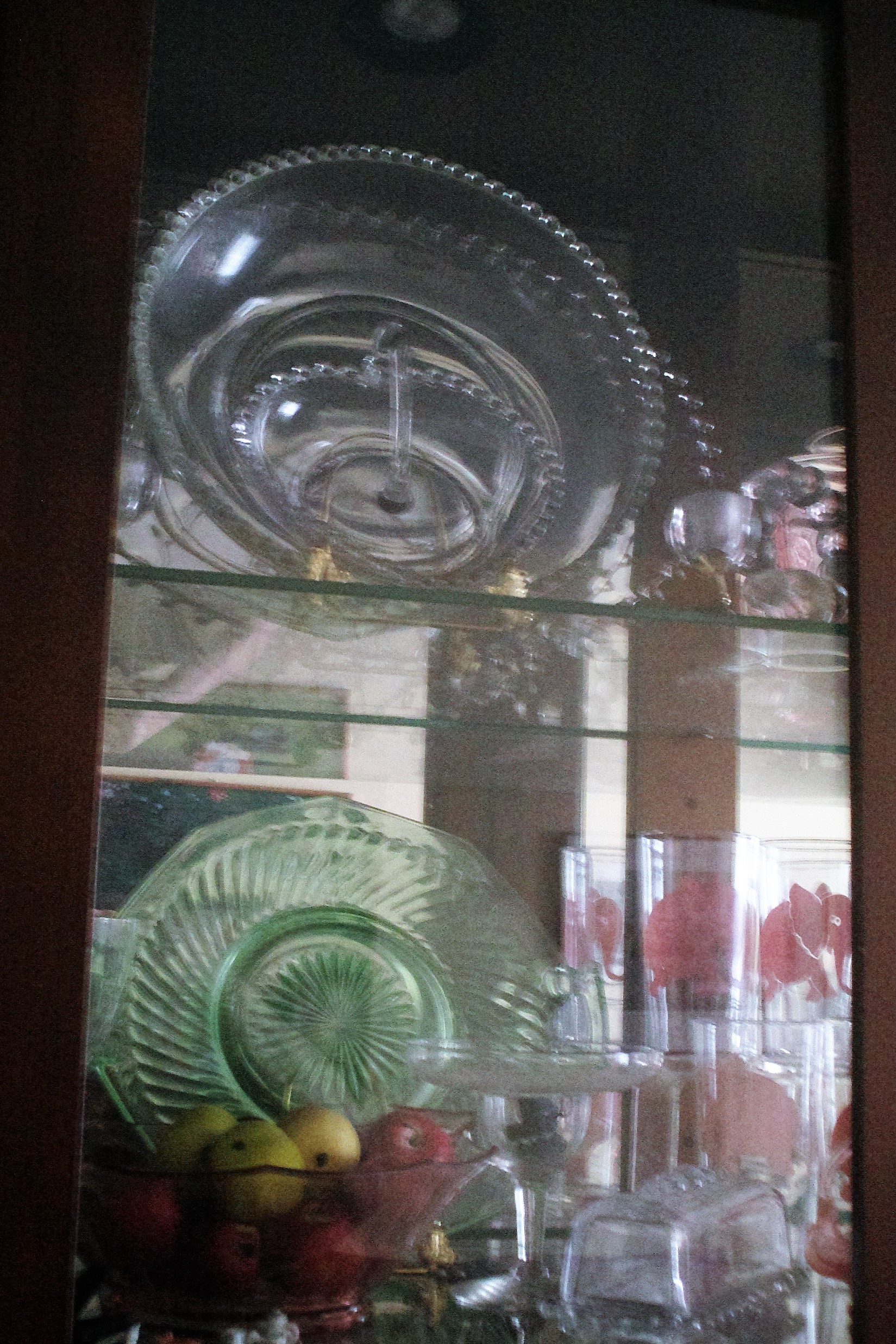

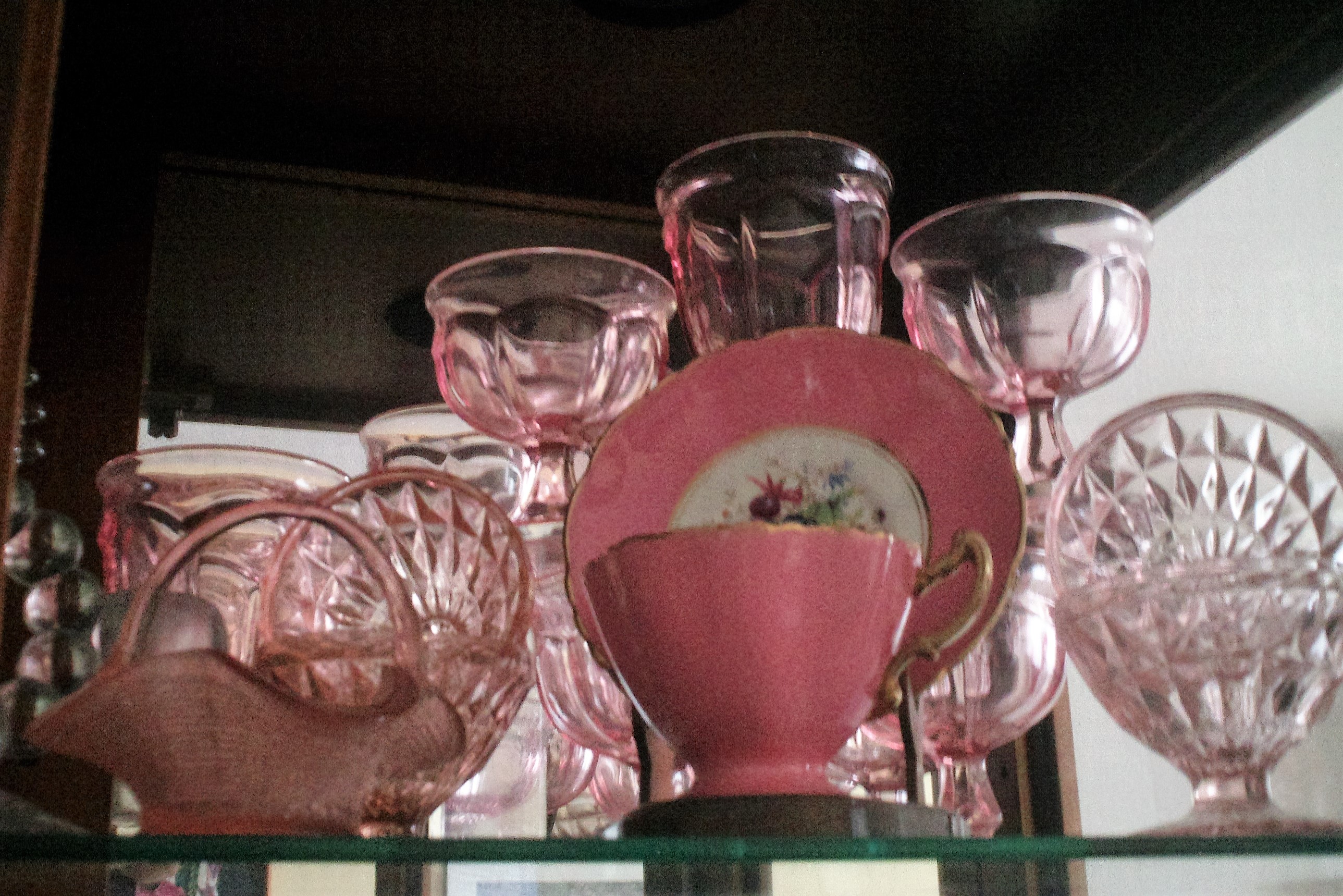

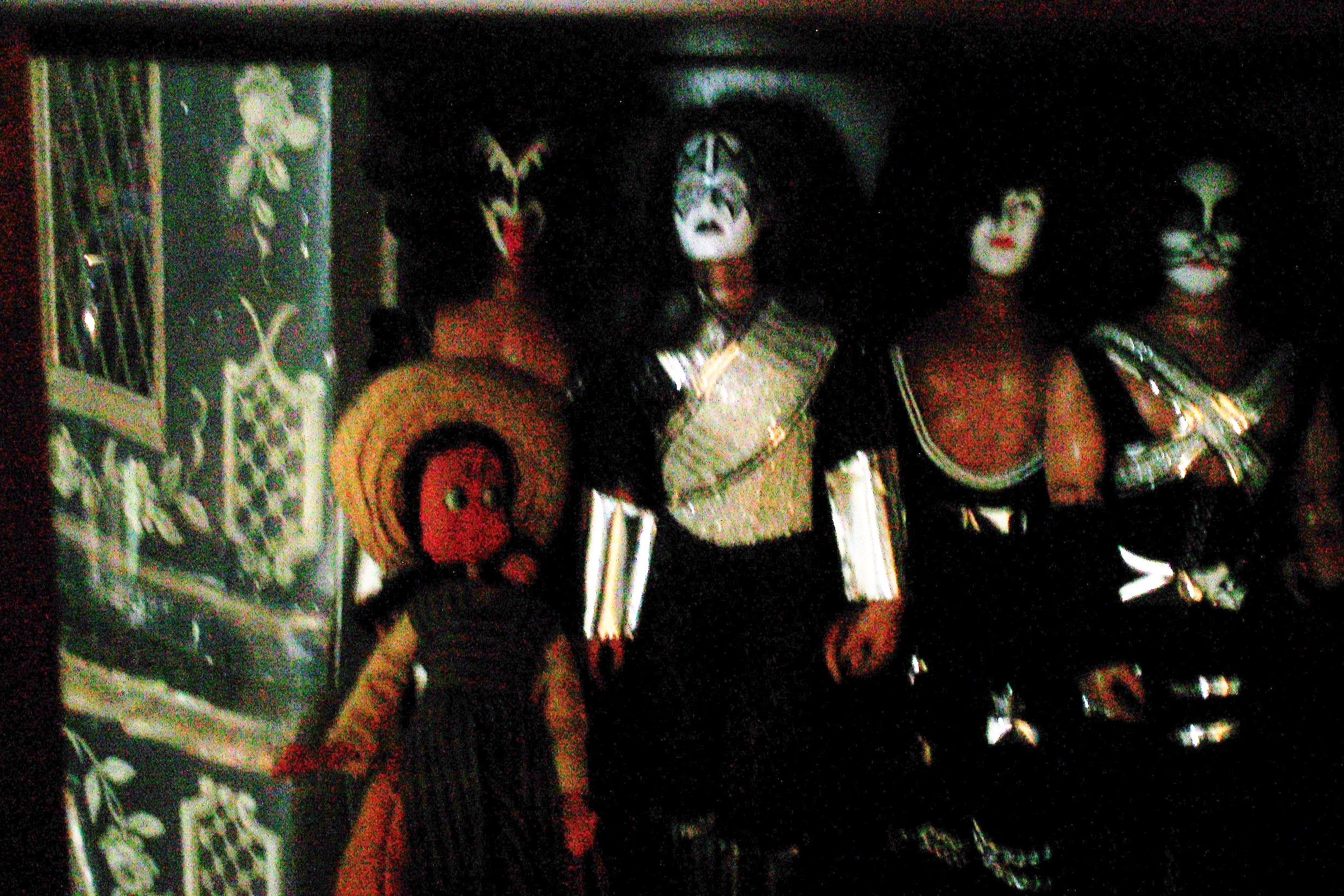


Faulkner’s The Wishing Tree, depression glass, and dolls (5 Sasha Dolls, 1 Kathy Kruse).
White Plains Anecdotes
Decided to post some stories shared by people on Facebook (FB):
Mike Stinnett in responding to a picture posted of the former 1909 White Plains Public Library in the FB group of “White Plains, Remember when…” wrote the following:
“I used to read the cartoons in the Saturday Evening Post. They were there under the staircase at the far end of the stacks. One night I read them too long, and got locked in the library. Before I tried to climb out a window, I decided to see if there was anyone downstairs. to let me out. That old staircase next to the front door used to make a Gawd awful noise. I think I scared that old janitor half to death.”
This library building dating from 1909 used to be at the northeast corner of Grand St and Quarropas Ave before being demolished to make way for the County extension structure constructed during Urban Renewal next to Michelain Building. There is a parklet (small garden) on the footprint of the former library. The old Beachwood Tree that was in front of the library was saved but it died. A young tree was planted in parklet in its memory.
Do you have a story to tell?
Dealing With A Noisy Neighbor
What can you do about a noisy neighbor and get results?
Been dealing with a really bad neighbor about 12 years. Live in Co-op as a share holder. Offender is also share holder. Going through building management/Board, police or even approaching neighbor just did not work and actually made things worse. City even changed noise ordinances making noise complaints even more difficult to use.
Knowing How Sound Travels Helps:
Did lots of research on noise. There are two types of noise- audio and impact. Audio noise is loud music, TV, talking and sounds that passes through the air. Impact noise is direct contact with a surface area (walls, ceilings and floors) and/or connected to other surfaces (i.e. banging on wall traveling to floor and/or ceiling). Audio is easier to deal with.
Impact noise is almost impossible to stop except at source. Audio noise can also make impact noise. For example, a loud speaker that touches a surface can beat into that surface.
Audio noise in my building travels up and down between units stacked on top of each other but not from units on same floor. Had a neighbor tap dancing on their wooden floor affect my refrigerator. It shook and this was with an apartment next to mine. Hammering a surface directly or indirectly can travel everywhere. My building had a pump going all night long that I heard from the other side of building. This was a building ordinance violation in my municipality so a complaint to City stopped this. It sounded like a whale in the ocean.
Knowing Your Rights:
You have a right to a quiet environment in your building and/or municipality. This can be written in a lease, house rules or in a municipal ordinance. No one in turn should disturb one’s neighbor unnecessarily.
My building dates from 1954 and found out that there is an empty space between floors. Sound coming from above is often worse than from below. Floors in my building require that 80% of floors be covered except for kitchen and bathroom. These floors needing carpeting are wooden. Sound travels from surface to surface (i.e. floor to walls to ceiling) by way of the “studs” or the wood beams that connect the surfaces to each other. Sheetrock does little to absorb noise and travels through it. Noise travels easily in open space like the space between ceiling and floor. When one hits or walks on ones floor, the impact of this hits the studs and the sound waves created by this action travels down to the floor below.
Action Taken With Temporary or Worse Result:
- Speaking with Offender.
- Calling, Speaking to or writing letter to building management and/or Board. Keep copies of letters and e-mails. Follow up calls with either e-mail or letter.
- Calling police who might show up and talk to neighbor but do little else. There might not be a violation. These ordinances are often referred to as nuisance laws. Read your ordinances in your community. They can also change. One policeman did tell me that the women above me had no carpets but had children running around in sneakers late at night (10:30 pm). I realized after one visit by police that my neighbor wasn’t even home. Her music was running loudly but she wasn’t even in the unit. Get reports by police and ask them to put in report things like they got no answer and/or that there were no carpets.
Action Taken That Got Results:
- Masking noise: Running white noise machines, fans or even air-conditioners. Out of season, fans can be faced to wall. You can also mask noise from the outside and having storm windows or double panes is better than one pane. But you can also put another barrier on windows that can be effective for outside noises.
- Playing an audio device (had to get surround sound and additional speakers cause my TV wasn’t loud enough).
- Striking back: Hitting a surface with a strong whack. You do not have to strike the ceiling but the walls connected to them. Hitting door metal frames is effective. Make sure the object you use will not damage your surface.
- Running a loud vacuum cleaner or motor (i.e. blender or electric tool). This is not the greatest method because you could damage machine. Doing this when you know your neighbor is sleeping can be effective. I figured out when my neighbor is in the unit or sleeping. Running an audio device does not require the offender being home. My neighbor runs hers when she isn’t in her unit. I did not hear foot steps or other banging. Car being gone from parking space is another indication.
- Sounding an alarm (loud noise). I got one that is used on doors and when I separate two parts, the alarm sounds. It is loud for me but this has been the only thing that seems to work with impact noise. I use it in my bed when neighbor gets up between 5 and 6 am and is noisy dropping things, slamming drawers or just walking in shoes on bare wooden floors.
Things Considered Doing
- Getting a Gong or loud instrument like an electric guitar with amplifier. Have played piano but did not work.
- Suing. But one needs proof and damages. Saw couple sue in small claims court (People’s Court) with wife winning a bigger cash reward (max) cause she had doctor bills showing pain and suffering. Husband did not have medical damages but won a lesser amount. Suit was made against building (not tenant) who did not have proper floor covering with a bunch of cats jumping about the apartment above the couple’s. I saw on YouTube. I myself was able to tape noise using video showing my apartment, and time on TV.
- Putting in sound proofing but this is not fully effective or easy to do. I asked to do this by filling in space between my ceiling and floor above but building did not allow. Could be a fire hazard. I considered putting in a ceiling below other but this is expensive and may only dampen 10-20% of noise. Would have to do with walls and even floors cause sound travels down or through them. Cost could be high and finding a contractor is difficult. All work has to go through my Board. They do sell sheetrock that dampers sound, clips for studs to attach surfaces that have rubber dampers and black plastic sheets that dampen noise that can be placed on ceilings, paint and even tape for connecting breaks in surfaces.
Being a Good And Quiet Neighbor:
One can lessen the noise you make by:
- Following rules of building by covering floors. Carpets need to be thick, large and have rubber under them. Small throw rugs do not do the trick.
- Walk on covered floors and not uncovered areas.
- Place things on floor and avoid dropping them.
- Avoid banging furniture up against walls, floor or ceilings (kitchen cabinets).
- Close draws and not bang them shut.
- Deal with squeaks at source. Oil them with even cooking oil.
- Avoid banging cabinets shut especially the noisy bathroom wall cabinet over sink.
- Doing construction at times allowed by building and/or municipality.
- You can go barefoot and/or shoeless. One can wear slippers without heavy bottoms or heels or socks with rubber grips on bottoms . Socks can be dangerous on a slippery surface. Socks with rubber grips on bottoms are given at hospitals and airplanes (upper classes) but they can be purchased.
- Lifting furniture when moving or put felt on bottom areas. You also avoiding scrapping your floors causing scratches.
Good luck and let me know your stories!
A Good Read
I’m an avid mystery book reader. Some of my favorite mystery authors include:
Jonathan Kellerman Karin Slaughter Martha Grimes
Linda Feinstein Sue Grafton Peter May
Ann Cleaves Mary Higgins Clark Nevada Barr
Sara Paretsky James Lee Burke Perri O’ Shaughnessy
Walter Mosley Tess Gerritson Lee Child
John Sanford Richard North Patterson Mo Hayder
——————————————————
Other favorite authors (now and in the past) include:
Dean Koontz Stieg Larsson Jim Butcher Fiona Davis
Douglas Preston/Lincoln Child Sidney Shelton
Ann Rice John Sandford Alexandre Dumas Robin Cook
Leo Tolstoy Ayn Rand
—————————————————————–
Biographies Worth Reading:
Jackson Pollack: An American Saga
You Can’t Be Serious (John McEnroe)
Open: An Autobiography (Andre Agassi)
Parks of White Plains: History Behind the Name
White Plains (WP) Historic Society’s newsletter posted article below on the history behind the names of City’s parks:

It should be noted that the City has other parks (see information posted below from City’s Park’s & Recreation Dept.), plazas and playgrounds (not in a park) and not listed in Newsletter above (i.e. Renaissance Plaza, Bark Park, Bryant-Mamaroneck Park & Mitchell Place Tot Lot). Baldwin Farm is named for former farm that makes up the park. Information can be found in blog entry on Quarry & Farms.
There are private gardens, parklets (memorial gardens) and Westchester County parks/gardens throughout WP.
Battle Hill Park is a recreational park on Battle Hill and is also named for hill. Chatterton Playground is named for the first name for Battle Hill during Colonial times. The hill refers to the family living on the hill. Chatterton was tenant farmer of Philipse Family.
Ridgeway Nature Trail starts on Ridgeway school.
Garden of Remembrance commemorating Holocaust is on Westchester County land on Martine Ave. Bronx River Parkway Reservation is a County park running in western part of City. 

Buried in White Plains
Entry is from White Plains, NY: A City of Contrasts from chapter “North Broadway Area.”
Both the Presbyterian Church & Cemetery and the White Plains (WP) Rural Cemetery on N Broadway contain graves from colonial times and veterans of the Battle of WP. As was once customary, people had family burial plots near their homes and WP still has three smaller burial areas.
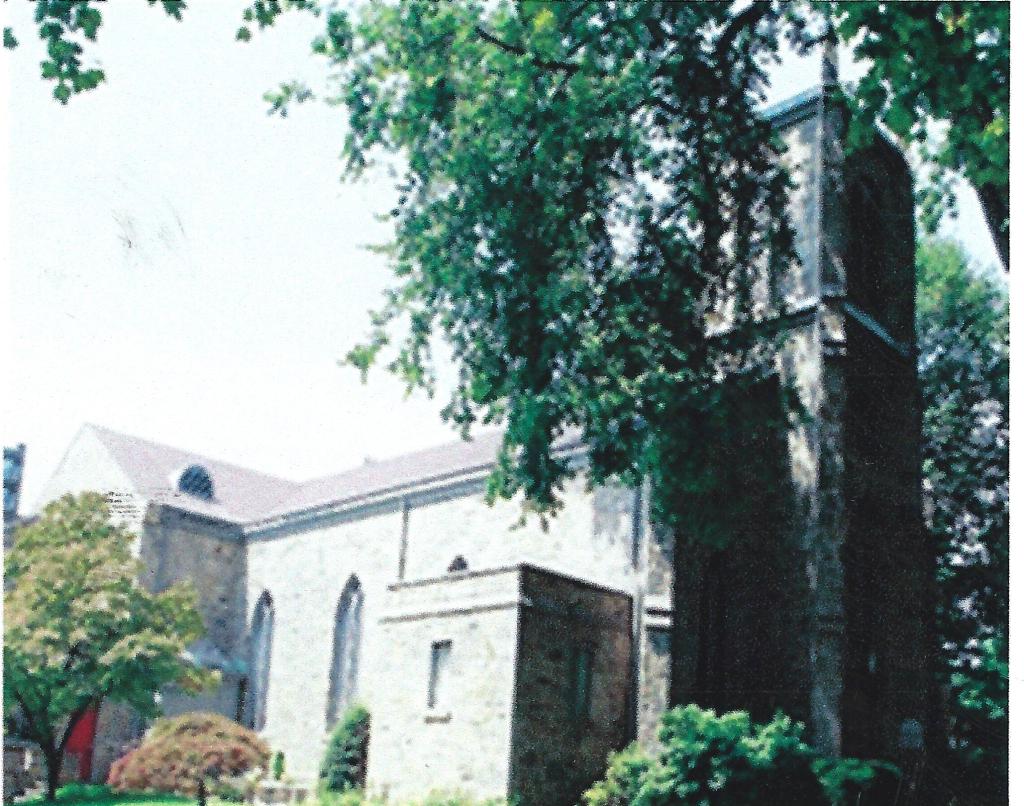 Today’s Presbyterian Church dates from 1855 with additions added in 1924 and 1958. Before constructing the first meeting house in 1727, services were held in the homes of its members as far back as 1722. The first structure built on the site was destroyed by fire as well as its 1824 replacement. The first structure was destroyed during the fire set by Major Austin after the Battle of WP.

Parts of the graveyard were moved to the north side of the chapel to make room for additions. Graves date from 1709. The church’s first ordained minister, Reverend John Smith (1702-1771) was buried under the church. His tomb stone was originally in the grave yard but was later placed inside the church. Jacob Purdy of the Purdy House is buried in the cemetery .
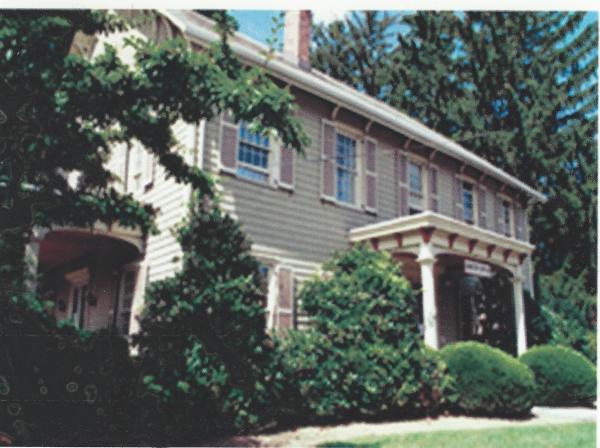 The WP Rural Cemetery, incorporated in 1854, bought the land bordering the property of the Methodist Church in 1855. The Church Building (1797) became the Cemetery’s office and replaced the first structure that was destroyed by fire in 1795. The Church’s grave yard dates back to 1797.
In 1966, before the WP Hotel (now Esplanade) was constructed, the burial plots near the corner of S Broadway and the E Post R that were part of the Grace Church Cemetery and Hatfield Family Burial Ground were relocated to the Rural Cemetery. Grace Church’s first building of 1825 was located on the site till it was abandoned in 1864 when the congregation moved to its new building on Main St. The Hatfield relations were among the first families to settle in White Plains. Captain Abraham Hatfield owned property and the Hatfield Tavern that was located near the first courthouse. Gilbert Hatfield’s home on Hatfield Hill was used by Americans during the Battle of WP. The home was located at 1020 Hall Ave till around 2013 when it was demolished. The former home of Daniel Hatfield still exists on Lake St.
Eight graves from the Dick Family Burial Ground (1798-1854) were also relocated to the WP Rural Cemetery in the early 1900’s from a section of the city along the south side Westchester Ave between Bryant Ave and Meadowbrook Rd.
 WP Rural Cemetery has a cannon and memorials honoring veterans buried in the cemetery.
 A small burial area for Harriott-Leonard Family on West Street remains with one tombstone for Abraham Leonard. In more recent times, it received attention by being cleared of overgrowth.
The much larger Purdy Cemetery is along Mamaroneck Ave just south of Hillair Circle. Both burial plots have gotten some recent attention. On November 7, 2010, a new headstone was rededicated for Hercules Wessels, one of several people who were buried in the Purdy Cemetery. The WP Historical Society has been restoring other tombstones in the grave site that is on private property but is now managed by the Historic Society. More information can be found on their website at whiteplainshistory.org.
 .
.
What remains of the Foster Family Burial Plot is located on Hall Ave where it becomes Buckout Rd. The Baldwin Cemetery is located further down the road from the Baldwin Farm that is now a city park. There is only one grave stone standing. The cemetery was recently named a Historic Landmark by the City.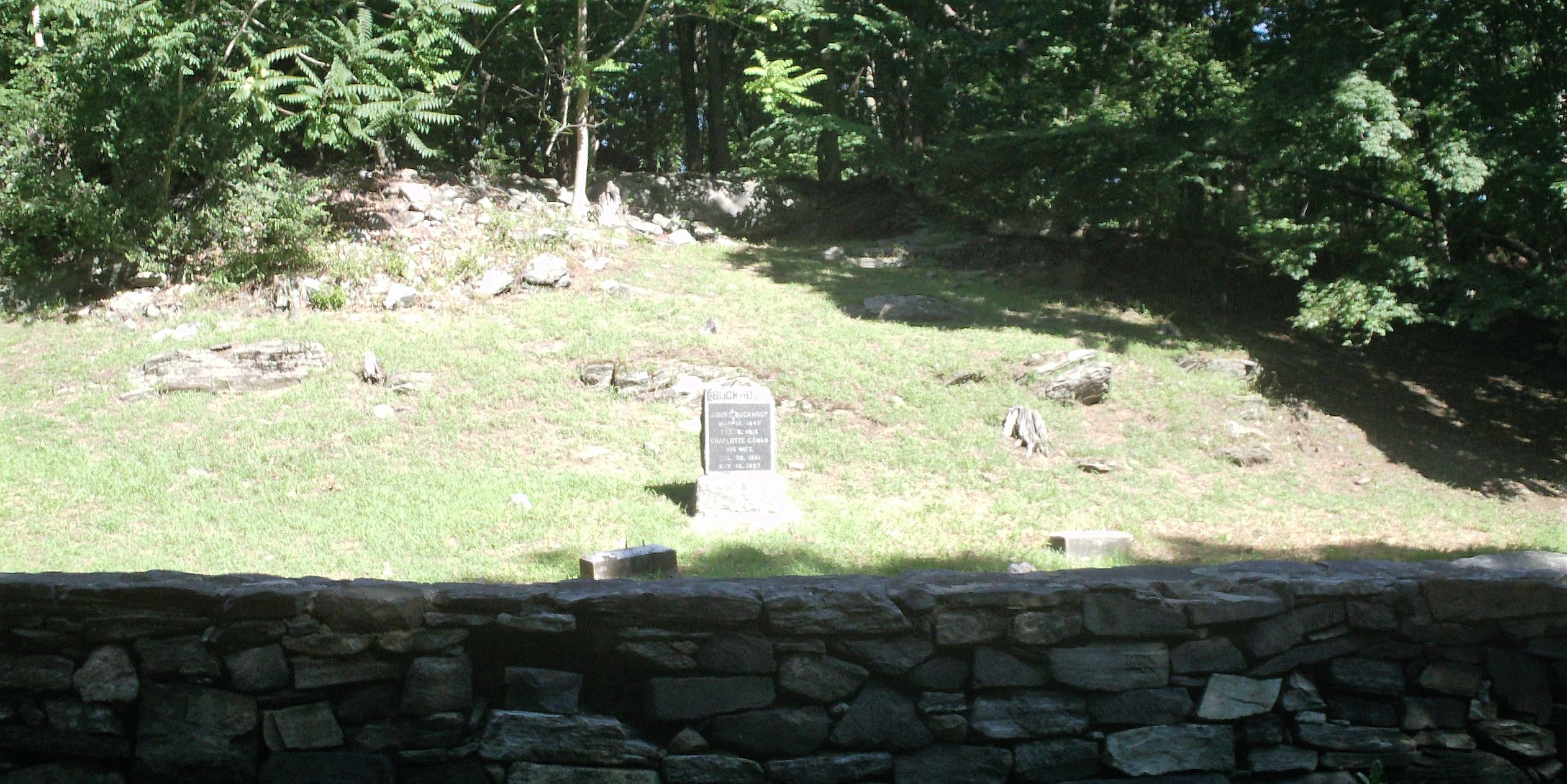
There are former members (including the founders) of Good Counsel buried at the Chapel of Divine Compassion on N Broadway. Father William A. Dunphy pastor of St John the Evangelist Church (1885-1891) is interred under the altar in the center of the sanctuary of the church.
For detail information on cemeteries see Patrick Raferty’s books: The Cemeteries of Westchester County. Erik Pleska has a book and website on Buckout Rd. of West Harrison @bedofnailz.com.
White Plains’ Older Homes
This entry is an updated version of a section from White Plains, New York: City of Contrasts in chapter “Houses:”
Some of White Plains (WP) early farms would later became country estates for wealthy New Yorkers (later 1800’s to early 1900’s), private schools, hospitals, golf courses, and even a large hotel but as the population grew in the 20th century the Business District expanded and many of the large estates were subdivided to build smaller homes and apartment buildings. Some mansions were preserved by being repurposed for non-residential uses.
A small number of homes that date from the 1700’s can still be found but most have been moved from their original sites. Some homes built during the 1800’s can also be found but the majority of homes in the city were built during the 20th century. In searching for older homes, the Internet can be a useful tool. Most homes listed for sale online provide the date of construction. The City’s Assessors Office is another good source.
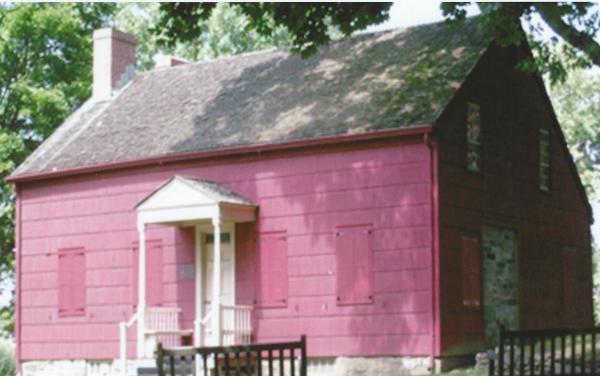
Besides the Jacob Purdy House (above) there a few other structures in WP that date from the colonial period. The Caleb Hyatt house (below) where Captain Benjamin Lyon lived during the American Revolution was moved from North St (where the offices of the former 1956 General Foods Building are today) to 28 Colonial Rd. In 1953, George Simpson moved the house and lived in it for a time.


In 1951, Simpson moved the former Anthony Miller (above house in blue) home from its location at 525 N Broadway to 379 Church St. The house is at the end of Church St and dates from the early 1720’s. The yellow house on N Broadway dates from 1776. Information is from Assessors Office and real estate websites.

The Queen Ann Victorian (brown) house at 108 N Broadway dates from around 1900 and was considered for a historic landmark by the city’s Historic Preservation Commission. House recently got a new outside paint job and its’ yellow.


Victorian home at 90 Greenridge Ave that dates from 1890 was built by the architect of Lyndhurst, Alexander Jackson Davis.
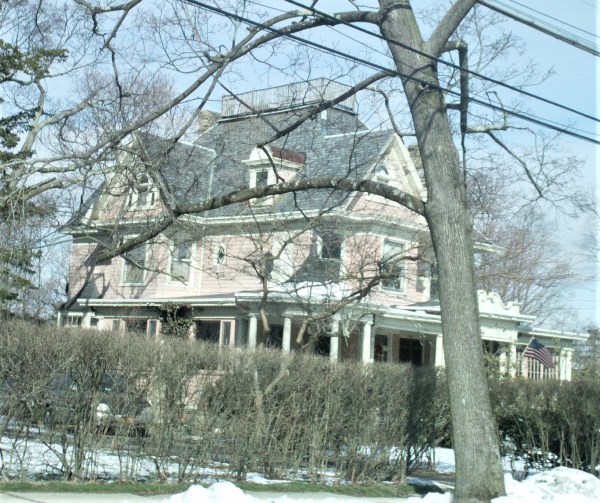
Another Victorian built in 1893 is at 99 Quinby Ave. It might have been a school at one time but can not find source.
The former Carpenter House dating from 1874 can be found at it’s original location on Purdy Hill just above the Hillside Village Condominiums at 16 Park Terrace.
The Percy Grainger House at 7 Cromwell Pl was built in 1893 for the Cromwell family. The composer lived in the house from 1921 to 1961 and his widow stayed on till 1979. The house is maintained as a museum by the Percy Grainger Society (see website for more information).

The 1810 home of Minot Mitchell (a lawyer) was moved to Mitchell Pl and is used by the American Legion. Originally, it was on S Broadway (where Cameo House is today) and designed to resemble the second court house in WP.
The Soundview Manor at 283 Soundview Ave was originally built as a wedding gift for Robert L. Dula. The house dating back to 1920 had been a Bed & Breakfast Inn for a number of years but the house was more recently sold to a developer who has plans to demolish the house and subdivide the property. The house is now in poor condition but was named a historic landmark by WP’s Historic Preservation Commission.

The Ballard-Durand Funeral Home (left) at corner of Maple Ave and S Broadway was once a residence that was built before 1938 when it was modernized for its present use.

The former C.V Rich Mansion (above) on Ridgeway Avenue dates from 1911 became the location for the Woman’s Club of WP in 1931. The group has roots back to 1904 but the Club was established in 1916. Additions to the original structure were completed in 1932.

The original house built by Daniel Hatfield House in 1786 is at 49 Lake St. Renovations and the store in front were added in 1924. The chimney foundation was made with cannon balls found in the area from the Battle of WP. The former Gilbert Hatfield house (1020 Hall Ave) that was used by officers of American Continental Army during the Battle of WP was finally located on Hall Ave but was demolished before publication of book. Pictures were actually online.
The stone sided house (below left) at 791 North St dates from 1895. The home at 880 North St is the former home of James Gibbons who died in 1908.

The house owned by Howard J. Griffin is also located on west side of North St at 1131 North St and is across from the Maple Moor Golf Course. The house has a section which is believed to date back to colonial times. The house was renovated in 1923. Griffin’s son Chauncey served as mayor of WP from 1931 to 1933. The farmland purchased by Howard Griffin in 1879, which contained his cider mill, became the Maple Moor Golf Course in 1925.

Former 1817 farmhouse is located at 250 Rosedale Ave. The former Gedney Farmhouse at 30 Burling Ave dates from around 1854 (or 1859 depending on source). It was used by the Westchester Music Conservatory when they first came to WP till they moved to Central Park Ave. Howard Willet, a gentleman farmer, bought Gedney Farm in 1897 and his second home (made of brick) is now at 25 Hathaway Lane. His first home burned down so this one was built after 1909. House address was on Oxford when it was built but the exact date of construction is not available.
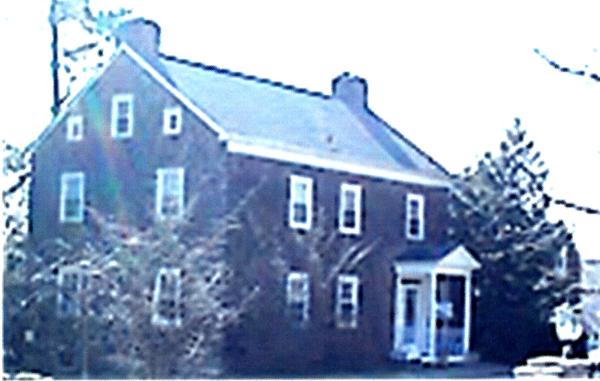
The former Ernest Erbeck home on Mamaroneck Ave is like one of the last houses left on the street in the Business District. The structure (below) dates back to the early 1900’s.
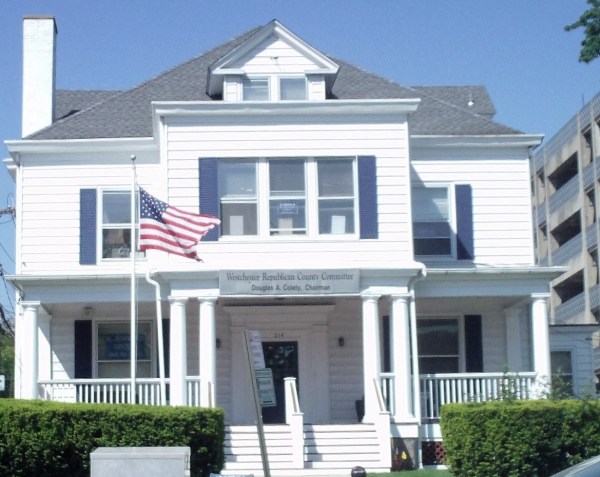

Little Farm is off of North St and the farmhouse dating from 1900 or earlier is still in the development of Little Lane. Information about this house and farm can be found on White Plains’ Historic Society’s website.
Besides the apartment buildings mentioned in other sections related to the book there are apartment buildings that predate 1940 in other areas of the city. Saxon House (1928) at 23 Old Mamaroneck Rd, Surrey Strathmore (1939) at 90 Bryant Ave, and Bristol House (1930) at 10 Nosband Ave are three.
Information about the Purdy House and other homes in WP can be found in other blog entries of this website.
White Plains’ 1st Village Street
The following entry is an updated version from “The Purchase of White Plains” chapter in White Plains, NY: A City of Contrasts:
 White Plains (WP) in Colonial days was largely made up of farms. Mills sprang up along streams & its rivers bringing the village its earliest industry.
The center of the village was along a former Indian trail that is now the west side of N Broadway north of Main St and south along what is now S Broadway & Maple Ave.
Along the dirt road was “the commons” or village green. Today, Tibbits Park and the other undeveloped areas left along the street are what remains of this former open space.
The Cochran Map (pictured above left) is a rendering of the original map held by Westchester County Archives (see their virtual archives) that was an early map drawn during the Battle of White Plains of Oct. 1776 by soldiers serving the American Continental Army.
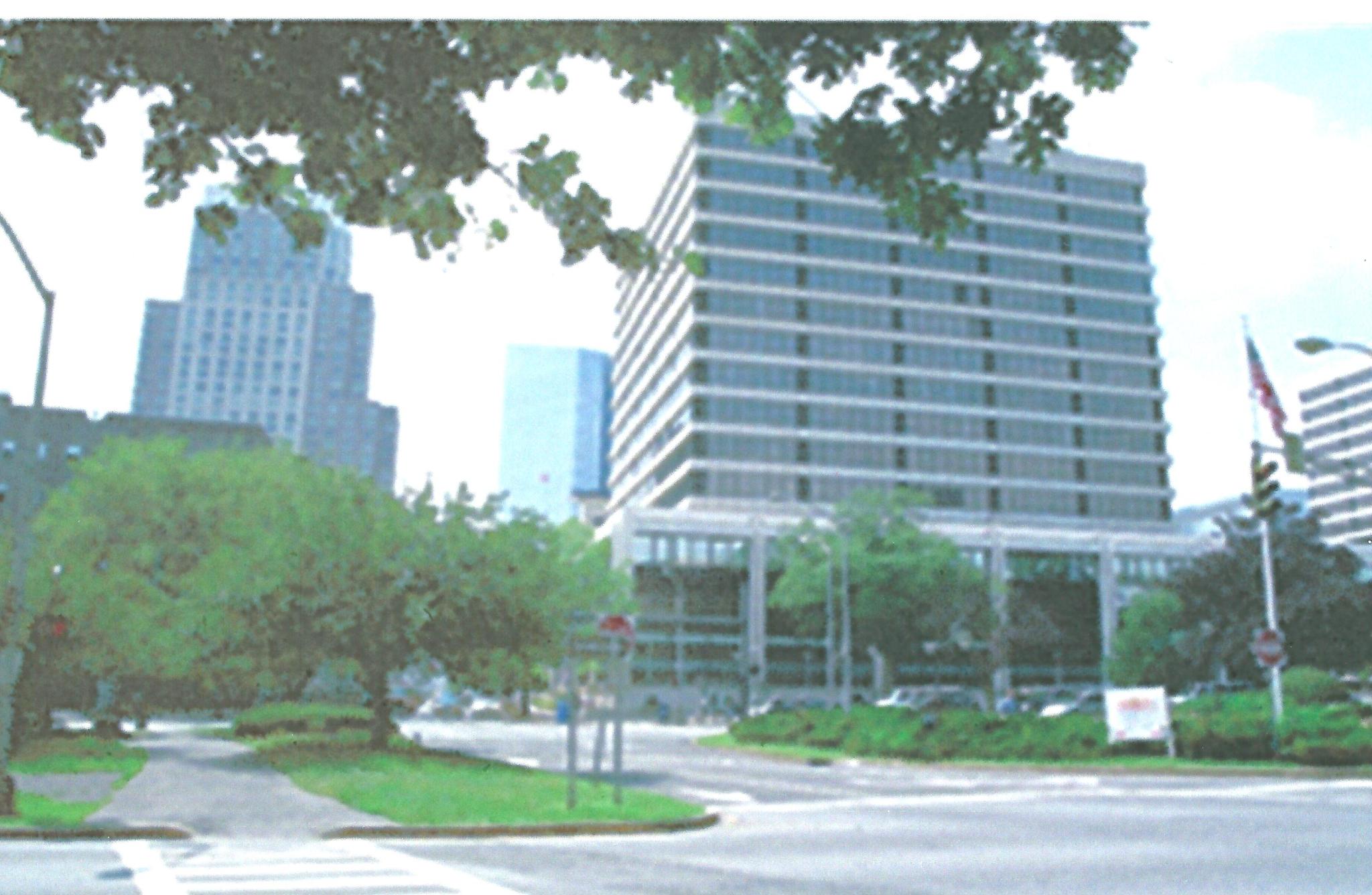

At 52 North Broadway in White Plains (WP) eleven histoic buildings make up the Good Counsel Complex. In 1886, Sisters of the Divine Compassion was founded in NY City by Mother Ma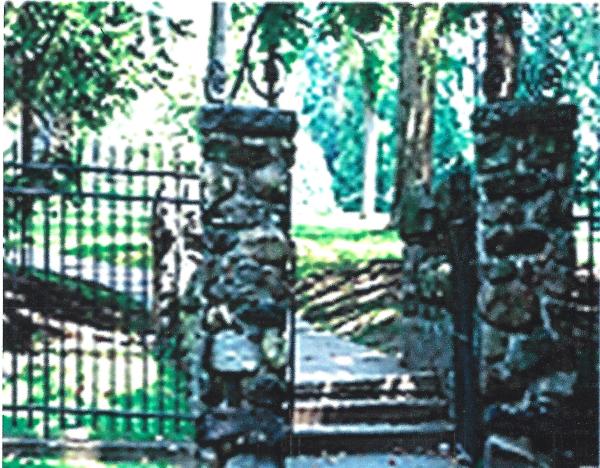 ry Veronica and Monsignor Thomas S. Preston. They bought the N Broadway property in 1892 and opened the House of Nazareth for children. Gate to property is on left.
In 1901, the Good Counsel Training School opened and in 1918 they began a high school. The Academy of Our Lady of Good Counsel was established in 1922 and its buildings are in the center of the grounds. At the end of 2014-2015 school year, the high school closed and the elementary school moved to another location.
The Convent was established in 1908 and its buildings were of the Spanish mission style. On the property, are two former residences: the Tilford House completed in 1856, and Mapleton House completed in 1867 ( pictured below). 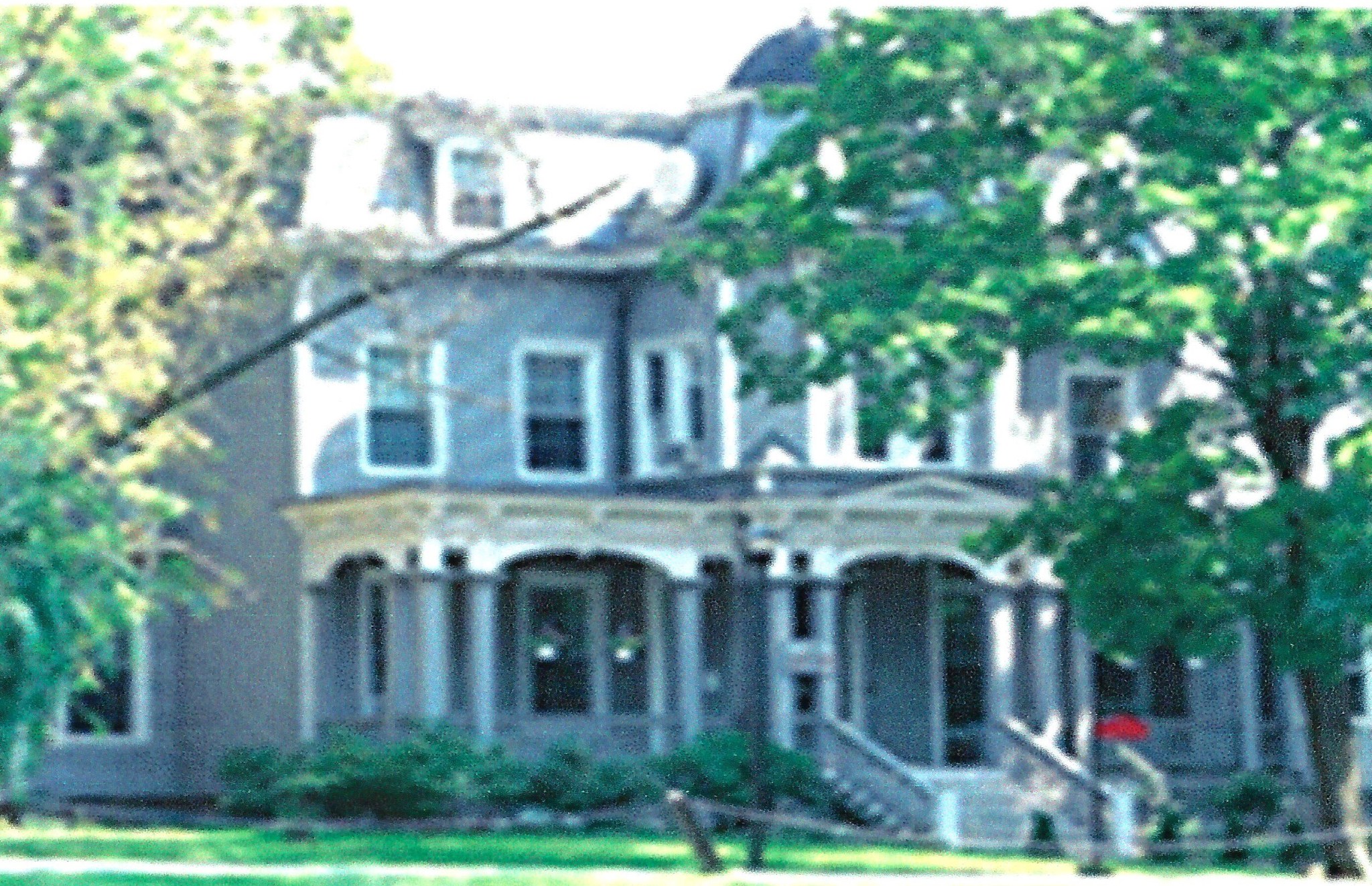
Tilford House was moved & repurposed when the Chapel of Divine Compassion (left) was constructed on the site in 1897. The co-founders of Good Counsel are buried in the church along with former clergy & Congressional Presidents.
The Complex was sold in 2015 to a developer who has plans to demolish most of the buildings. Their plan is to move Mapleton next to the church that still remains in the hands of the “sisters.
Since 1976, Pace University has shared the original complex. Preston Hall (dating from 1931) once housed Good Counsel College that was established in 1923. In 1972, the college was renamed WP College. Original gates can be found at the entrance on N Broadway.
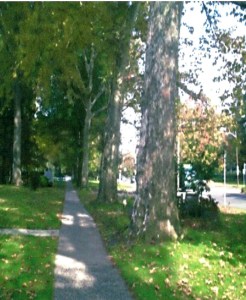
Across the street from the Complex area, are some of the city’s oldest trees.
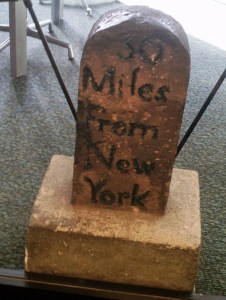
Since the 1930’s, N/ S Broadway, and the Post Rd became part of New York Route 22. The post road was used for mail delivery during colonial times and an old 30 mile marker that was located where Maple Ave and South Broadway intercepted. WP Library is its keeper and is now in reopened Local History Room at WP Library (below).
Presbyterian Church & Cemetery and the WP Rural Cemetery on N Broadway contain graves from colonial times including those who fought in the Battle of WP. Information about the cemeteries can be found in the entry of website: Buried in WP.
Today’s Presbyterian Church (left) dates from 1855 with additions added in 1924 and 1958. Before constructing the first meeting house in 1727, services were held in the homes of its members as far back as 1722. The first structure built on the site was destroyed by fire by Major Austin after the Battle of WP in Nov 1776. A replacement 1825 structure would also be destroyed by fire.
The WP Rural Cemetery, incorporated in 1854, bought the land bordering the property of the Methodist Church in 1855. The Church Building (1797, above)) became the Cemetery’s office and replaced the first structure that was destroyed by fire in 1795. The Church’s grave yard dates back to 1797. For more information about the cemetery see the entry of website: Buried in WP.
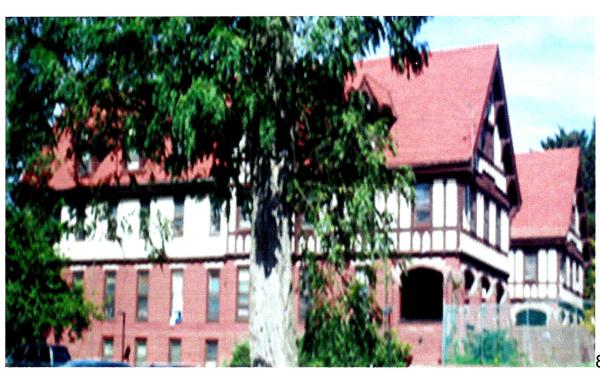
The Tudor style building, the Kennedy-Duncan Building pictured below left) at 69 N Broadway is the older part of the YWCA residence and dates from 1914. It was the former Presbyterian Rest For Convalescence and in 2011 was put on the National Register of Historic Places. The YWCA started as a girls club in 1929, was incorporated in 1930 and has offered housing for woman since 1930. The newer addition dates from 1970.
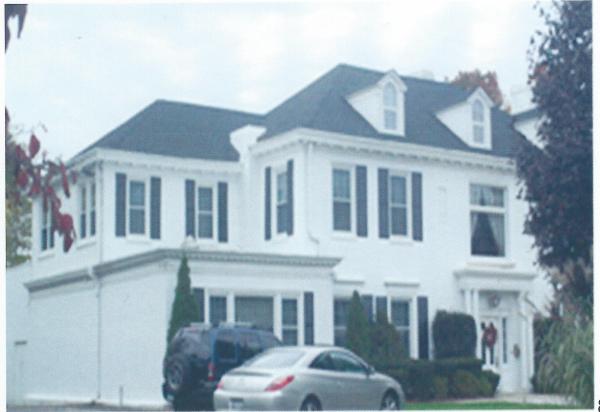
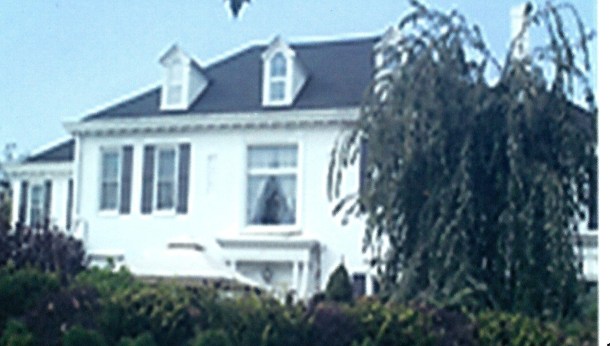
Along N Broadway and on the streets nearby there are a number of buildings, private homes and apartment buildings that were built before 1940. The house at 96 N Broadway (yellow house pictured below left) is listed by WP as dating from 1776. The Colonial Mansion (1899) is at 139 N Broadway (pictured below right). For more information see “Businesses and Organizations” blog entry,
.
. 
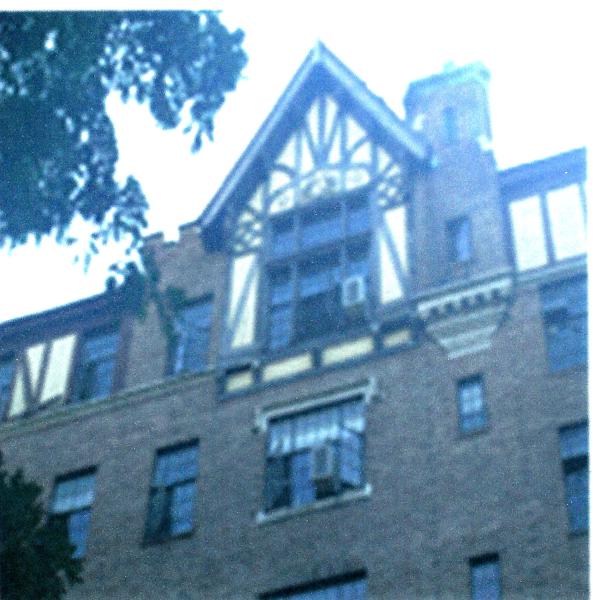
Broadpark Lodge (1927-8) on Westchester Ave and Main St has some noteworthy architectural details such as a weather vane on a high tower (pictured above) 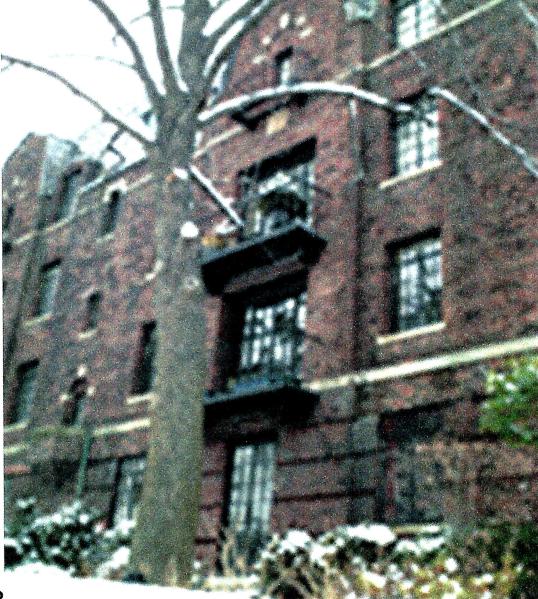 and small carved heads decorating the building.
Other older apartments on the street are The Chateau (1928) at 87 N Broadway, the Dorchester (1939) at 40 N Broadway and Broadlawn (pictured left; 1928) at 20 North Broadway. Broadlawn is of French provincial design and the grounds contain two rare Dutch Elms.
. 
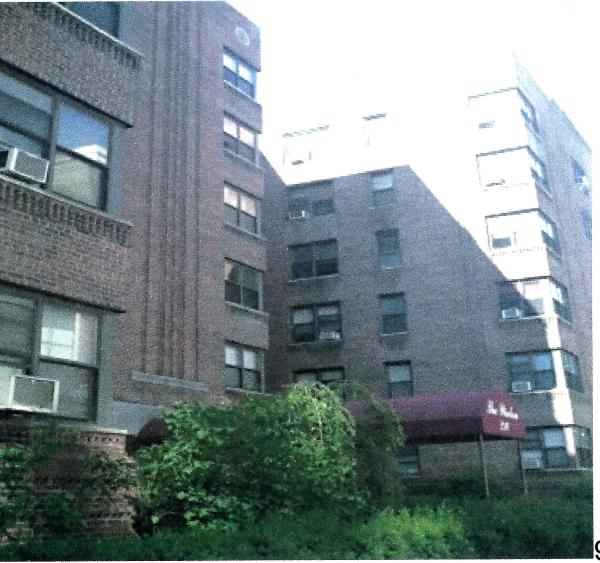
One S Broadway (1937), the Brentwood (1935-6) at 300 Main St (above left), the Wellington (1925) at 312 Main Street, the Winton (pictured above right;1939) at 210 Martine, the Parkville House (1920) at 16 Lake St, the Granada Arms (1929) at 30 Winsor Terrance, Franklin Manor/Court (1928) on Franklin Ave, and the Royal View Condominiums (1928) at 42 Barker Ave.
 Royal View
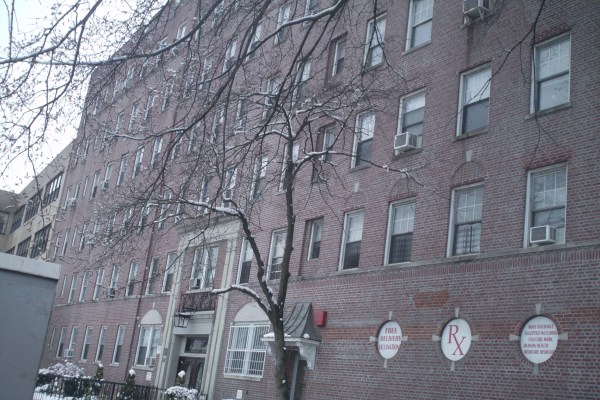 1 S Broadway
Other apartment buildings in the city that predate 1940 include: Saxon House (1928) at 23 Old Mamaroneck Rd, Surrey Strathmore (1939) at 90 Bryant Ave, and Bristol House (1930) at 10 Nosband Ave.
 Sandy's Written Creations
Suffrage Movement Comes to White Plains: “Give Us Your Vote” at ArtsWestchester
Posted on December 12, 2017 by sandraharrison1954
Leave a Comment
Visited ArtsWestchester’s exhibit on Suffrage Movements- “Give us the Vote” that ends Jan 27, 2018.
Share this: Sandy's Written Creations