1%

Found this article about the 1%:

Barron’s Penta Daily     May 7, 2012, 12:18 A.M. ET

Who Are the One Percent?

By Richard C. Morais

“If you prick us, do we not bleed? If you tickle us, do we not laugh? If you poison us, do we not die? And if you wrong us, shall we not revenge?”

Those searing words of Shylock in Shakespeare’s The Merchant of Venice haunt me as I read the explosive report sitting in my lap. On Wednesday the Harrison Group and American Express Publishing releases their 2012 Survey of Affluence and Wealth in America at the American Express Publishing Luxury Summit unfolding at the Breakers in Palm Beach. Penta was given an exclusive look at the survey in advance. It’s a sobering document.

While the report studies all affluent earning more than $100,000 year, I am only going to zero in on the section of the report dealing exclusively with the top 1%, 390 of the 1,268 surveyed that had more than $450,000 in annual income. Here, first, their definition of the One Percent: they have median annual household income of $750,000, median assets of $7.5 million, and there are 1.2 million of them across the country.

Let’s put that annual income level in perspective. The presidents of august educational institutions like Mountain State University of West Virginia and Chapman University of California make $1.8 million and $1.5 million a year respectively. So it’s important the public realize the much-derided 1% is a rich group, yes, but they are nowhere near the 400 über-rich, the Larry Ellisons and Donald Trumps that make up the wealth mythology floridly living in our imagination.

In actual fact, the 1% look a lot more like “regular folk” than most of us really realize. According to the survey:

– 67% grew up in a middle class or poorer household. – 85% made their wealth in their lifetime. – 76% describe themselves as “Middle Class” at heart. – 3% is the sum total of their assets that they inherited.

“This is the triumph of the Middle Class,” says Jim Taylor, Vice Chairman of the Harrison Group. “Even when older, the [One Percent] don’t lose the degree with which they see themselves as the repository of the Middle Class. That means hard work. That means the value of education. That means the value of family and luck.”

Indeed, it’s important to understand most of these “Middle Class” millionaires rose to financial prominence by striving to create a business or idea or product of excellence. The wealth was a byproduct, came to them suddenly and unexpectedly, usually through a liquidity event, such as a big bonus at a major company, or a private equity buyout of the firm they built from scratch.

But here is what is so sad about the Amex-Harrison report: hammered in the financial markets and hammered by the public, this Middle Class made-good, these engines of economic growth for the nation, have dug themselves into the bunker, battered both emotionally and financially. They are hoarding cash, avoiding almost all risk, shunning their communities and hunkering down with a few select friends and family only.

They are, in a word, disengaged.

In 2007, the One Percent had a savings rate of 12%; in 2011, that savings rate had jumped to 34%. So no surprise their savings doubled between 2007 and 2011, from $250 billion a year to $550 billion a year. The percentage of those savings going into “personal savings and money markets,” earning low returns but relatively safe, has jumped from 24% to 54%. Conversely, and more disturbing, is the fact the rate invested in “financial products and markets” has plummeted from 76% to 46%.

That is not good for the nation. These people are, by definition, risk takers, and yet they’ve stopped taking financial risks. They are, in the words of the report, “irrationally defensive.” Taylor warns that “this is tremendously risky for the country. They’re putting their money under the mattress. They’re terribly nervous.”

Why should the public care? Very simply. Investment doesn’t follow job creation; new jobs are the result of risk-takers making investments.

It gets worse. For those who perceive themselves as “Middle Class” at heart – repositories of all those hard working and family values that added greatly to our nation’s fabric – it is a great shock to suddenly be vilified as social villains. Their response, understandably, is to pull back, to become ever more emotionally isolated and withdrawn from the public arena, precisely when they are most needed to be engaged with society.

In Q1 of 2010, 62% of the One Percent surveyed felt it was “important for me to join in social events in my community.” By the same quarter in 2012, that figure had plummeted to 44%. These very affluent folk are so circling their wagons that even their interest in socializing “with people who have achieved a similar level of success as I have” has fallen from 75% to 67% during the same period.

A staggering 92% agreed with the statement, “More and more I find I am preferring to spend my time with my very closest friends and family.” (Compared with 82% for the general population.) It’s an isolation that’s been steadily growing every quarter. In a related response, hanging out with “close friends and family” in the current year was a specific “goal” for 54% of those questioned in Q1 2011. Just a year later the figure had jumped to 62%.

It’s almost like, after several years of being blamed for all the ills in the nation, the One Percent are washing their hands of the rest of us, now too afraid to even be seen in public: 25% are “extremely/very concerned about being scorned for being in the top percent in the economy.” Cara David, Senior Vice President at American Express Publishing, warns against a nation where “success is not something you want to aspire to.”

So let’s take a deep breath. We must respect the Wall Street protestors for acting as a kind of conscience for the nation, their chants and drumming a kind of cri de coeur that all is not well with the nation. But we should also recognize that Witch Hunts are also very much a part of the country’s DNA, and the demonizing of the wealthy has finally reached a dangerous tipping point for the nation.

“We somehow have to change the storytelling about the wealthy in this country,” says David. “The more and more they pull back – it’s not good for anybody. We need the wealthy to be active and out and not be hiding. And those that aren’t [wealthy], need to have more appreciation for those that are.”

The chanting Wall Street protestors, the populist politicians, the media pundits who somehow think it is good sport to hunt down the nation’s wealthy with the soapbox equivalents of elephant guns, need to understand how they are collectively destroying the environment. It’s a simple fact: bio diversity is the sign of a healthy eco-system; kill off the elephants and we all die.


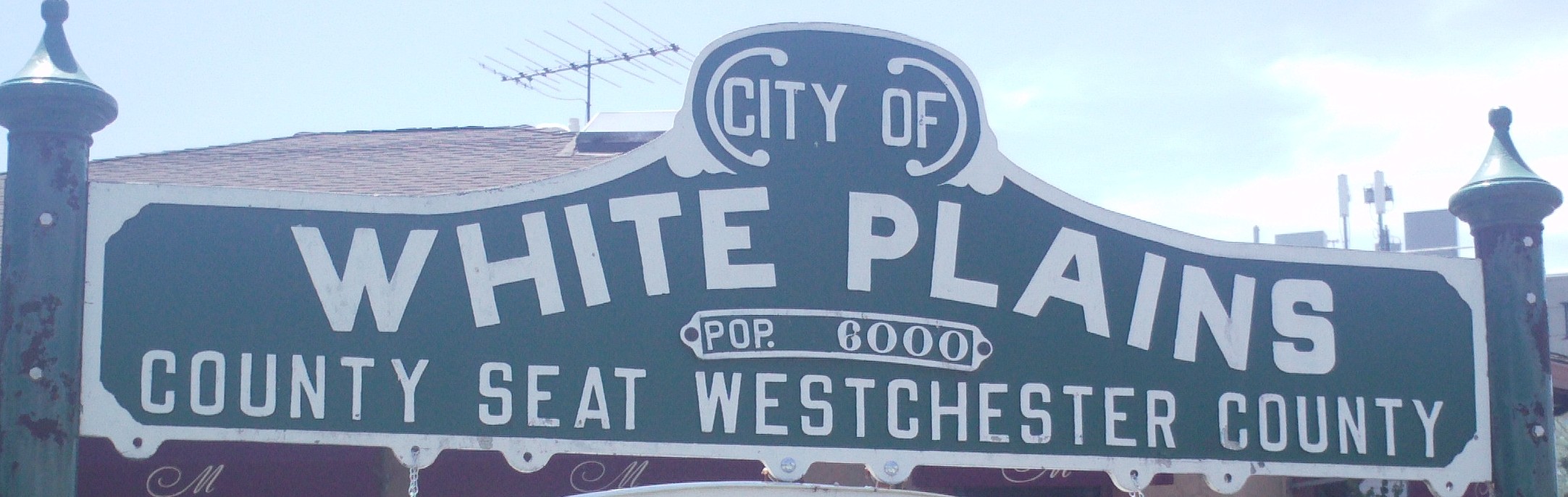
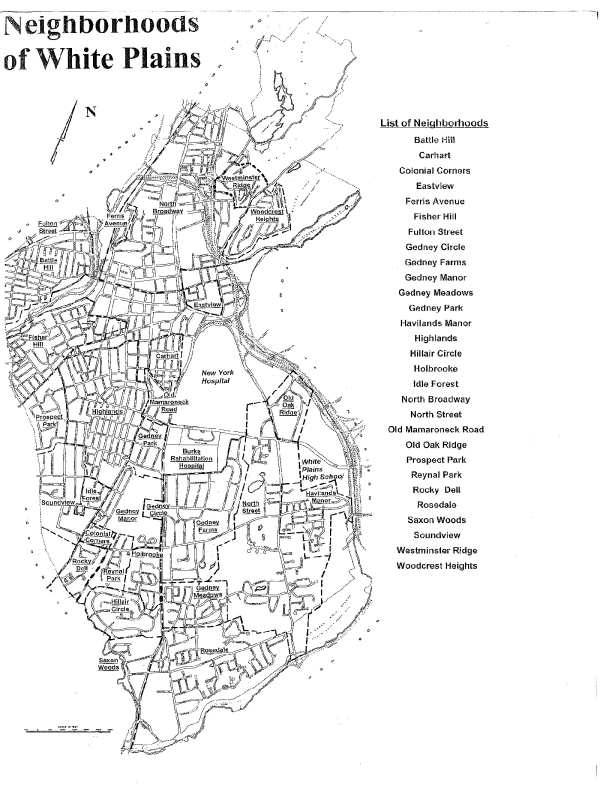
White Plains Neighborhoods

white-plains-resized-600

White Plains has 30 neighborhoods. Names come from streets, geographic area, names of estates, Battle of WP, developers name for area, farms and from those that owned or lived in those areas.


Homeless; Abandoned in White Plains
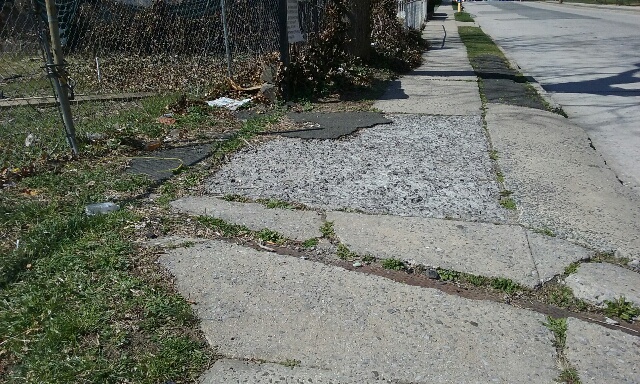
When is enough, enough?

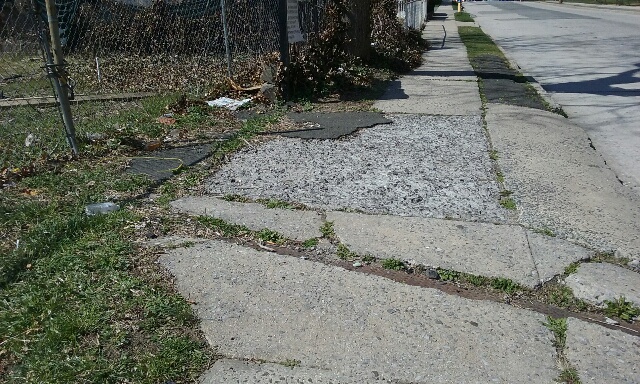
Properties sold to developers who then abandon their plans are often left in worse condition than what was there before. This lot in White Plains between Windsor Terrace and Amherst is one of these properties. Long gone are the house and parking lot that people used in the neighborhood. Left is an ugly unmaintained lot as it has been for years. Sidewalk is in need of a redo especially being across from a school.

20160322_140656_resized20160322_140915_resized


Dr. Martin Luther King Jr Boulevard

The former Grove Street was renamed  Dr. Martin Luther King Jr. to honor the civil rights leader of the 20th century in 1997.

A statue of Dr. King stands on the street in front of the Westchester  County Court House. It was dedicated  on January 15, 2007 and was created by Milton L. Sherrill.

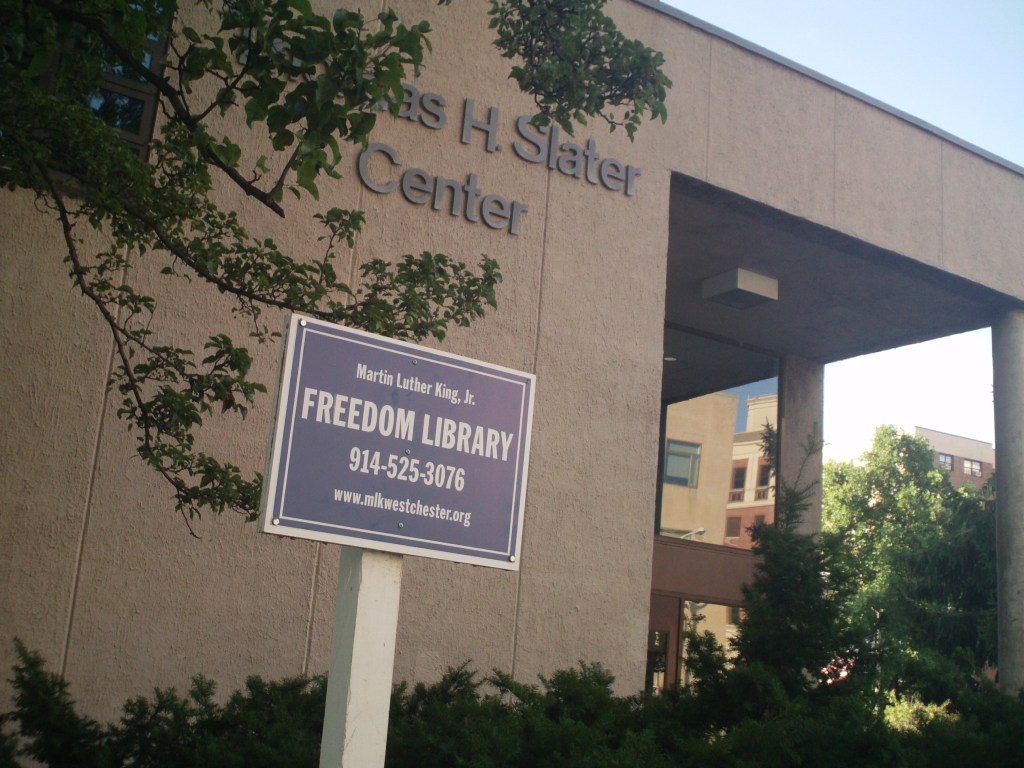
Nearby, the Martin Luther King Jr. Freedom Library is located at the Thomas H. Slater Center at 2 Fisher Court and is run by the Westchester Martin Luther King Jr. Institute of 250 Bryant Avenue. Information about the organization and library can be found at http://www.mlkwestchester.org.
What’s in a Name? Bloomingdale Road vs. Bloomingdale’s

Bloomingdale Road in White Plains is where one can find Bloomingdales’ Department Store. But, contrary to what one might think, it is not the reason for the name of the street. The name comes  from the former psychiatric hospital  Bloomingdale Hospital (or Bloomingdale Asylum) that is now the New York-Presbyterian Hospital, Psychiatry. The original hospital property extended from Westchester Avenue to Heatherbloom Road. Most of the grounds were covered by parkland developed by the Olmsted Company.

The former Bloomingdale Asylum of New York City (NYC) opened in 1821 in upper Manhattan at 116th Street along what was then Bloomingdale Road. This area was known as “Bloomingdale.” The name can be traced back to colonial times when the Dutch occupied Manhattan. Today the street is Broadway and the area is Morningside Heights. The former hospital grounds are now part of Colombia University with Buell Hall as the only remaining building from the former hospital.

In 1868, the NYC hospital bought farmland in White Plains in hopes of opening an annex to their hospital but construction did not begin till 1888 after the NYC hospital closed in 1880. Construction lasted till about 1895.

Bloomingdale derives from the Dutch name Bloemendael and its use goes back to the time when the Dutch occupied New York City (New Amsterdam). The region in Netherlands from which the name originates is where tulips are grown and means “valley of flowers.”

On the other hand, the surname for the Bloomingdale brothers who founded the Bloomingdales’ Department Store derives from German or a Bavarian dialect. Bloomingdale is the Americanized version of the Jewish German surname Blumenthal. In German, it means “flower valley.” Bavaria existed from 1806 to 1918 as a Kingdom and today it is a free state in Germany.

Bloomingdale’s of White Plains opened in 1975 on land leased from the hospital. The first Bloomingdale’s branch in Westchester County was in New Rochelle. A year after, opening its White Plains store, the one in New Rochelle closed. The store expanded in the later part of the 1990’s.DSC02903

What’s in a Name? White Plains’ Bar Building

The Bar Building of White  Plains located at 199 Main Street dates from 1926. Back then it was the tallest building constructed between Manhattan and Albany but today it is overshadowed by Westchester’s tallest buildings in the Ritz Carlton Complex.

The name for the building comes from its location and for the occupation of most of its tenants, lawyers. The building was built across from the former Westchester County Court House that was demolished in 1978. The Galleria Mall was built in its place. Avoiding demolition itself, the building was saved from the Ritz Carlton construction project and was added to the National Register of Historic Places in 2007.

dsc01178

The use of word “bar “in reference to the law or legal profession has a number of meanings. Barring furniture in medieval Europe was used to divide a court room between the areas where the trial participants were located and where the public was allowed to watch the trial. Today, court rooms continue to use a physical barrier (i.e. railing) to separate the two areas. The term “bar” also refers to the steps and procedures one must take to become a licensed lawyer, to the whole legal profession and to the governing body that regulates and reviews the conduct of lawyers.

Cemeteries of Westchester County

The three volume spiral bound Cemeteries of Westchester County by Patrick J. Raftery is a great resource for information about the cemeteries of Westchester County, NY . Books are available at local libraries and for sale at the Westchester County Historic Society. The following is from the Historical Society website:

A  comprehensive reference work of the County’s cemeteries, as well as a detailed history of the families who have settled here over many generations. From the forward by cemetery expert Gray Williams: “Patrick Raftery has made an enormous contribution to the history of Westchester with this definitive catalog of all its known churchyards, family graveyards and public cemeteries, including both those that still exist and those that have disappeared. He has combined exhaustive documentary research with painstaking observation and photography to provide what will unquestionably prove to be an enduring reference. But from his detailed descriptions there also emerges a revealing account of how the commemoration of the dead has evolved over the centuries and of how this evolution reflects changes in society itself.”

Sources for Further Study of White Plains

Listed are sources from White Plains, New York: A City of Contrasts:

Online Internet Sources:

Places for Research:

  • Local History Collection and Archives at White Plains Library
  • Westchester Historical Society and Westchester County Archives located  in Elmsford
  • Rye Historic Society

Books to Read:

  • Yesterday in White Plains (1981) by Renoda Hoffman
  • Buckout (2018) Eric Pleska
  • It Happened in Old White Plains (1989) by Renoda Hoffman
  • The Changing Face of White Plains (1994) by Renoda Hoffman
  • The Battle of White Plains (1991) by Renoda Hoffman
  • Historic White Plains by Thomas Rösch (1976)
  • The Jews of Westchester, A Social History by Baila R. Shargel and Harold L. Drimmer (1994)
  • Native New Yorkers, The Legacy of the Algonquin People of New York by Evan T Pritchard (2002)
  • On the Streets Where We Lived, A Pictorial Study of African Americans Living in White Plains, New York From the Beginning of the Twentieth Century by Harold A. Esannason (2011)
  • Westchester: The American Suburb edited by Roger Panetta
  • Cemeteries of Westchester by Patrick Rafferty (2011)
  • The Westchester Historian- Under the Apple Tree: The History of Golf in Westchester County by Dr William Quirin (Summer 2009)
  • Franklin Mile Markers on the Old Post Rd: by Cahal Whelan (2015)
  • Westchester County Airport by Kevin Patterson (2017)


Books on Bronx River and “The Hills” of West Harrison

History Books recently published that might be of interest to those drawn to this website are The Bronx River in History & Folklore by Stephen Paul Deville and The Freedom Journey by Edythe Ann Quinn.
The following two excerpts are from the back of the book The Bronx River in History & Folklore and Amazon.com:

The Bronx River flows for twenty-three miles through Westchester County and the heart of the Bronx. It is New York City’s only freshwater river, and it is exceptionally rich in history, folklore and environmental wonder. From Revolutionary War battlefields to native forests and lost villages, its lore and remarkable history are peopled with an array of legendary characters like Aaron Burr and the redoubtable Aunt Sarah Titus. Today, the once-polluted river is revitalized by decades of citizen activism, and it once again plays a unique role in the diverse communities along its length. Stephen DeVillo traces the river’s long and colorful story from the glaciers to the present day, combining human history, local legends and natural history into a detailed portrait of a special part of New York.
Stephen Paul DeVillo is the former development coordinator at the Bronx River Alliance, where he contributed a series of Bronx River stories for their newsletter. He develops walking tours for the Alliance’s Bronx River Rambles that explore the river’s history and environment, and has given historical walking tours for other organizations, including the Friends of the Old Croton Aqueduct and NYC H2O. He is a longtime member of the Bronx County Historical Society and the East Bronx History Forum.

The following information comes from the White Plains Library website about Edythe Ann Quinn” and her book:

Through wonderfully detailed letters, recruit rosters, and pension records, Quinn tells the story of thirty-five African American Civil War soldiers and the United States Colored Troop (USCT) regiments with which they served. The men all came from The Hills, an African American community near present-day Silver Lake. Their ties to family, land, church, school, and occupational experiences at home buffered the brutal indifference of boredom and battle, the ravages of illness, the deprivations of unequal pay, and the hostility of some commissioned officers and white troops. At the same time, their service among kith and kin bolstered their determination and pride.
Dr. Quinn is a Professor of History at Hartwick College in Oneonta, NY. She received a Gilder-Lehrman Institute Fellowship for African-American Research and is an experienced teacher, lecturer, and researcher. She used materials from the White Plains Collections and other local libraries, historical societies, and archives in her research for Freedom Journey.

Information about the Bronx River and “The Hills” can also be found in my book White Plains, New York: A City of Contrasts and this website.